
TL;DR

Get your next haul delivered free with Prime
- Fast, free delivery on millions of items
- Prime Video, Amazon Music and more included
- Member-only deals all year
Halloween costume accessories — wigs, props, makeup, masks, and headpieces — typically cost $5–50 and can transform ordinary clothes into a full costume for a fraction of a pre-packaged outfit’s price. U.S. Halloween spending regularly tops $10–12 billion annually, with costumes and accessories representing $3.5–4 billion of that. This guide covers trending accessories, safety rules (especially for cosmetic contact lenses), budget hacks, and the best times to buy.
The difference between a “person in black clothes” and “a convincing Wednesday Addams” is about $25 worth of accessories. Braids. A pale collar. Maybe a deadpan prop. That’s it. Halloween costume accessories are the quiet workhorses of October 31st — they do the heavy lifting while the clothes just show up.
Halloween spending in the U.S. regularly tops $10–12 billion a year, with costumes and accessories representing the biggest slice at $3.5–4 billion or more [1]. But here’s the part most people miss: you don’t need to spend big to look great. You need to spend smart.
In this guide, you’ll learn which accessories give you the most costume per dollar, what’s trending right now, the safety rules nobody tells you about (cosmetic contact lenses, I’m looking at you), and exactly when to shop for the best deals.
Accessories closest to your face — wigs and makeup — deliver the most costume impact per dollar; typical spend is $10–50 per piece.
Cosmetic contact lenses are FDA-regulated medical devices; only buy from verified sellers or eye care professionals, never from gas stations or unverified site…
The "closet costume" strategy (3–4 accessories + clothes you own) builds a recognizable costume for under $30.
Shop late August–September for selection; buy November 1–7 for 50–90% off clearance pricing for next year.
Trim, de-shine, and pin a cheap wig to make a $15 piece look like a $60 one — and store it on a stand to reuse it for years.
The 6 Accessory Categories That Do the Most Work
Halloween costume accessories fall into six core categories: hats and wigs, makeup, props, masks, themed jewelry, and wearable pieces like wings, capes, and tutus. Master these and you can build almost any costume from scratch — or rescue a mediocre one.
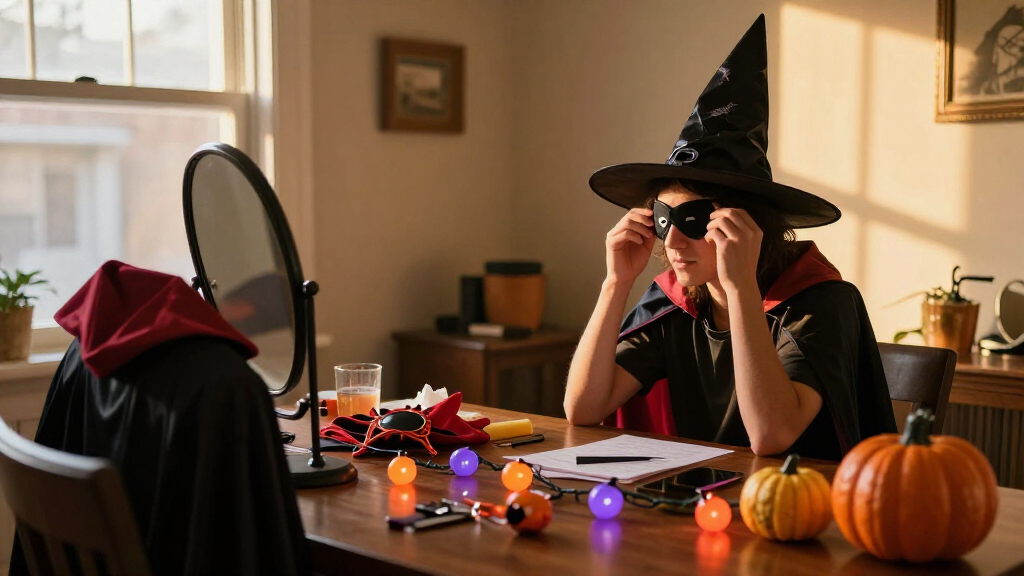
Think of accessories as the seasoning. A plain black dress is a blank plate. Add a witch hat ($10), a broom ($8), and green face paint ($6), and suddenly you’ve served something memorable. Accessories are a shortcut to a finished look without the $60 pre-packaged costume that fits nobody well.
Here’s how the main categories stack up on cost versus impact:
| Category | Typical Price | Costume Impact | Best For |
|---|---|---|---|
| Wigs & hats | $10–50 | High — changes your silhouette instantly | Character costumes |
| SFX makeup | $15–50+ kits | Very high — most realistic effect | Zombies, wounds, fantasy looks |
| Props | $5–15 | Medium — instantly recognizable | Themed outfits, group costumes |
| Masks | $10–40 | High but hides your face | Parties, minimal-effort looks |
| Jewelry & accents | $3–15 | Low to medium — the finishing touch | Vampires, cats, witches |
| Wings, capes, tutus | $15–35 | High — dramatic from across a room | Fairies, bats, ballet themes |
One rule of thumb: spend on what’s closest to your face. A quality wig and good makeup beat an expensive jacket every time, because that’s where people actually look [1].
What’s Trending: From SFX Makeup to Light-Up Everything
This year’s biggest Halloween costume accessory trends are special effects makeup, LED tech, pop culture replicas, and sustainable DIY pieces. The cheap plastic era is fading; people want looks that photograph well.
SFX makeup has gone mainstream. Liquid latex, scar wax, and beginner airbrush kits that once lived in film-industry supply stores now sit on party-store shelves. A $30 kit can produce a gash or rotting-zombie texture that no mask can match — and it moves with your face.
LED accessories are everywhere. Light-up masks, fiber-optic hoodies, and glowing elven ears photograph dramatically in the dark. They also solve a real problem: visibility for kids trick-or-treating at night. Win-win.
Pop culture still drives spikes. When a show or movie hits, accessory demand explodes within weeks — think Wednesday Addams braids, Barbie-pink accessories, and Stranger Things gear in recent seasons. If you want a trending piece, buy it by late September; the popular sizes and styles sell out first [1].
Finally, sustainability is having a moment. Thrifted, upcycled, and reusable accessories are a growing segment — a velvet cape you re-wear for five years costs less per wear than a disposable one.
The Safety Rules That Actually Matter (Read Before Buying Lenses)
The most important Halloween accessory safety rules involve cosmetic contact lenses, face paint ingredients, flame resistance, and realistic-looking props. Most accessories are harmless. These four areas are not.
Cosmetic contact lenses are medical devices regulated by the FDA in the U.S. Buying “crazy eyes” lenses from a gas station or unverified online seller carries real risk — corneal scratches, infections, and in severe cases vision loss. If you want colored lenses, get them through an eye care professional or a verified seller, even with zero vision prescription [1].
Never buy cosmetic contact lenses without FDA verification. A $15 pair from an unverified seller is not a bargain — eye injuries from unlabeled novelty lenses are one of the most common Halloween ER visits.
Face paint: look for non-toxic, FDA-compliant ingredients, and always patch-test on your inner arm 24 hours before the big night. Red, itchy half-faces are a real thing.
Flame resistance: trick-or-treating means candles on porches. Check labels for flame-resistant materials on capes, wigs, and tutus — synthetic hair goes up fast near an open flame.
Props: many schools and venues ban realistic-looking weapons. A spray-painted cardboard sword passes; a hyper-realistic blade gets your kid sent home. When in doubt, go obviously fake.
Turn Your Closet Into a Costume for Under $30
The “closet costume” strategy uses three or four Halloween costume accessories to transform clothes you already own into a full look. It’s the single best budget move in Halloween — and it works even if you’re deciding on October 30th.
The method is simple. Pick a character defined by iconic accessories, then match roughly with your existing wardrobe. Some proven combos:
- Wednesday Addams: black dress you own + braided wig ($15) + pale collar ($8)
- Cat: black outfit + ears headband ($5) + tail ($6) + drawn-on whiskers (free, eyeliner)
- Vampire: dark shirt and pants + cape ($15) + fangs ($4) + slicked hair
- Tourist: Hawaiian shirt + bucket hat ($6) + camera prop + fanny pack
- Scarecrow: flannel shirt + straw hat ($8) + face paint patches ($5)
Compare that to a $50–70 packaged costume that fits poorly and falls apart by November. The closet route is a kind of organized laziness — minimal effort, maximum recognition, and you keep the accessories for next year.
Pro tip: dollar stores are shockingly good for small props, gloves, and themed accents in October. Quality varies, but for a one-night item, it’s often all you need.
When to Buy: The Timing That Saves You 50–90%
The best time to buy Halloween costume accessories is late August through September for selection, and the first week of November for discounts of 50–90% off. Your calendar matters almost as much as your budget [1].
Here’s the shopping timeline:
- Late August–mid September: fullest selection, especially online. Trending items are in stock in all sizes.
- Early October: still good selection, but popular accessories start selling out. Buy anything trending now.
- Two weeks before Halloween: the panic zone. Party stores are picked over; expect lines and compromises.
- November 1–7: clearance season. Wigs, props, and makeup drop to 50–90% off. Buy for next year.
- Off-season (winter): costume shops clearing inventory online — decent deals, random selection.
The November play is the real hack. Spend $15 on clearance this year and you’ve pre-solved next Halloween for the price of a sandwich. Just label the storage box, or you’ll spend next October wondering where the witch hat went.
Where to shop, roughly in order of convenience: Amazon and online costume retailers (selection), Spirit Halloween and party stores (try-before-you-buy), dollar stores (cheap accents), and thrift stores (one-of-a-kind pieces nobody else will have).
Make a Cheap Wig Look Like It Cost Four Times More
You can make a $15 synthetic wig look dramatically better with three tricks: trimming, taming shine, and proper anchoring. Cheap wigs don’t fail because of the fiber — they fail because they come out of the bag looking like a startled animal.
Trim the bangs and ends. Cheap wigs ship long and shapeless. A five-minute snip with scissors (or a friend’s help) adds shape that reads as “styled” instantly.
Kill the shine. Budget synthetic hair has a plasticky gloss that screams costume. A light dusting of dry shampoo or baby powder tones it down — don’t overdo it, or you’ll trade shiny for ghostly.
Anchor it properly. The most common wig complaint is slipping. Wear a wig cap ($3), pin the wig to your real hair with bobby pins crossed in an X, and position it slightly forward — most people wear wigs too far back, exposing a suspicious hairline [1].
And when the night’s over, store the wig on a ball or stand, not crushed in a bag. A cared-for $20 wig survives three or four Halloweens, which makes it cheaper than the “disposable” $12 one in the long run.
Frequently Asked Questions
Are Halloween colored contact lenses safe?
Only if they’re FDA-approved and purchased from a verified seller or eye care professional. Cosmetic lenses are regulated medical devices in the U.S., and unlabeled novelty lenses from unverified sellers cause scratches, infections, and sometimes permanent eye damage. Even with perfect vision, get fitted — a lens that fits wrong is a lens that hurts.
How do I keep a Halloween wig from slipping?
Wear a wig cap, bobby-pin the wig to your real hair in an X pattern at the temples, and position it slightly forward of where you think it goes. Most slippage happens because people wear wigs too far back, which also exposes an unnatural hairline.
What accessories transform plain clothes into a costume?
Wigs, hats, capes, ears headbands, fangs, face paint, and a single strong prop. A black dress plus a braided wig makes Wednesday Addams; a flannel plus a straw hat and face paint makes a scarecrow. Aim for three to four recognizable pieces and you’re done — total cost is usually under $30.
When do Halloween accessories go on sale?
Clearance starts November 1st, with discounts of 50–90% off during the first week. Selection is best in late August and September, so trending items should be bought early — but anything you can plan a year ahead for should be bought right after Halloween.
How do I remove liquid latex and scar wax makeup?
Peel liquid latex gently from one edge — never rip it off skin with hair underneath. Soak stubborn areas with warm water and soap, and use a latex-safe remover or oil-based cleanser for residue. Scar wax lifts off with an oil-based remover; follow with a gentle cleanse and moisturizer.
Conclusion
If you remember one thing: the accessories make the costume, and the calendar makes the price. Spend your budget on the wig, the makeup, and the one prop people will remember — then buy next year’s versions at 70% off in the first week of November.
This Halloween, skip the sad packaged costume rack. Build your look piece by piece, check those lens labels, and walk into the party as the person everyone asks, “Okay, where did you get that?”
Fall Picks
fall essentials
As an affiliate, we earn on qualifying purchases.