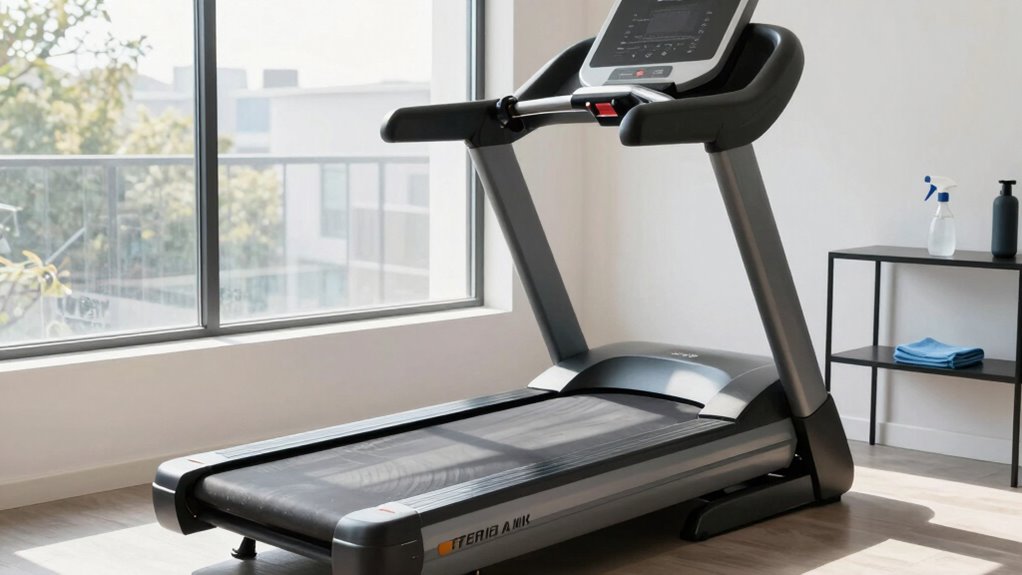

To make your treadmill last longer with less work, perform regular cleaning and lubrication to keep parts moving smoothly, and always check for signs of wear or loose bolts. Use your treadmill correctly by avoiding sudden speed or incline changes and maintaining proper posture. Store it in a dry, level spot away from direct sunlight. Regularly inspect for issues like unusual noises or slipping belts—staying proactive helps prevent major repairs. Keep exploring to learn more simple tips for ideal treadmill care.
Key Takeaways
- Regularly clean the belt, deck, and internal parts to prevent dust buildup and ensure smooth operation.
- Lubricate the belt periodically to reduce friction, noise, and wear on moving components.
- Perform routine inspections of bolts, screws, and electrical connections to catch issues early.
- Use the treadmill properly with correct posture and gradual speed/incline adjustments to minimize mechanical stress.
- Store the treadmill in a dry, level space and cover it when not in use to protect against environmental damage.
As an affiliate, we earn on qualifying purchases.
Understand the Main Parts of Your Treadmill and How They Work
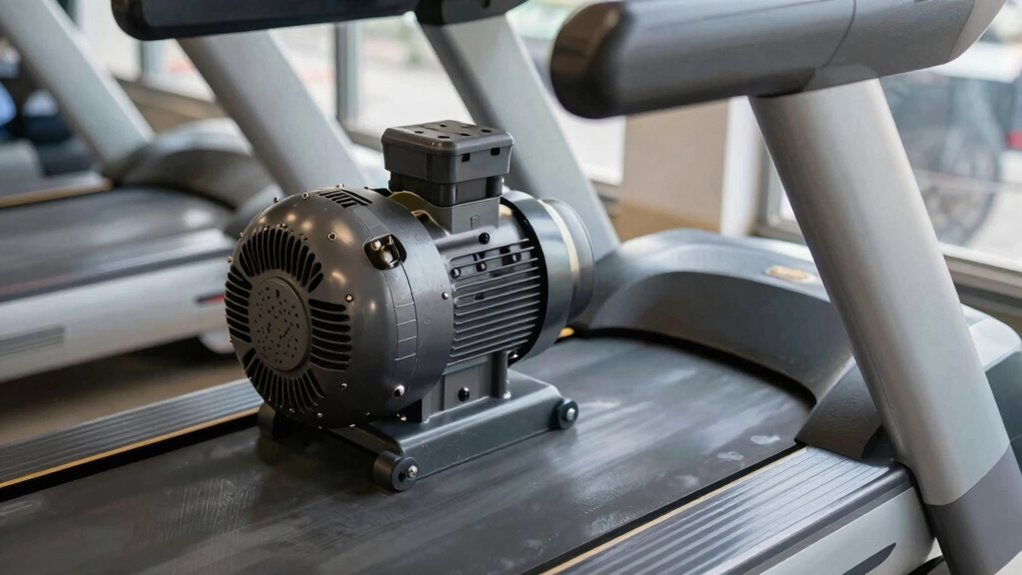
To keep your treadmill running smoothly for years, it’s essential to understand its main components and how they function. The motor powers the belt, so motor maintenance is vital; regular checks guarantee it runs efficiently and prevents overheating. The belt itself needs proper alignment to avoid uneven wear and slipping, which can damage internal parts. A misaligned belt causes unnecessary strain on the motor and can reduce the treadmill’s lifespan. Familiarize yourself with how these parts work together: the motor drives the belt, which provides the running surface. Keeping the motor well-maintained and belt alignment are key steps in prolonging your treadmill’s life. Additionally, knowing how to optimize treadmill settings can further extend its longevity and improve workout quality. Regularly inspecting these components and understanding their functions can help you spot problems early and maintain peak performance with less effort. Proper lubrication of the belt can also reduce wear and improve overall durability, especially when combined with regular maintenance checks that include cleaning and inspecting internal parts.
As an affiliate, we earn on qualifying purchases.
Clean and Lubricate Your Treadmill Regularly for Smooth Performance

To keep your treadmill running smoothly, you need to clean it regularly using proper techniques that remove dust and sweat buildup. Applying the right lubricant at recommended intervals guarantees the belt moves quietly and efficiently. Establishing a regular maintenance schedule helps you stay on top of cleaning and lubrication, preventing costly repairs down the line. Incorporating airless paint spraying tips for cleaning tools can make the process more efficient and effective. Recognizing the importance of dream symbolism related to clocks and time can also inspire you to stay consistent with your maintenance routine.
Proper Cleaning Techniques
Regularly cleaning and lubricating your treadmill is essential for maintaining smooth operation and extending its lifespan. To keep it in top shape, focus on removing surface debris and preventing dust accumulation. Here are key cleaning steps:
- Wipe down the belt and deck with a soft, damp cloth after each use.
- Use a vacuum or brush to clear dust from under and around the motor and rollers.
- Check the side rails and console for dirt, wiping them clean regularly.
- Inspect and clean the power cord and plug to avoid dust buildup that could cause electrical issues.
- Incorporate landscaping elements around your workout area to reduce dust and debris from entering the treadmill.
Effective Lubrication Methods
Even if your treadmill looks clean, neglecting proper lubrication can cause unnecessary wear and reduce its lifespan. Using the right lubricant types is essential—most manufacturers recommend silicone-based or Teflon lubricants for smooth operation. Before applying, turn off and unplug your treadmill, then lift the belt slightly to access the deck. Apply the lubricant evenly along the center of the running belt or deck, following the manufacturer’s instructions. Use an applicator or a clean cloth to spread it evenly and avoid over-lubricating, which can attract dust and debris. Proper application techniques guarantee the lubricant reaches all necessary areas without excess, minimizing friction and wear. Regularly lubricating your treadmill keeps it running smoothly and extends its lifespan. Additionally, work-life harmony can help you stay consistent with maintenance routines, ensuring your equipment stays in top condition longer. Maintaining a consistent cleaning and lubrication schedule is especially important for preventing dust and debris buildup, which can accelerate wear. Incorporating a routine maintenance schedule can help you stay on top of these tasks and prolong your treadmill’s optimal performance. Regularly inspecting your treadmill for signs of wear and tear can also help catch issues early before they lead to costly repairs.
Regular Maintenance Schedule
Maintaining a consistent schedule for cleaning and lubricating your treadmill guarantees it performs smoothly and lasts longer. Regular upkeep improves treadmill aesthetics, keeping it looking new, and enhances user comfort during workouts. To stay on top of maintenance, consider these steps:
- Clean the belt and deck weekly to remove dust and sweat that can cause wear.
- Lubricate the belt every 3-6 months to reduce friction and noise.
- Check bolts and screws monthly, tightening as needed for stability.
- Inspect the motor and wiring biannually, ensuring everything functions smoothly.
- Monitor treadmill noise levels regularly, as abnormal sounds can indicate wear and tear requiring attention. Proper maintenance also helps prevent malfunctions that could lead to costly repairs.
Following this schedule keeps your treadmill running quietly and efficiently, prolongs its lifespan, and maintains a clean, attractive look. Consistent maintenance is key to maximizing user comfort and treadmill aesthetics.
As an affiliate, we earn on qualifying purchases.
Use Your Treadmill Correctly to Prevent Unnecessary Wear

To prevent unnecessary wear on your treadmill, it’s essential to use it correctly from the start. Focus on proper treadmill ergonomics to guarantee your posture remains safe and comfortable during workouts. Always stand upright, avoid leaning on the handrails excessively, and keep your stride natural. This proper posture not only enhances user safety but also reduces strain on the machine’s components. Additionally, assure you start with a warm-up and avoid sudden changes in speed or incline. Proper technique minimizes stress on the motor and belt, prolonging your treadmill’s lifespan. Maintaining consistent natural movement throughout your workout can further help reduce unnecessary mechanical stress. Regularly inspecting and cleaning your treadmill can also help identify potential issues early, ensuring optimal function over time. Here’s a quick guide:
| Aspect | Do’s | Don’ts |
|---|---|---|
| Posture | Stay upright, relaxed | Slouching or leaning |
| Speed adjustments | Increase gradually | Sudden jumps |
| Handrail use | Use minimally for balance | Rely heavily on handrails |
| Warm-up | Always warm up first | Skip warm-up |
| Incline settings | Adjust safely, gradually | Abrupt changes |
As an affiliate, we earn on qualifying purchases.
Monitor and Adjust Speed and Incline Settings Safely
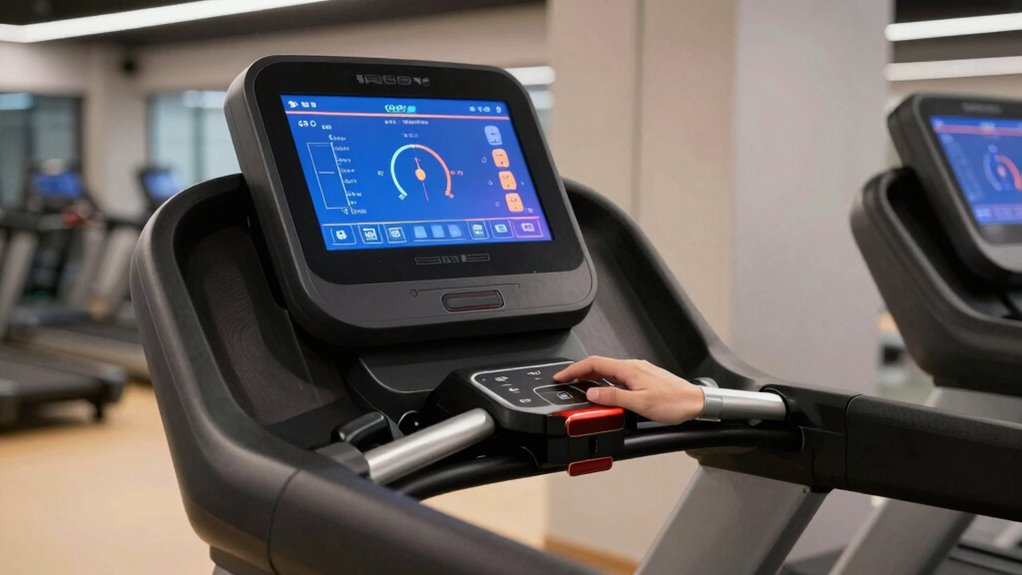
To keep your treadmill in good shape, you need to regularly check your speed and incline settings before starting your workout. Make certain you’re using proper technique when adjusting the controls to prevent unnecessary strain on the machine. Staying attentive to these details helps prolong your treadmill’s lifespan and ensures safe, effective workouts. Additionally, being aware of ethical considerations in consumer electronics can help you make more responsible choices when purchasing or disposing of fitness equipment. Being mindful of smart lock features and security measures can also guide you in safeguarding your home or office equipment from unauthorized access. Regular maintenance and awareness of connected equipment features can further enhance your workout experience and equipment longevity. Recognizing common troubleshooting alerts can help you quickly address minor issues before they cause significant damage or downtime.
Regularly Check Settings
Regularly checking and adjusting your treadmill’s speed and incline settings guarantees safe and effective workouts, while also preventing unnecessary wear on the machine. To guarantee calibration accuracy and match your user preferences, follow these steps:
- Verify that the displayed speed and incline match your actual settings with a stopwatch or level.
- Adjust settings gradually, avoiding sudden changes that strain components.
- Recalibrate the machine if readings seem inconsistent or off.
- Regularly review your workout data and tweak settings to better suit your fitness goals.
- Incorporate monitoring and calibration techniques to ensure the treadmill maintains optimal performance over time.
Use Proper Technique
Monitoring and adjusting your treadmill’s speed and incline settings during workouts is essential for safety and machine longevity. Always maintain proper posture and focus on a correct stride to prevent unnecessary strain on the motor and belts. Use the control panel to gradually increase or decrease speed, avoiding sudden jumps that can cause wear. Keep your movements controlled, and watch your form to reduce impact on the treadmill’s components. Additionally, air purifier maintenance can help ensure a cleaner environment that supports your overall workout safety. Incorporating proper juice extraction techniques can also promote overall health, helping you stay energized and reduce fatigue during your workouts.
Perform Routine Maintenance Checks to Catch Problems Early
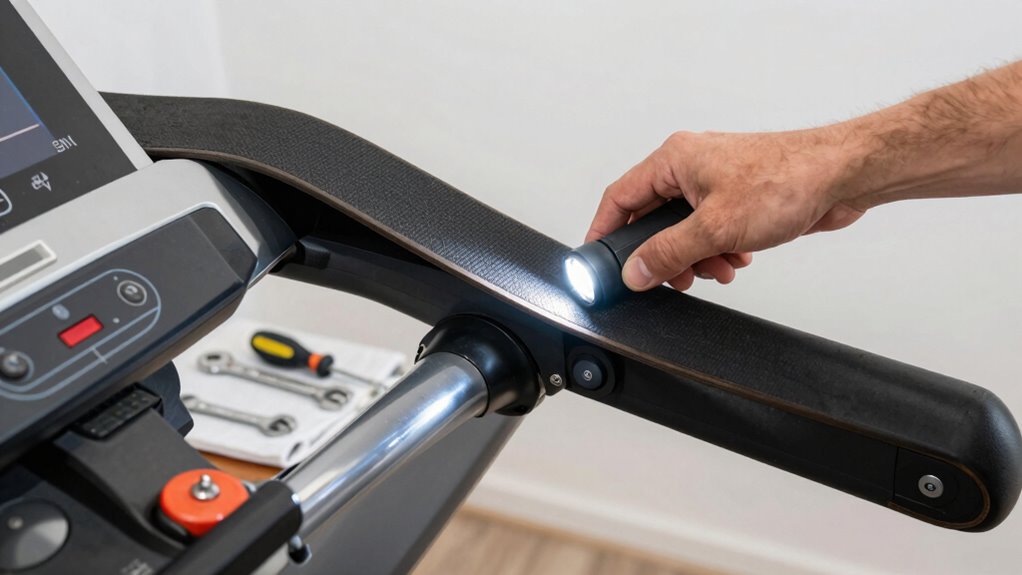
Have you ever wondered how catching small issues early can save your treadmill from costly repairs or premature replacement? Regular maintenance checks are key to maintaining treadmill safety and user comfort. Keep an eye on these four areas:
- Inspect the Belt: Look for signs of wear or looseness, and adjust or replace as needed.
- Lubricate Moving Parts: Proper lubrication reduces friction and extends component life.
- Check for Unusual Noises: Strange sounds often signal off-balance parts or loose bolts.
- Test Emergency STOP Function: Ensure it’s working smoothly for safety during workouts.
Additionally, regularly monitor the motor for overheating or unusual performance issues to prevent breakdowns and ensure accurate measurement tools are functioning properly. Incorporating product roundups for maintenance supplies can make it easier to find the right tools and parts for your treadmill upkeep.
Performing these routine checks helps identify problems early, preventing bigger issues later. Consistent maintenance not only prolongs your treadmill’s life but also guarantees a safer, more comfortable workout experience.
Choose Quality Parts and Accessories to Extend Your Treadmill’s Life

Choosing high-quality parts and accessories for your treadmill guarantees it performs reliably and lasts longer. When selecting replacements or upgrades, do a thorough brand comparison to find reputable manufacturers known for durability. Cheaper, generic parts may save money initially but can lead to frequent breakdowns and costly repairs. Always check accessory compatibility to ensure the parts fit perfectly and work seamlessly with your treadmill model. Investing in quality belts, rollers, and electronics from trusted brands helps maintain peak performance and reduces wear and tear. Properly matched parts prevent unnecessary strain on your treadmill’s motor and deck. Remember, using inferior accessories can undermine your efforts to extend its lifespan, so prioritize reputable brands and compatibility for the best long-term results.
Store and Position Your Treadmill Properly to Avoid Damage
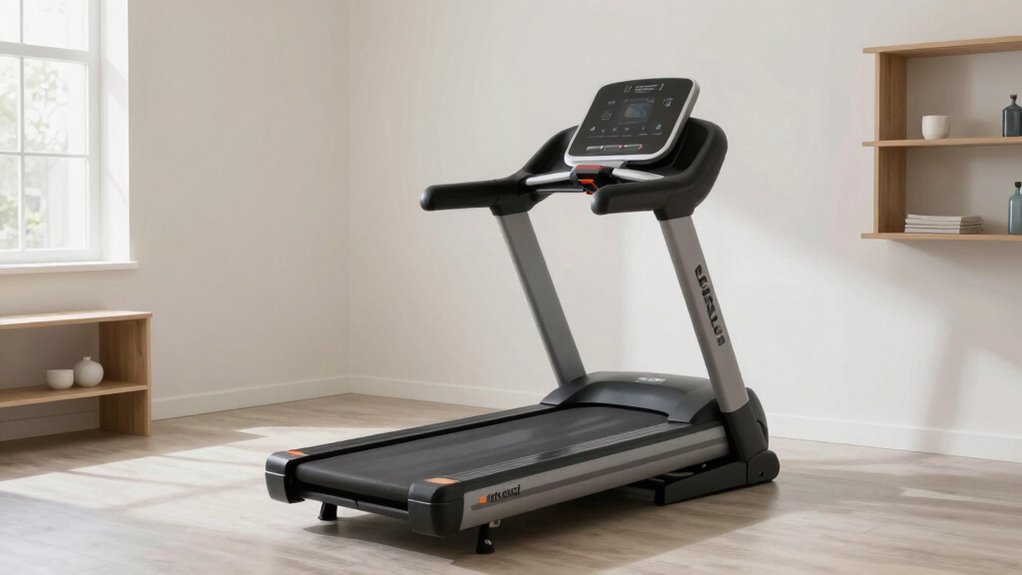
Properly storing and positioning your treadmill is essential to prevent damage and prolong its lifespan. Use these storage tips and positioning strategies to keep it in top shape:
Proper storage and positioning help prevent damage and extend your treadmill’s lifespan.
- Store your treadmill in a dry, climate-controlled area away from direct sunlight or moisture.
- Place it on a flat, level surface to prevent unnecessary strain on components.
- Keep it at least a few inches away from the wall to allow proper airflow and prevent overheating.
- Cover your treadmill with a breathable cover when not in use to protect it from dust and debris.
Following these steps guarantees your treadmill stays in good condition longer, saves you money, and minimizes maintenance needs. Proper storage and strategic positioning are key to extending its durability.
Identify Signs of Treadmill Problems and When to Seek Repairs
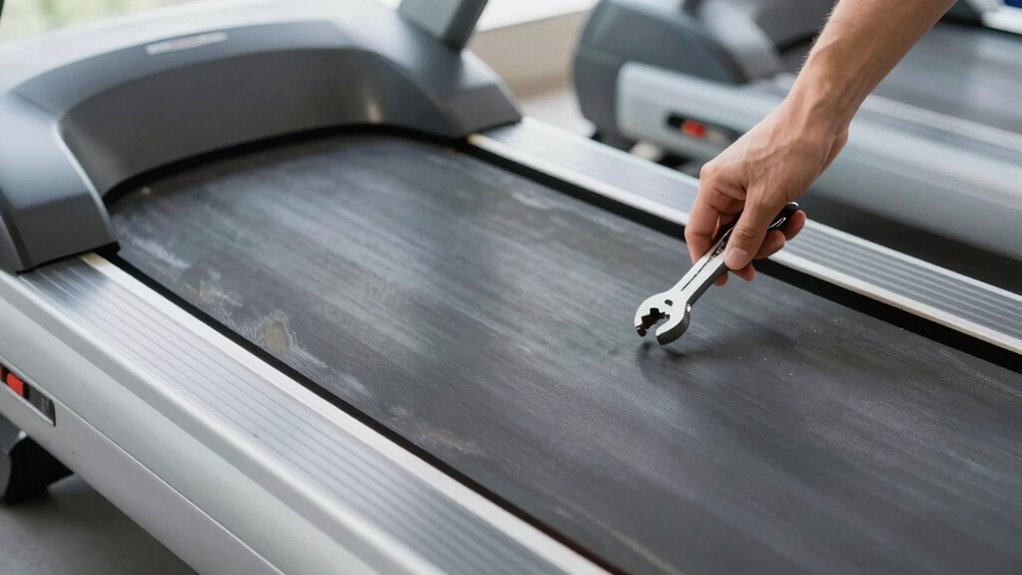
Recognizing the early signs of treadmill problems can save you from costly repairs and extended downtime. Listen for unusual noises, such as squeaking or grinding, which may indicate motor or belt issues. Check if the deck feels uneven or if the belt slips during use, signaling potential mechanical problems. Keep an eye on digital displays for error messages or inconsistent readings. When problems arise, review your treadmill’s warranty coverage—some issues might be covered, reducing repair costs. Comparing brands can help you choose models with better durability and customer support, making repairs easier. If you notice persistent problems or warning signs, it’s best to seek professional repairs promptly to prevent further damage and prolong your treadmill’s lifespan.
Frequently Asked Questions
How Often Should I Replace Treadmill Belts or Decks?
You should replace your treadmill belt every 3 to 6 months, depending on usage, and inspect it regularly for signs of wear. Deck replacement is typically needed every 3 to 5 years, but this varies based on how often you use your treadmill and its maintenance. Keep your treadmill well-maintained, clean, and properly aligned to extend the life of the belt and deck, reducing the need for frequent replacements.
What Safety Precautions Should I Take During Treadmill Maintenance?
Think of your safety gear as your armor—never skip it during treadmill maintenance. Always turn off and unplug the machine, then wear gloves and safety glasses to protect against debris or accidental injury. Keep emergency procedures handy, like knowing how to quickly disconnect power or stop the treadmill. These precautions guarantee you stay safe, turning maintenance into a controlled task rather than a risky challenge.
Can I Use Household Lubricants on My Treadmill?
You shouldn’t use household lubricants on your treadmill because they may not be compatible with the machine’s parts. Treadmill compatibility is essential to avoid damage, so always choose lubricants specifically designed for treadmills. Using the wrong type can cause slipping or wear out components faster. To keep your treadmill running smoothly and extend its lifespan, stick to manufacturer-recommended lubricants and follow their instructions carefully.
How Does Ambient Temperature Affect Treadmill Longevity?
Ambient temperature greatly impacts your treadmill’s longevity. Extreme temperatures, whether hot or cold, can cause components to wear faster or malfunction. Temperature effects mean you should keep your treadmill in a climate-controlled environment. Follow maintenance tips like regularly cleaning and lubricating parts, and avoid exposing it to moisture or direct sunlight. Proper care ensures your treadmill operates smoothly longer, saving you time and money on repairs.
Are There Specific Brands of Parts Recommended for Repairs?
You should prioritize brand compatibility and repair certifications when choosing parts for repairs. While some might think generic parts work fine, sticking to original or recommended brands guarantees durability and proper fit. Certified repair technicians often prefer parts with recognized certifications, reducing the risk of damage. This approach saves you money in the long run and keeps your treadmill running smoothly, extending its lifespan with less hassle.
Conclusion
By understanding your treadmill’s parts, maintaining it regularly, and using it properly, you can make it last longer with less work. Think of your treadmill like a car — with proper care, it’ll run smoothly for years. Keep an eye on signs of trouble and address issues early, and you’ll enjoy reliable workouts without the hassle. A little effort now saves a lot of trouble later, keeping your fitness journey on track.