
To protect your financial data from identity theft, regularly monitor your credit reports and set up alerts for any suspicious activity. Create strong, unique passwords for all accounts and avoid reusing them. Be cautious with your personal information by verifying identities before sharing data and staying alert to phishing scams. Secure your devices and Wi-Fi networks with updates and VPNs. Implementing these steps will help you stay safer—exploring further will give you even more effective strategies.
Key Takeaways
- Regularly monitor your credit reports for suspicious activity and unauthorized accounts.
- Use strong, unique passwords and a password manager to secure all online accounts.
- Protect personal information by verifying identities and avoiding phishing scams.
- Safeguard devices and networks by updating software, using VPNs on public Wi-Fi, and shredding sensitive documents.
- Stay vigilant and combine credit monitoring with proactive security practices to prevent identity theft.
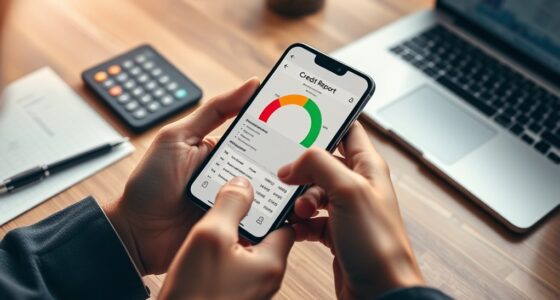
Identity theft can happen to anyone, but you can take simple steps to protect yourself. One of the most effective ways is by staying vigilant with your financial data. Regularly monitoring your credit reports through credit monitoring services allows you to catch suspicious activity early. These services provide alerts whenever there’s a change in your credit profile, such as new accounts opened in your name or unfamiliar inquiries. By reviewing your reports at least once a year, or more often if you suspect something, you can quickly identify and address potential issues before they escalate. Combining credit monitoring with a proactive approach to security creates a strong defense against identity theft.
Regularly review your credit reports to catch suspicious activity early and protect against identity theft.
Another essential step is creating secure passwords for your online accounts. Many people use easy-to-guess passwords like birthdays or simple sequences, making it easier for thieves to access their information. Instead, opt for complex, unique passwords for each account. Use a combination of upper and lowercase letters, numbers, and special characters to make your passwords harder to crack. Consider using a password manager to securely store and generate strong passwords, so you don’t have to remember them all. Never reuse passwords across multiple sites, especially for sensitive accounts like banking or email. This way, even if one account is compromised, your other accounts stay protected.
Be cautious about sharing personal information online or over the phone. Phishing scams often try to trick you into revealing sensitive data by pretending to be legitimate companies or authorities. Always verify the identity of anyone asking for your personal information before providing it. Avoid clicking on suspicious links or downloading attachments from unknown sources, as these can contain malware designed to steal your data. Keep your devices’ software and security patches up to date to close vulnerabilities that hackers could exploit.
Physical security is just as important as digital precautions. Shred any documents containing your personal information before discarding them, so thieves can’t easily retrieve your data from trash. Also, be mindful when using public Wi-Fi networks; avoid accessing sensitive accounts unless you’re on a secure, encrypted connection. If you do need to use public Wi-Fi, consider using a virtual private network (VPN) to encrypt your internet traffic. Additionally, understanding the role of contrast ratio in projectors can help you better evaluate visual clarity and image quality—this principle is also crucial for ensuring clear, sharp visuals in digital displays.
Taking these steps might seem simple, but they’re powerful tools for safeguarding your financial information. Regular credit monitoring, creating secure passwords, and being cautious with your personal data help you stay a step ahead of identity thieves. Staying vigilant and proactive ensures your financial health remains protected, giving you peace of mind in today’s digital world.
credit monitoring service subscription
As an affiliate, we earn on qualifying purchases.
As an affiliate, we earn on qualifying purchases.
Frequently Asked Questions
How Can I Detect if I Am a Victim of Identity Theft Early?
You can detect if you’re a victim of identity theft early by regularly checking your credit reports and using credit monitoring services. Look out for suspicious activity, such as unfamiliar accounts or unexpected charges. If you notice any discrepancies, act quickly by freezing your credit and reporting the fraud. Staying vigilant and monitoring your financial data helps you catch identity theft early and minimizes potential damage.
What Are the Common Signs of Identity Theft?
You might notice credit report monitoring alerts or discover suspicious account activity, which are common signs of identity theft. Other clues include unexpected charges, unfamiliar accounts opening in your name, or missing bills. If these coincidences happen, take action quickly. Regularly check your credit report and bank statements, and stay alert for anything unusual. Early detection can save you from serious financial damage and help you regain control.
How Secure Are Online Banking Platforms From Hacking?
Online banking platforms are quite secure thanks to advanced encryption protocols that protect your data during transactions. Many banks also use biometric authentication, like fingerprint or facial recognition, to add extra security layers. However, you should still stay cautious by avoiding public Wi-Fi and regularly updating your passwords. While these measures considerably reduce hacking risks, no system is entirely foolproof, so stay vigilant to protect your financial information.
What Steps Should I Take if My Financial Data Is Compromised?
If your financial data gets compromised, act quickly by contacting your bank and freezing your accounts to prevent further fraud. Monitor your account activity regularly and report suspicious transactions immediately. For financial recovery, file a police report and notify credit bureaus to place fraud alerts. These steps help with fraud prevention and make sure you recover your finances faster, minimizing damage from identity theft.
Are There Any Legal Protections if My Identity Is Stolen?
Yes, you have legal protections if your identity is stolen. Consumer protections laws and legal remedies allow you to dispute fraudulent charges and hold perpetrators accountable. You can also report the theft to authorities and your financial institutions, who are required to investigate and assist. These protections help you recover losses and prevent future incidents. Stay informed about your rights, and don’t hesitate to seek legal advice if needed.
password manager software
As an affiliate, we earn on qualifying purchases.
As an affiliate, we earn on qualifying purchases.
Conclusion
Protecting your financial data is essential in today’s digital world. By staying vigilant, using strong passwords, and monitoring your accounts regularly, you can considerably reduce your risk of identity theft. Remember, your personal information is valuable—so why leave it vulnerable? Take proactive steps now to safeguard your identity. After all, isn’t your financial security worth the effort? Stay alert, stay protected, and keep your financial future safe.
RFID blocking wallet
As an affiliate, we earn on qualifying purchases.
As an affiliate, we earn on qualifying purchases.
VPN for public Wi-Fi
As an affiliate, we earn on qualifying purchases.
As an affiliate, we earn on qualifying purchases.