

Be alert to financial red flags like promises of high returns with little risk, vague explanations, and pressure to act fast. Watch for signs of fake documents, inconsistent communication, or reluctance from representatives to answer questions. Always verify the legitimacy of the investment source and avoid impulsive decisions. Recognizing these warning signs can help you spot Ponzi schemes and scams early. Keep exploring to uncover how to protect yourself and make smarter investment choices.

Get your next haul delivered free with Prime
- Fast, free delivery on millions of items
- Prime Video, Amazon Music and more included
- Member-only deals all year
Key Takeaways
- Consistently high returns with little or no risk promised are typical red flags of Ponzi schemes.
- Pressure to invest quickly and vague explanations of how returns are generated indicate scam tactics.
- Inconsistent or forged documentation and reluctance to provide references signal potential fraud.
- Complex jargon or overly technical language may be used to obscure lack of transparency.
- Sudden changes in investment strategy or suspicious communication patterns are warning signs of scams.
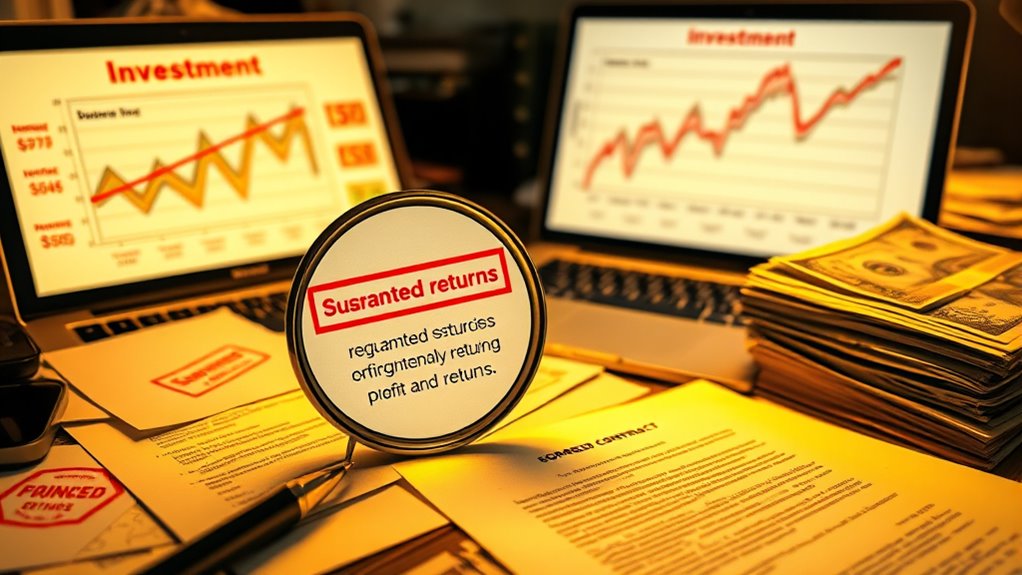
Are there warning signs that indicate your finances might be in trouble? Recognizing these signals early can save you from significant losses, especially when it comes to Ponzi schemes and investment scams. One of the first steps you should take is conducting a thorough risk assessment of any investment opportunity. If an investment promises unusually high returns with little or no risk, it’s a red flag. Genuine investments involve risk, and any claim to the contrary should prompt skepticism. During your risk assessment, ask questions about how the investment generates returns, and always verify the legitimacy of the source. Be wary of pressure tactics or promises of quick wealth, which are common tactics used by scammers to push you into making hasty decisions.
Watch for red flags like promises of high returns with no risk; always verify sources and ask questions.
Fraud detection plays a *vital* role in safeguarding your finances. When dealing with unfamiliar or new investment opportunities, stay alert for signs of fraud. Check whether the firm is registered with relevant regulatory authorities, such as the SEC or FINRA, and verify their credentials. If the investment details are vague or the person promoting it avoids providing clear documentation, it’s a strong indicator that something may be amiss. Scammers often use complex jargon or overly technical language to obscure the truth, so don’t be afraid to ask for straightforward explanations or seek a second opinion. Additionally, understanding the types of water parks can help you identify legitimate companies and avoid scams related to fake or unverified investment schemes in the leisure industry.
Another red flag is inconsistent or suspicious communication. If you notice frequent changes in the terms or sudden shifts in strategy, take a step back and reassess. Fraudulent schemes often rely on keeping investors in the dark or providing incomplete information to hide their true intentions. Also, watch for signs of fake or forged documents. Always verify the authenticity of any paperwork and double-check the details with official sources. If an investment advisor or representative is reluctant to provide references or refuses to answer your questions directly, consider it a warning sign.
Trust your instincts—if something doesn’t feel right, it probably isn’t. Conducting a proper risk assessment combined with vigilant fraud detection can help you spot potential Ponzi schemes early. Remember, scammers thrive on your lack of awareness and quick decisions. Take your time, do your research, and seek advice from trusted financial professionals before committing your money. Protecting yourself from investment scams is about staying informed and cautious at every step, ensuring your financial future remains secure from deceptive schemes.
As an affiliate, we earn on qualifying purchases.
Frequently Asked Questions
How Can I Verify if an Investment Opportunity Is Legitimate?
To verify if an investment opportunity is legitimate, do thorough due diligence by researching the company’s background, checking for regulatory compliance, and reviewing its licensing status with authorities like the SEC or FINRA. Trust transparent communication and be wary of guarantees or high returns with little risk. You should also seek independent advice from financial professionals and scrutinize the investment’s documentation before committing your money.
What Are Common Signs Indicating a Ponzi Scheme?
You spot a Ponzi scheme when fraudulent promoters promise you unrealistic returns with little risk, creating a tempting illusion of quick wealth. Unlike legitimate investments, these schemes rely on new investors’ money to pay earlier investors. Watch out for consistently high, guaranteed profits, lack of transparency, and pressure to reinvest. If returns seem too good to be true, it probably is—trust your instincts and do thorough research.
How Should I Respond if I Suspect a Scam?
If you suspect a scam, trust your instincts and stop any further investment. Use your knowledge of investment psychology to stay calm and avoid impulsive decisions. Follow scam prevention tips like verifying credentials, researching the company, and consulting a financial advisor. Report your concerns to authorities or consumer protection agencies. Staying vigilant and cautious helps protect your money and ensures you don’t fall victim to fraudulent schemes.
Are There Legal Protections for Scam Victims?
Ever wonder what happens if you’re scammed? Fortunately, you have legal remedies and victim support options. Laws protect you from fraud, allowing you to report the scam and seek restitution through authorities or civil courts. Support networks also assist victims with guidance and resources. Don’t hesitate to act—these protections aim to help you recover and prevent further financial harm. Your proactive response is essential in fighting back against scams.
What Steps Can Prevent Future Investment Fraud?
To prevent future investment fraud, you should prioritize fraud prevention strategies like thorough investor education and vigilance. Always research investment opportunities, verify credentials, and be cautious of promises that seem too good to be true. Stay informed about common scams and red flags, and use reputable financial advisors. By actively educating yourself and practicing due diligence, you can markedly reduce your risk of falling victim to investment fraud.
As an affiliate, we earn on qualifying purchases.
Conclusion
Don’t ignore these red flags—trust your instincts and do thorough research before investing. Even if a deal sounds too good to be true, it probably is. Scammers thrive on your hesitation, but staying vigilant keeps your money safe. Remember, asking questions and verifying credentials can save you from financial disaster. So, stay alert and protect your hard-earned money; it’s better to be cautious than regretful later. Your financial security depends on it.
investment risk assessment guides
As an affiliate, we earn on qualifying purchases.
As an affiliate, we earn on qualifying purchases.
regulatory authority verification tools
As an affiliate, we earn on qualifying purchases.
As an affiliate, we earn on qualifying purchases.
Fall Picks
fall essentials
As an affiliate, we earn on qualifying purchases.