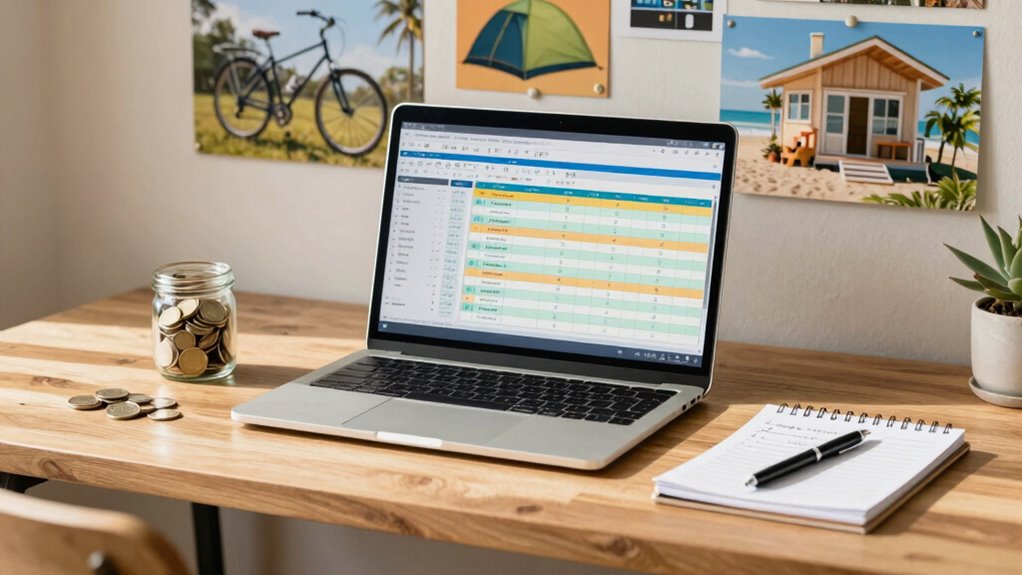

To create a backward budget for your summer big purchase, start with your goal amount and break it down into monthly savings targets. Automate transfers and cut unnecessary expenses to stay consistent. Focus on prioritizing spending and finding extra income if needed. Celebrate small milestones along the way to stay motivated. By working backwards from your goal, you’ll develop a clear, achievable plan. Keep going, and you’ll discover how to turn your savings goal into reality.

Get your next haul delivered free — and shop member deals
- Fast, free delivery on millions of items
- Access to Prime Big Deal Days deals on October 6–7
- Prime Video, Amazon Music and more included
Key Takeaways
- Start with your summer purchase target amount to set a clear savings goal.
- Break down the total cost into manageable monthly savings targets.
- Automate savings transfers immediately after each paycheck to ensure consistency.
- Reevaluate expenses to prioritize savings and cut unnecessary spending.
- Track progress regularly and celebrate milestones to stay motivated toward your summer goal.

Planning for a big purchase can feel overwhelming, but a backward budget makes it manageable. Instead of figuring out how much you need to save first, start with the amount you want to spend by summer. Knowing your target total gives you a clear goal, which helps you work backward to determine how much you need to save each month. This approach shifts your focus from vague intentions to concrete actions, making your saving strategies far more effective. It also clarifies your spending priorities, so you can cut unnecessary expenses and allocate more toward your big purchase.
Once you establish your total goal, break it down into manageable monthly savings targets. For example, if you plan to buy a new appliance or go on a vacation costing $3,600, and you have six months to save, you’ll need to set aside $600 each month. This clear breakdown keeps you focused and prevents last-minute scrambles for funds. Using this backward planning method makes your progress measurable and motivating, as you can track each month’s savings and see yourself edging closer to your goal.
To stick with your plan, consider specific saving strategies. Automate your transfers to a dedicated savings account right after each paycheck arrives. Automating helps eliminate temptation and ensures you consistently contribute toward your goal. Additionally, look for ways to boost your savings—maybe by temporarily reducing non-essential spending, like dining out or subscriptions, or by finding extra income through side gigs. These tactics can accelerate your progress, giving you more confidence that you’ll reach your target before summer. Incorporating effective financial planning techniques can further optimize your savings strategy and help you stay on track. Recognizing the importance of financial discipline can reinforce your commitment and improve your chances of success.
Prioritizing your spending is crucial. You might need to reevaluate your current expenses and decide what’s necessary versus what can be postponed or eliminated. By focusing on your spending priorities, you free up more money for your savings. Incorporating efficient finance guides can provide valuable insights into creating realistic budgets and managing your expenses effectively. Remember, small sacrifices now can lead to a big payoff later, especially when you’re working toward a specific goal. Keeping your goals in mind, such as creating a natural pool or planning a poolside event, can motivate you to stay disciplined. Keep your eyes on the prize, and don’t forget to celebrate small milestones along the way. Each time you hit a savings goal or stick to your plan for a month, acknowledge your progress. This positive reinforcement keeps you motivated and committed.
Ultimately, a backward budget simplifies the process of saving for big purchases by turning an intimidating task into a series of achievable steps. It helps you stay disciplined, prioritize your spending, and implement effective saving strategies. With a clear target and a structured plan, you’ll be surprised how quickly the funds add up, making your summer purchase a reality rather than a distant dream. Incorporating financial discipline techniques can further enhance your planning process and keep you on track.
dedicated savings account for big purchases
As an affiliate, we earn on qualifying purchases.
As an affiliate, we earn on qualifying purchases.
Frequently Asked Questions
How Do I Prioritize My Big Purchase Goals?
To prioritize your big purchase goals, start by setting a clear purchase timeline, so you know when each goal needs to be achieved. Use savings strategies like automating transfers and cutting unnecessary expenses to stay on track. Rank your goals based on urgency and importance, then allocate your savings accordingly. This approach helps you stay focused, guarantees timely purchases, and keeps your financial plan organized and achievable.
What if My Savings Fall Short of the Target?
If your savings fall short, don’t panic—around 40% of Americans lack enough emergency funds. Focus on boosting your savings gradually, and consider adjusting your investment strategies to maximize growth. Prioritize building an emergency fund first, so unexpected expenses don’t derail your plans. Reassess your timeline and cut non-essential expenses. Staying flexible and committed helps you reach your big purchase goals, even if it takes a little longer.
How Often Should I Review My Budget Plan?
You should review your budget plan at least monthly to maintain financial discipline and guarantee you’re on track. Regular expense tracking helps you identify any overspending or areas needing adjustment. By consistently checking in, you can make timely changes, stay motivated, and avoid surprises. This proactive approach keeps your savings goals realistic and achievable, especially when aiming for big purchases by summer.
Can I Adjust My Timeline if Needed?
Yes, you can adjust your timeline if needed. Maintaining a flexible timeline allows you to accommodate unexpected expenses or delays. If you find that your original schedule isn’t feasible, create alternative plans to stay on track. Regularly reviewing your progress helps you identify when adjustments are necessary, ensuring you stay motivated and focused on your goal. Flexibility keeps your savings plan realistic and achievable, even if circumstances change.
What Tools or Apps Are Best for Tracking Progress?
You should use apps like Mint or YNAB to track your progress effectively. These tools help you monitor your spending, savings, and investment strategies, boosting your financial literacy. By regularly updating your data, you stay motivated and on track. They also provide insights that help you adjust your budget if needed, ensuring you meet your summer purchase goals. Staying organized with these apps makes managing your finances easier and more efficient.
automatic transfer savings account
As an affiliate, we earn on qualifying purchases.
As an affiliate, we earn on qualifying purchases.
Conclusion
By planning your big purchases backward, you turn dreams into achievable goals. Set your target date, then work backward to save steadily. Remember, “A penny saved is a penny earned,” so stay disciplined and patient. With this approach, you’ll make your summer splurge a reality without stress. Stay committed, follow your timeline, and watch your savings grow. Before you know it, you’ll be enjoying that big purchase just in time for summer!
budget planner for summer vacation
As an affiliate, we earn on qualifying purchases.
As an affiliate, we earn on qualifying purchases.
As an affiliate, we earn on qualifying purchases.
Halloween Picks
halloween
As an affiliate, we earn on qualifying purchases.