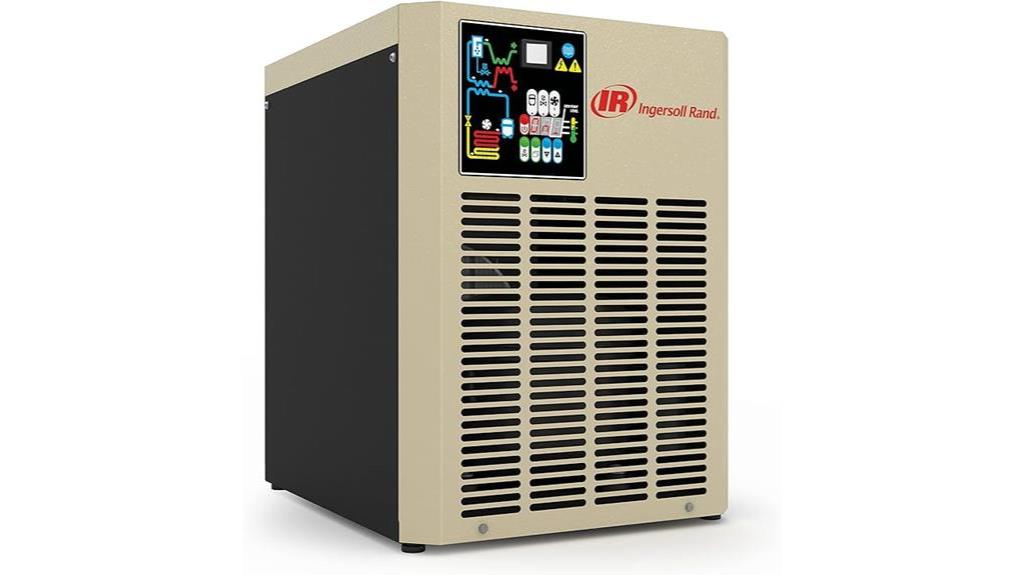
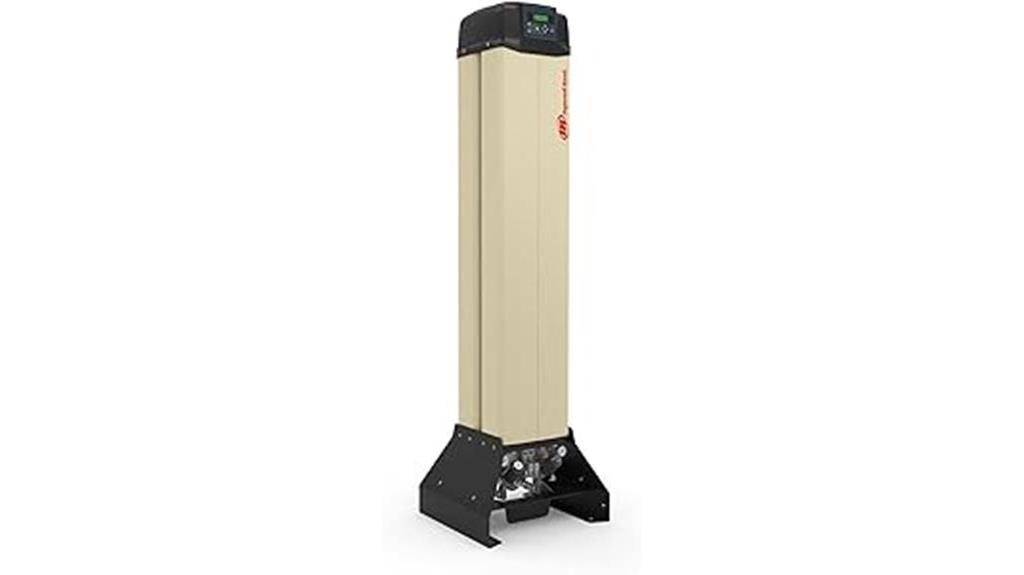
Choosing the right Ingersoll Rand D108in compressor depends on your specific needs, whether for demanding industrial tasks or portable DIY projects. Among the top picks, the Ingersoll Rand 2475N7.5 7.5 HP Two-Stage Air Compressor offers unmatched durability for continuous operation but is large and heavy. The Ingersoll Rand UP6-7.5-125 stands out for quiet operation and high airflow, ideal for industrial settings with noise restrictions. Meanwhile, the Ingersoll Rand P1.5IU-A9-H GarageMate provides portability and ease of use for mobile professionals and DIY enthusiasts. Each model balances performance, size, and cost differently, so understanding these tradeoffs is key to making an informed choice.

Get your next haul delivered free with Prime
- Fast, free delivery on millions of items
- Prime Video, Amazon Music and more included
- Member-only deals all year
Key Takeaways
- The Ingersoll Rand 2475N7.5 is best suited for heavy-duty, continuous industrial use despite its size and weight.
- The UP6-7.5-125 offers a quiet operation and high airflow, making it ideal for noise-sensitive environments.
- The GarageMate is a portable, quiet option perfect for mobile professionals and DIYers, but it may be less suited for heavy industrial tasks.
- All models have high-quality cast iron construction, but their size, portability, and power output vary significantly.
- Tradeoffs between power, size, and noise level are the main considerations when choosing the right compressor for your needs.
| Ingersoll Rand 2475N7.5 7.5 HP Two-Stage Air Compressor |  | Best for Heavy-Duty, Continuous Industrial Use | Horsepower: 7.5 HP | Maximum Pressure: 175 psig | Tank Capacity: 80 gallons | VIEW ON AMAZON | See Our Full Breakdown |
| Ingersoll Rand SS3L3 Single Stage Air Compressor, 3 HP, 60 Gal Vertical |  | Best for Demanding Professional Use in Compact Spaces | Horsepower: 3 HP | Tank Capacity: 60 gallons | Maximum Pressure: 135 psig | VIEW ON AMAZON | See Our Full Breakdown |
| Ingersoll Rand UP6-7.5-125 7.5 HP 80-Gallon Air Compressor |  | Best for Quiet, Heavy-Duty Industrial Use | Motor: ODP electric motor | Cooling: Air-cooled aftercooler | Operation Noise: 65 dB | VIEW ON AMAZON | See Our Full Breakdown |
| Ingersoll Rand P1.5IU-A9-H GarageMate Air Compressor |  | Best Portable Solution for DIY and Mobile Professionals | Horsepower: 7.5 HP | Lubricant: All Season Select synthetic lubricant | Service Interval: 2,000 hours | VIEW ON AMAZON | See Our Full Breakdown |
| ingersoll rand d108in review | Horsepower | Tank Capacity | Maximum Pressure | Lubricant |
|---|---|---|---|---|
| Ingersoll Rand 2475N7.5 7.5 HP | 7.5 HP | 80 gallons | 175 psig | All-Season Select synthetic lubricant |
| Ingersoll Rand SS3L3 Single St | 3 HP | 60 gallons | 135 psig | — |
| Ingersoll Rand UP6-7.5-125 7.5 | 7.5 HP | 80 gallons | — | — |
| Ingersoll Rand P1.5IU-A9-H Gar | 7.5 HP | — | — | All Season Select synthetic lubricant |
More Details on Our Top Picks
Ingersoll Rand 2475N7.5 7.5 HP Two-Stage Air Compressor
The Ingersoll Rand 2475N7.5 stands out for its durable cast iron construction and large 80-gallon tank, making it an excellent choice for demanding industrial environments. Its two-stage design provides high maximum pressure of 175 psig, suitable for continuous operation and heavy-duty tasks. Compared with smaller or single-stage models, this compressor offers extended lifespan and increased efficiency, though its size and weight can be a drawback for those with limited space. Maintenance is simplified thanks to individually cast cylinders and synthetic lubricant, which reduces downtime. However, its substantial size and higher initial cost mean it’s best suited for dedicated workshop or industrial use rather than mobile or small-scale applications.
Pros:- Durable cast iron construction for long pump life
- High maximum pressure of 175 psig for demanding tasks
- Easy maintenance with individually cast cylinders
- Extended synthetic lubricant service interval
Cons:- Heavy and large, requires substantial space
- Potentially higher upfront cost
Best for: Heavy industrial environments needing continuous, high-pressure output
Not ideal for: Small garages, mobile professionals, or those limited by space
- Horsepower:7.5 HP
- Maximum Pressure:175 psig
- Tank Capacity:80 gallons
- Lubricant:All-Season Select synthetic lubricant
- Warranty:Two years
Our verdict“This compressor is a powerhouse for industrial and continuous duty applications, but its size limits portability.”
Ingersoll Rand SS3L3 Single Stage Air Compressor, 3 HP, 60 Gal Vertical
The SS3L3 combines durability with high performance, featuring a cast iron build and a 60-gallon vertical tank. It delivers up to 135 psig, making it suitable for demanding tasks that require reliable, continuous airflow. Compared to larger, two-stage units, this model offers a good balance of power and space efficiency, though it still remains heavy and sizable. Its auto start/stop control simplifies operation, and safety features ensure reliable performance. The main tradeoff is its size—while more compact than industrial giants, it still requires significant space and may be costly upfront for smaller workshops. It excels in professional settings where noise and space are considerations but demands a solid power supply.
Pros:- Durable cast iron construction
- High pressure up to 135 psig
- Auto start/stop control simplifies operation
- Reliable safety features
Cons:- Heavy and large, needs significant space
- High initial cost
Best for: Professional workshops needing high pressure with space efficiency
Not ideal for: Small DIY setups or environments with space constraints
- Horsepower:3 HP
- Tank Capacity:60 gallons
- Maximum Pressure:135 psig
- CFM:11.3 at 90 psi
- Operation:Continuous duty
Our verdict“A solid choice for demanding professional environments needing reliable, high-pressure air with a relatively compact footprint.”
Ingersoll Rand UP6-7.5-125 7.5 HP 80-Gallon Air Compressor
The UP6-7.5-125 offers a notable advantage with its whisper-quiet operation at 65 dB, making it suitable for environments where noise is a concern. Its 80-gallon tank and 28 CFM airflow at 125 PSI make it a versatile choice for heavy-duty industrial applications. The air-cooled aftercooler helps reduce discharge temperatures, boosting efficiency and longevity. Compared with other models, its quiet operation allows installation closer to work areas, but it requires a 230V single-phase power supply, which could pose a challenge in some setups. Its weight and size are still considerable, and initial setup might be complex for those unfamiliar with industrial compressors. Still, it balances power, size, and noise for professional use in noise-sensitive locations.
Pros:- Whisper-quiet operation at 65 dB
- Large 80-gallon tank for heavy-duty tasks
- Efficient cooling reduces discharge temperatures
- Reliable airflow of 28 CFM at 125 PSI
Cons:- Requires 230V single-phase power
- Heavy and bulky for limited spaces
- Initial setup can be complex
Best for: Industrial environments needing high airflow with minimal noise
Not ideal for: Small garages or portable applications
- Motor:ODP electric motor
- Cooling:Air-cooled aftercooler
- Operation Noise:65 dB
- Voltage:230V single phase
- Horsepower:7.5 HP
- Tank Capacity:80 gallons
- Air Flow:28 CFM @ 125 PSI
- Max PSI:125 PSI
Our verdict“Ideal for industrial settings where noise reduction is critical without sacrificing airflow capacity.”
Ingersoll Rand P1.5IU-A9-H GarageMate Air Compressor
The GarageMate emphasizes portability and ease of use, with a heavy-duty handle and semi-pneumatic tires that facilitate transport. Operating quietly at 80 dBA, it is built with durable cast iron components and features synthetic lubricant for long service intervals. This model is perfect for mobile professionals, DIYers, or those needing a compressor that can be moved easily between sites. Compared to larger stationary models, the GarageMate sacrifices some airflow and pressure capacity—it’s better suited for light to moderate tasks rather than heavy industrial applications. Its compact size and portability come with tradeoffs in raw power and capacity, but its quiet operation is a significant advantage in noise-sensitive environments.
Pros:- Portable with ergonomic handle and semi-pneumatic tires
- Quiet operation at 80 dBA
- Built with durable components and synthetic lubricant
- Long service intervals
Cons:- May be heavy to move despite portability features
- Synthetic lubricant requires specific maintenance
- Price not specified
Best for: DIYers, mobile professionals, and small-scale use
Not ideal for: Heavy industrial or continuous high-demand applications
- Horsepower:7.5 HP
- Lubricant:All Season Select synthetic lubricant
- Service Interval:2,000 hours
- Noise Level:80 dBA
- Material:Cast iron cylinder and frame
Our verdict“A portable, quiet compressor ideal for mobile work and DIY projects, though less suited for heavy industrial tasks.”

How We Picked
Our selection process focused on models that are representative of the Ingersoll Rand D108in lineup, emphasizing performance, durability, and versatility. We prioritized units with proven reliability, balanced power output, and features that match different user scenarios. Each model was evaluated on factors like build quality, maintenance ease, noise level, and suitability for demanding applications versus portable use. This approach ensures that each pick fills a distinct niche, helping buyers identify which model aligns best with their specific requirements.
| ingersoll rand d108in review | Lubricant |
|---|---|
| Ingersoll Rand 2475N7.5 7.5 HP | All-Season Select synthetic lubricant |
| Ingersoll Rand SS3L3 Single St | — |
| Ingersoll Rand UP6-7.5-125 7.5 | — |
| Ingersoll Rand P1.5IU-A9-H Gar | All Season Select synthetic lubricant |
Factors to Consider When Choosing Ingersoll Rand D108in Review
Choosing the right Ingersoll Rand D108in model hinges on understanding your specific needs, workspace, and budget. The lineup offers options from industrial-grade heavy-duty units to portable, quiet models suitable for mobile professionals or DIYers. Key factors to consider include power output, tank size, noise level, and mobility. For industrial applications requiring continuous high pressure, larger two-stage models excel, but they are bulky and costly. Conversely, for versatility and ease of transport, smaller or portable units deliver performance with less capacity but greater convenience. Balancing these features against your working environment will help identify the best fit for your projects.
Power and Pressure Needs
If your tasks demand high pressure and continuous operation, look for models like the Ingersoll Rand 2475N7.5 with 7.5 HP and 175 psig. For lighter duties or intermittent use, smaller units such as the SS3L3 provide ample power without overwhelming your workspace or budget. Understanding your required airflow (CFM) and maximum PSI ensures you pick a unit that can handle your workload efficiently without overpaying for unnecessary capacity.
Size, Portability, and Space
Industrial units like the 2475N7.5 are sizable and best suited for dedicated spaces, whereas models like the GarageMate prioritize portability with ergonomic handles and semi-pneumatic tires. If your workspace is limited or you need to move your compressor frequently, portability features become critical. However, keep in mind that portable models might compromise on airflow and pressure capacity, making them less ideal for heavy-duty demands.
Noise and Environment
In noise-sensitive settings, the UP6-7.5-125 offers a significant advantage with its whisper-quiet operation at 65 dB, allowing installation near work areas without disturbance. Larger industrial models generally produce more noise, which might necessitate soundproofing or remote placement. Consider your environment when choosing—quiet operation can improve workflow and reduce fatigue.
Frequently Asked Questions
What should I consider when choosing between two-stage and single-stage compressors?
Two-stage compressors, like the Ingersoll Rand 2475N7.5, typically deliver higher pressure and are more durable for continuous industrial applications. Single-stage units, such as the SS3L3, are often more compact and less expensive, making them suitable for moderate or intermittent tasks. Your choice depends on whether you need sustained high pressure and durability versus portability and cost efficiency.
Is noise level a significant factor for choosing an Ingersoll Rand compressor?
Yes, especially if your workspace is noise-sensitive or if you plan to operate the compressor near occupied or quiet areas. The UP6-7.5-125 offers a notably low noise level at 65 dB, making it ideal for such environments. Larger units like the 2475N7.5 are louder and may require noise mitigation measures. Prioritizing noise level helps ensure comfort and compliance with workplace standards.
How important is portability in selecting an Ingersoll Rand compressor?
If you need to move your compressor frequently between job sites or within a workshop, portability features such as handles and pneumatic tires become essential. The GarageMate exemplifies this with its lightweight, portable design. However, portability often comes with tradeoffs in capacity and power, so consider your workload before choosing a portable model over a stationary one.
What maintenance considerations are there for these compressors?
Most Ingersoll Rand models, including the 2475N7.5 and GarageMate, use synthetic lubricants that extend service intervals, reducing downtime. Regular maintenance involves checking and changing oil, inspecting belts, and cleaning filters. Larger units may require more complex maintenance routines, so assessing your ability to service the compressor is important in your decision process.
Are these compressors suitable for DIY projects?
While some models like the GarageMate are designed with portability and ease of use in mind, larger industrial units like the 2475N7.5 are better suited for professional or heavy-duty applications. For DIY projects requiring occasional use, a smaller, quieter, and portable compressor will generally suffice, but for frequent or demanding tasks, investing in a more robust model is advisable.
Conclusion
For industrial users and those needing continuous, high-pressure output, the Ingersoll Rand 2475N7.5 makes the most sense despite its size and cost. Professionals seeking quiet operation and high airflow for demanding tasks should consider the UP6-7.5-125. DIYers or mobile professionals with limited space will benefit most from the GarageMate for its portability and quiet operation. Each of these options offers distinct advantages aligned with specific use cases, so matching your workload, workspace, and budget is key to selecting the best Ingersoll Rand D108in model for 2026.
As an affiliate, we earn on qualifying purchases.Halloween Picks
halloween