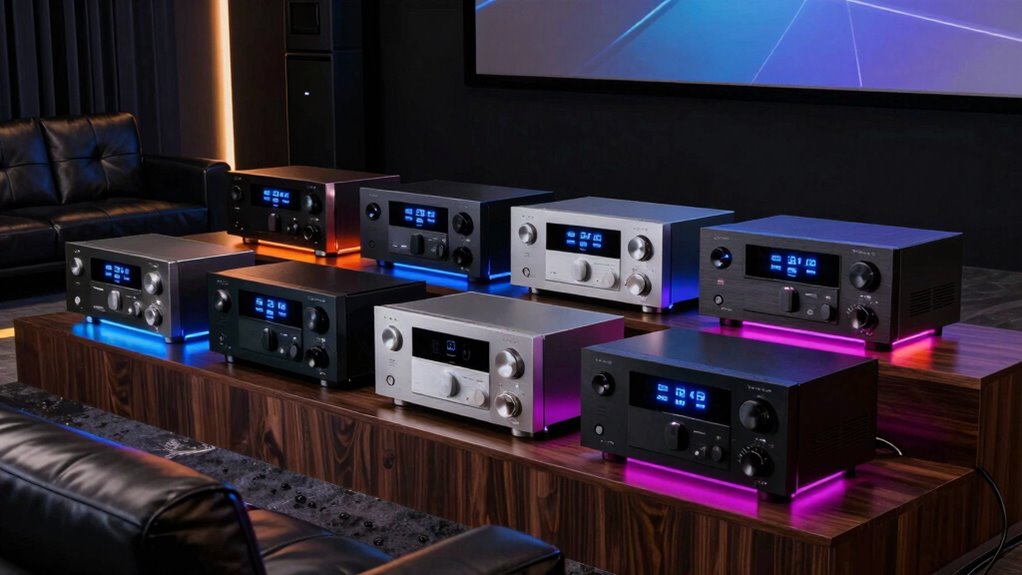

AV receivers are the heart of any home theater setup, connecting your audio and video sources for an immersive experience. The best options balance power, features, and ease of use, but tradeoffs often involve price, complexity, and future-proofing. The Denon AVR-X1700H stands out for its balanced performance and smart features, while the Pyle 7.1-Channel Bluetooth Receiver offers massive power at a budget. On the other hand, simpler models like the Sony STRDH190 prioritize ease of use over advanced features. Continue reading for a full breakdown of these choices and what makes each one suitable for different needs.
Complete the kit

Key Takeaways
- Power output varies significantly, with high-watt models suited for large rooms or high-volume listening.
- Built-in streaming and smart features are more common in mid-range and premium models, enhancing usability.
- Many budget options lack advanced room calibration or HDMI 2.1 support, limiting future compatibility.
- The number of channels and surround sound formats like Dolby Atmos influence immersive experience quality.
- Build quality and user interface consistency are key factors often overlooked but impact long-term satisfaction.


More Details on Our Top Picks
Pyle 7.1-Channel Hi-Fi Bluetooth Stereo Amplifier – 2000 Watt AV Home Theater Receiver with Radio, USB, RCA, HDMI, Microphone Inputs, Supports 4K UHD TV and 3D
The Pyle PT796BT.5 stands out for its impressive 2000W peak power, making it ideal for large home theaters where volume and impact matter. Compared with the Denon AVR-X1700H, it sacrifices some surround sound sophistication for raw power, but it offers a broad array of inputs—including HDMI, USB, RCA, and microphone connections—that support diverse devices. Its support for 4K UHD pass-through and 3D video ensures high-quality multimedia performance. However, its size and weight can be cumbersome, and casual users might find the complex feature set overwhelming. This receiver is best suited for those prioritizing maximum volume and multi-source connectivity over refined audio calibration or advanced surround formats.
Pros:- Impressive 2000W peak power ideal for large spaces
- Supports 4K UHD and 3D pass-through for quality video
- Built-in Bluetooth 5.0 for wireless streaming
- Multiple input options including HDMI, USB, and RCA
Cons:- Heavy and large, requiring ample space
- Complex features may be overwhelming for casual users
- Remote control requires batteries (not included)
Best for: Large home theater setups requiring high wattage and multiple input options.
Not ideal for: Casual listeners or small rooms where high power isn’t necessary, due to its bulky size.
- Power Output:2000 Watt MAX
- Channels:7.1
- Speaker Impedance:4-16 Ohm
- Bluetooth Version:5.0
- Wireless Range:30+ ft.
- Dimensions:16.9 x 13.8 x 5.5 inches
Our verdict“This receiver makes the most sense for users who need high power and flexible connectivity in a large home theater setting.”
Sony STRDH190 2-Ch Home Stereo Receiver with Bluetooth and Phono Inputs
The Sony STRDH190 offers a straightforward stereo experience with Bluetooth streaming and phono input, making it a great choice for vinyl enthusiasts or those seeking high-quality stereo sound. Compared to the Denon AVR-X1700H, it lacks surround sound capabilities but excels in delivering clear, high-resolution audio from two speakers. Its compact design fits well into smaller spaces and its multiple inputs, including a dedicated phono, support a variety of audio sources. However, its limitation to 2 channels and absence of Wi-Fi restrict its use in multi-room or surround sound setups. This model is best suited for listeners focused on stereo music or casual home audio without the complexity of a full surround system.
Pros:- Bluetooth wireless streaming for convenience
- Includes a dedicated phono input for vinyl playback
- Supports up to four speakers with zone switching
- High-resolution audio quality
Cons:- Limited to 2 channels, not suitable for surround sound
- Lacks Wi-Fi connectivity for streaming services
- Basic aesthetic design
Best for: Music lovers seeking high-resolution stereo sound in a compact, easy-to-use receiver.
Not ideal for: Home theater enthusiasts wanting surround sound or multi-room features, as it’s limited to 2 channels.
- Power Output:100 watts x 2 (8 ohms)
- Speaker Impedance:6–16 ohms
- Inputs:Phono, 4 stereo RCA, 3.5mm
- FM Radio Presets:30
- Dimensions:5 ¼ Inch tall
Our verdict“This receiver is best for music fans who want a simple, high-quality stereo system without the bells and whistles of surround sound.”
Pyle 5 Channel Rack Mount Bluetooth Amplifier Receiver – 200 Watt Home Theater Amp with Wireless Streaming
The Pyle PDA7BU delivers 200W of power across five channels, making it a good fit for smaller home theaters or multi-zone audio in a rack-mounted setup. Compared to the 7.1-channel Pyle PT796BT.5, it offers fewer channels but more focused power and easier installation thanks to rack mounting hardware. Its media support—including Bluetooth, USB, and SD card—enables flexible source options in a durable, metal chassis. The Bluetooth 2.1 limits range and connectivity compared to newer standards, but it remains a practical choice for basic wireless streaming. The main tradeoff is that it requires external speakers to complete the system, so it’s best for users who already have a speaker setup or want a straightforward, reliable amplifier for multiple sources.
Pros:- Compact, rack-mountable design
- Supports multiple media formats including Bluetooth, USB, and SD
- Durable metal construction
- Powerful 200W output for multi-channel setups
Cons:- Bluetooth 2.1 offers limited range and connectivity
- No built-in Wi-Fi or streaming apps
- Requires external speakers for full setup
Best for: Home theater users needing a rack-mountable, multi-source amplifier with flexible media options.
Not ideal for: Users seeking Wi-Fi or advanced wireless features, as it relies on Bluetooth 2.1 and lacks internet radio.
- Power Output:200 Watt @ 4 Ohm
- RMS Power:100 Watt x 2 @ 8 Ohm
- Media Support:USB, SD, MP3, WAV
- Bluetooth Version:2.1
- Dimensions:19.0 x 9.8 x 2.2 inches
- Material:Metal, Aluminum Alloy Panel
Our verdict“Ideal for users who need a sturdy, versatile amplifier with multiple media inputs for a rack-mount environment.”
Denon AVR-X1700H 7.2 Channel AV Receiver – 80W/Channel, Built-in HEOS
The Denon AVR-X1700H offers a balanced mix of surround sound, 8K HDMI support, and multi-room streaming with HEOS. Its 80W per channel strikes a balance between power and efficiency, especially suited for medium-sized rooms. Unlike the Yamaha RX300A, which focuses on simpler home theater experiences, this model supports advanced video formats like 8K/60Hz and Dolby Atmos for immersive audio. Its multi-room capabilities and voice control integrations add convenience, but the more complex feature set can be daunting for beginners. It’s a good pick for users who want a future-proof, high-performance AV receiver with high-quality video and audio, but those seeking straightforward setup might find it more than they need.
Pros:- Supports 8K/60Hz and 4K/120Hz pass-through for future-proofing
- Immersive Dolby Atmos and DTS:X support
- Multi-room streaming with HEOS
- Easy setup with on-screen guidance
Cons:- Higher price point for basic users
- Features may be complex for those unfamiliar with advanced home theater systems
- Power per channel might be insufficient for very large rooms
Best for: Home theater enthusiasts wanting 8K support and immersive multi-dimensional sound with multi-room features.
Not ideal for: Entry-level users or small rooms, where simpler, less expensive options might suffice.
- Channels:7.2
- Power per Channel:80W
- HDMI Inputs:3 8K inputs
- Supports:8K/60Hz, Dolby Atmos, DTS:X
- Connectivity:Wi-Fi, AirPlay 2, Bluetooth
- Pre-Outs:2
Our verdict“This receiver is best suited for users seeking advanced 8K video and immersive multi-channel audio with multi-room streaming capabilities.”
Yamaha RX300A 5.2-Channel Home Theater AV Receiver with Dolby Atmos, 4K120/8K HDMI, Bluetooth Multipoint
The Yamaha RX300A combines Dolby Atmos and DTS Virtual:X with automatic room correction, making it a compelling choice for those who want immersive sound without complicated setup. Its 70W per channel is adequate for most medium-sized rooms, and support for 4K and 8K video formats ensures future compatibility. Compared with the Denon AVR-X1700H, it offers a more straightforward experience with less complexity, appealing to users who prefer a plug-and-play approach. The Bluetooth Multipoint feature adds convenience for multi-device streaming. However, its limited number of HDMI inputs—just four—may restrict device connectivity, and it lacks built-in voice control. This model makes the most sense for those who prioritize ease of use and Atmos immersion over extensive connectivity options.
Pros:- Supports Dolby Atmos and DTS Virtual:X for immersive audio
- Automatic room correction for optimized sound
- Supports high-resolution 4K and 8K video formats
- Bluetooth Multipoint for flexible streaming
Cons:- Limited HDMI inputs for multiple devices
- No built-in voice control features
- Power output may be insufficient for very large rooms
Best for: Home theater enthusiasts seeking immersive Dolby Atmos sound with quick setup and seamless streaming.
Not ideal for: Users with extensive device collections needing many HDMI inputs or advanced smart features.
- Channels:5.2
- Power:70W per channel
- HDMI Inputs:4
- Supports:Dolby Atmos, DTS Virtual:X, 4K/8K
- Bluetooth:Multipoint
- Video Resolution:4K120/8K60
Our verdict“This receiver is well-suited for users who want immersive audio and straightforward setup in a medium-sized home theater.”
JBL MA310 5.2 Channel 4K AV Receiver (Black)
The JBL MA310 stands out for its focus on delivering a premium home theater experience, especially through its support for 4K video and high-quality audio. Compared to the Denon AVR-S570BT, it offers more HDMI inputs (five versus four), making it better suited for setups with multiple devices, though it falls short on network streaming since it lacks built-in Wi-Fi. Its native Dolby and DTS decoding provide immersive sound quality, yet its 60W output per channel might struggle in very large rooms or with demanding speakers. The inclusion of Bluetooth streaming enhances convenience, but the absence of Wi-Fi limits its integration with smart home systems. This model makes the most sense for those who prioritize multiple, straightforward HDMI connections and high-fidelity audio over advanced networking features or room-filling power.
Pros:- Supports 4K video for sharp, high-quality visuals
- Multiple HDMI inputs for versatile device connection
- Wireless Bluetooth streaming for music playback
- Native Dolby and DTS decoding for immersive sound
Cons:- No built-in Wi-Fi or network streaming capabilities
- Limited info on app control or smart home integration
- Power output may be insufficient for very large rooms
Best for: Home theater enthusiasts who want multiple HDMI inputs and high-quality surround sound without the need for complex network integration.
Not ideal for: Large, smart home setups that require built-in Wi-Fi or multi-room streaming features, as the MA310 lacks these capabilities.
- Connectivity Technology:Bluetooth
- Controller Type:Remote
- Built-In Bluetooth:Yes
- Number of HDMI Ports:5
- HDMI Output:1
- Channel Configuration:5.2
Our verdict“This receiver fits well for users seeking straightforward, high-quality video and audio with multiple HDMI inputs, but less so for those needing advanced network features.”
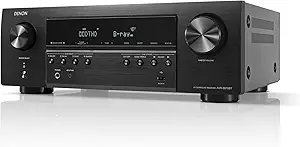
Denon AVR-S570BT 5.2 Channel AV Receiver – 8K Ultra HD Audio & Video
The Denon AVR-S570BT offers strong appeal for those wanting to future-proof their home theater, supporting 8K Ultra HD, HDR formats, and multiple HDMI 2.1 inputs. Unlike the JBL MA310, it adds HDMI 2.1 ports, which are essential for gamers or users with upcoming 8K devices. Its 70W per channel output provides slightly more power, ideal for medium-sized rooms, though it still doesn’t support larger spaces needing more wattage. The built-in Bluetooth allows wireless streaming, but the model lacks built-in Wi-Fi, making app control or multi-room streaming less straightforward unless paired with compatible smart devices. Its focus on 8K and HDR makes it a better pick for those planning to upgrade their visual setup, but if you want more channels or native surround formats, you might look elsewhere. This receiver makes the most sense for users prioritizing 8K compatibility and future-ready features over channel expansion.
Pros:- Supports 8K Ultra HD and HDR formats for high-end visuals
- Multiple HDMI 2.1 inputs for gaming and future upgrades
- Built-in Bluetooth for wireless music streaming
- Enhanced power output (70W x 5) suitable for medium rooms
Cons:- No integrated Wi-Fi for network streaming or smart home integration
- Limited to 5.2 channels, not ideal for larger systems
- Requires compatible TV remote or app for full control
Best for: Home theater fans who want to enjoy the latest 8K content and gaming with multiple HDMI 2.1 inputs, and who are comfortable with basic app control via remote.
Not ideal for: Large, multi-zone setups or users seeking built-in Wi-Fi for seamless multi-room audio, as the AVR-S570BT relies on external solutions for network streaming.
- Channels:5.2
- HDMI Inputs:4 HDMI 2.1
- HDMI Output:1
- Power:70W x 5
- Supports:8K Ultra HD, HDR, Dolby Vision, HDR10+, VRR, QFT
- Audio Formats:DTS HD Master, Dolby TrueHD
Our verdict“Ideal for users seeking a future-proof AV receiver with 8K support and HDMI 2.1, but less suited for large-scale or multi-room configurations.”

How We Picked
Products were selected based on a combination of performance, feature set, build quality, and value for money. We prioritized models that offer reliable audio and video processing, modern connectivity options, and ease of setup. The ranking considers how well each receiver balances these factors for various types of users, from casual viewers to audiophiles. We also evaluated compatibility with current home entertainment standards and future-proofing features like HDMI 2.1 and eARC support, to ensure longevity and relevance in evolving tech landscapes.Factors to Consider When Choosing Av Receivers
Choosing the right AV receiver involves understanding several core factors that impact performance, usability, and compatibility. Beyond raw power, features like HDMI support, room calibration, and streaming capabilities play significant roles. Knowing what tradeoffs to accept helps prevent overspending on features you don’t need or missing out on essential ones. This guide breaks down the key considerations to help you make an informed decision tailored to your specific setup and future plans.Power and Channels
Power output, measured in watts per channel, determines how loud and dynamic your system can get. However, more power isn’t always better if your room is small or you listen at moderate volumes. The number of channels influences the complexity of your setup, especially if you plan to add rear or overhead speakers. For larger rooms or immersive formats like Dolby Atmos, a 7.2 or higher channel receiver may be worth the investment, while smaller spaces can be handled well with 5.2 or fewer channels.
Connectivity and Compatibility
Modern AV receivers should support HDMI 2.1, eARC, and HDCP 2.2 or higher to handle the latest 4K and 8K content smoothly. Streaming features like Bluetooth, Wi-Fi, and built-in voice assistants can simplify daily use but may bump up the price. Ensure your receiver has enough HDMI inputs for your sources—gaming consoles, streaming devices, Blu-ray players—so you don’t need additional switches. Compatibility with smart home systems can also add convenience, especially for integrated setups.
Audio Formats and Surround Sound
If immersive sound matters, look for support for Dolby Atmos, DTS:X, and DTS Virtual:X. These formats create a 3D audio space, enhancing movies and games. Not all receivers support the latest formats, so check specifications if you want future-proofing. Also consider room calibration features like Audyssey, YPAO, or MCACC, which optimize sound based on your space’s acoustics, often making a noticeable difference in audio clarity and balance.
Ease of Use and Setup
Complex interfaces can turn setup into a chore, especially for beginners. Look for models with straightforward menus, automatic calibration, and clear labeling. Some receivers include mobile apps that simplify configuration and control, which can be a significant advantage. Consider how frequently you’ll need to adjust settings—if you prefer plug-and-play, prioritize models known for user-friendly interfaces.
Build Quality and Future-Proofing
Investing in a well-built receiver ensures longevity and fewer issues over time. Metal chassis, quality connectors, and solid cooling are signs of durability. Future-proofing involves supporting the latest HDMI standards, multiple zones, and smart features. While more advanced models often cost more, they reduce the need for upgrades as technology evolves, providing better value in the long run.
Frequently Asked Questions
Do I need a 7.2 channel receiver if I only plan to use 5.1 speakers?
Not necessarily. A 7.2 channel receiver offers additional outputs for more speakers or zones, but if your current setup is 5.1, a 5.2 or 5.1 model can suffice. However, choosing a 7.2 receiver provides room to expand in the future without replacing your equipment. It also often includes enhanced features like better processing power or more robust connectivity, which can be beneficial even at smaller speaker counts.
Is HDMI 2.1 really necessary for my home theater?
HDMI 2.1 offers higher bandwidth for 8K video, variable refresh rate, and enhanced audio return channel (eARC). If you’re investing in the latest gaming consoles, 8K TVs, or want the most future-proof setup, HDMI 2.1 becomes more important. For most current 4K content, HDMI 2.0 is still sufficient, but opting for HDMI 2.1 now can save money and hassle later if your equipment is compatible.
Should I prioritize power over features?
Power is an important factor but isn’t the only consideration. A receiver with ample power will produce louder, cleaner sound, especially in larger rooms. However, features like room calibration, streaming, and multiple HDMI inputs often provide more immediate practical benefits. For most users, a balanced approach—adequate power combined with essential features—yields the best overall experience.
Are budget AV receivers worth considering?
Budget options can be a good starting point, especially if your setup is simple or you’re just beginning with home theater. They typically lack advanced features like HDMI 2.1 or multi-zone support but can deliver decent sound quality for basic needs. Keep in mind that investing slightly more often provides better build quality, future compatibility, and a more seamless experience, making budget models suitable only for very casual or temporary setups.
How important is room calibration technology?
Room calibration helps optimize sound based on your space’s unique acoustics, often correcting for speaker placement and room anomalies. Most modern receivers include some calibration system, which can significantly improve audio clarity and balance. Skipping calibration may result in uneven sound or excessive bass, especially in challenging environments. Investing in a receiver with effective calibration features is worthwhile for achieving high-quality, balanced sound without professional tuning.
Conclusion
For casual viewers or those new to home theater, the Sony STRDH190 offers ease of use and affordability. The Denon AVR-X1700H is best suited for those seeking a balanced, feature-rich experience with future-proofing. If budget is a concern but power is a priority, the Pyle 7.1-Channel Bluetooth Receiver provides overwhelming output for large rooms. For audiophiles and home theater enthusiasts ready to invest in premium features, the Denon AVR-S570BT or Yamaha RX300A stand out. Your choice depends on your room size, feature needs, and budget—match your priorities to the right model for the best long-term satisfaction.