
Portable power stations range from pocket-sized units that recharge a phone a few times to refrigerator-sized batteries that can run a home office through an outage, and the biggest mistake buyers make is paying for capacity they will never use — or undersizing right before a storm. My top overall pick is the Anker SOLIX S2000, which balances a 2,010 Wh capacity with a manageable 1,500 W output and a reputation for build quality. For emergency home backup on a bigger budget, the Jackery Explorer 2000 v2 offers more wattage and expandability, while the Jackery Explorer 300 is the smarter choice for campers and commuters who mainly need to keep laptops and drones alive. The core tradeoff in this category is weight versus capacity, with battery chemistry (LiFePO4 versus older lithium-ion) determining how many years your investment lasts. Read on for the full breakdown of all 15 models.
Complete the kit


Key Takeaways
- Battery chemistry was the clearest dividing line in this lineup: LiFePO4 models like the BLUETTI AC180 and Anker SOLIX C1000 Gen 2 are rated for thousands of cycles, while smaller lithium-ion units such as the Jackery Explorer 300 typically last a fraction of that.
- The mid-size class (roughly 1,000–1,200 Wh) delivered the best value per usable watt-hour, with the BLUETTI AC180 and Anker SOLIX C1000 Gen 2 outperforming budget 1000W generics on inverter quality and warranty support.
- Ultra-compact units under 100 Wh — the DaranEner, MARBERO, and the bundled Explorer 300 — are airline-friendly but cannot run most kitchen appliances, so their value depends entirely on portability being your priority.
- Bundles with solar panels, like the Jackery HomePower 1000 Plus v2 kit, only make sense if you genuinely expect off-grid recharging; buying panels separately is often cheaper for occasional users.
- Surge ratings mattered more than headline wattage in real comparisons: a 600W BailiBatt with only 293Wh of capacity can start power tools but drains fast, while higher-capacity units with weaker inverters can stall on refrigerators.
| Anker SOLIX S2000 Portable Power Station, 2,010 Wh, 1,500 W |  | Best Overall | Battery capacity: 2,010 Wh | Battery type: LFP | Continuous output: 1,500 W (3,000 W peak) | VIEW LATEST PRICE | See Our Full Breakdown |
| DaranEner Portable Power Station, 100W, 89.6Wh LiFePO4 |  | Best Ultra-Compact Pick | Battery capacity: 89.6 Wh | Battery type: LiFePO4 | AC outlets: 2 × 100W | VIEW LATEST PRICE | See Our Full Breakdown |
| Jackery Explorer 300 Portable Power Station, 292Wh |  | Best Weekend Camping Pick | Capacity: 292 Wh | Continuous output: 300 W (600 W peak) | Battery chemistry: LiFePO4 | VIEW LATEST PRICE | See Our Full Breakdown |
| Jackery Explorer 2000 v2 Portable Power Station, 2042Wh, 2200W | 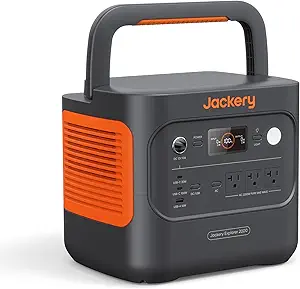 | Best Premium Home Backup | Battery capacity: 2,042 Wh | AC output: 2,200 W | Battery type: LiFePO4 | VIEW LATEST PRICE | See Our Full Breakdown |
| 1000W Portable Power Station with 1024Wh LiFePO4 Battery |  | Best Value Mid-Size Pick | Continuous output: 1,000 W | Battery capacity: 1,024 Wh | Battery chemistry: LiFePO4 | VIEW LATEST PRICE | See Our Full Breakdown |
| Jackery Explorer 1000 v2 Portable Power Station |  | Best for Fast Recharging | Battery capacity: 1,070Wh | Battery type: LFP | AC output: 1,500W (3,000W surge) | VIEW LATEST PRICE | See Our Full Breakdown |
| Jackery Explorer 300 Portable Power Station with 40W Solar Panel |  | Best Small Solar Kit | Battery capacity: 292Wh | Battery chemistry: LiFePO4 | Weight: 7.5 lbs | VIEW LATEST PRICE | See Our Full Breakdown |
| GRECELL 500W Portable Power Station, 519Wh |  | Best Port Variety on a Budget | Capacity: 519Wh (140,400mAh) | AC output: 2 pure sine wave 110V outlets, 500W total | USB outputs: 3 USB-A QC3.0 (18W each), 1 USB-C PD (60W) | VIEW LATEST PRICE | See Our Full Breakdown |
| BailiBatt 600W Portable Power Station, 293Wh |  | Best Output-to-Size Ratio | Battery capacity: 293Wh | AC output: 600W, 120V pure sine wave | Output ports: 7 total, including 100W and 24W USB-C | VIEW LATEST PRICE | See Our Full Breakdown |
| MARBERO Portable Power Station, 88Wh, 120W Surge, 24,000mAh |  | Best Ultra-Compact Backup | Capacity: 88Wh (24,000mAh) | Running power: 80W (120W surge) | Output ports: 8: AC, USB-A, USB-C PD, car DC | VIEW LATEST PRICE | See Our Full Breakdown |
| BLUETTI AC180 Portable Power Station, 1152Wh LiFePO4 Battery |  | Best for Home Backup | Battery capacity: 1152Wh | Battery type: LiFePO4 | AC output: 1800W | VIEW LATEST PRICE | See Our Full Breakdown |
| Jackery HomePower 1000 Plus v2 Portable Power Station Bundle with Battery Pack 2000 and 340W Solar Panel |  | Best Expandable Solar Kit | Battery capacity: 1024Wh (expandable to 11kWh) | Battery type: LiFePO4 | AC output: 1800W | VIEW LATEST PRICE | See Our Full Breakdown |
| BLUETTI Elite 30 V2 Portable Power Station, 288Wh, 600W |  | Best Compact Performer | Battery capacity: 288Wh | Battery type: LFP | Continuous output: 600W | VIEW LATEST PRICE | See Our Full Breakdown |
| Anker SOLIX C1000 Gen 2 Portable Power Station |  | Best Fast Recharging | Battery capacity: 1,024Wh | Output wattage: 2,000W | Peak output: 3,000W | VIEW LATEST PRICE | See Our Full Breakdown |
| ALLWEI 300W Portable Power Station with 256Wh LiFePO4 Battery |  | Best Budget Starter | Capacity: 256Wh | Battery chemistry: LiFePO4 | Continuous output: 300W | VIEW LATEST PRICE | See Our Full Breakdown |
| portable power station | Weight | Battery capacity |
|---|---|---|
| Anker SOLIX S2000 Portable Pow | 35.7 lbs | 2,010 Wh |
| DaranEner Portable Power Stati | 2.54 lbs | 89.6 Wh |
| Jackery Explorer 300 Portable | Approximately 7.5 lbs | — |
| Jackery Explorer 2000 v2 Porta | 39.5 lbs | 2,042 Wh |
| 1000W Portable Power Station w | 27.73 lbs | 1,024 Wh |
| Jackery Explorer 1000 v2 Porta | 23.8 lbs | 1,070Wh |
| Jackery Explorer 300 Portable | 7.5 lbs | 292Wh |
| GRECELL 500W Portable Power St | — | — |
| BailiBatt 600W Portable Power | 7.7 lbs | 293Wh |
| MARBERO Portable Power Station | 3.2 lbs | — |
| BLUETTI AC180 Portable Power S | — | 1152Wh |
| Jackery HomePower 1000 Plus v2 | 23.8 lbs | 1024Wh (expandable to 11kWh) |
| BLUETTI Elite 30 V2 Portable P | 9.4 lbs | 288Wh |
| Anker SOLIX C1000 Gen 2 Portab | 11.3 kg | 1,024Wh |
| ALLWEI 300W Portable Power Sta | 6.4 lbs | — |
More Details on Our Top Picks
Anker SOLIX S2000 Portable Power Station, 2,010 Wh, 1,500 W
This pick makes the most sense for buyers who want a do-everything home backup and camping station without stepping up to the heavier 2kWh class. The 2,010 Wh LFP battery is nearly identical in capacity to the Jackery Explorer 2000 v2, but the Anker counters with six recharging paths — including an alternator charger and generator input — and a UPS switchover under 10 ms, twice as fast as the Jackery’s 20 ms. That speed matters if you’re protecting sensitive electronics like a desktop PC during outages. Compared with the generic 1000W/1024Wh model elsewhere in this roundup, you’re getting roughly double the stored energy and far more recharging flexibility. The tradeoff is weight: at 35.7 lbs, this is a two-handed carry, and the missing 12 V DC port will annoy anyone running older car-style accessories.
Pros:- High 2,010 Wh capacity with long-lasting LFP chemistry rated up to 10,000 cycles
- UPS switchover under 10 ms protects sensitive electronics during outages
- Six recharging methods including solar, alternator, and generator input
- Eight outlets let you run a full mix of devices simultaneously
Cons:- No 12 V DC port, limiting compatibility with some car-style accessories
- At 35.7 lbs, it’s awkward to move solo compared with mid-size stations
Best for: Homeowners who want serious outage backup with fast UPS protection and multiple ways to recharge
Not ideal for: Campers who prioritize portability — at 35.7 lbs it’s far heavier than compact options like the Jackery Explorer 300
- Battery capacity:2,010 Wh
- Battery type:LFP
- Continuous output:1,500 W (3,000 W peak)
- Outlets:8
- Solar input:Up to 400 W
- UPS switchover:Under 10 ms
- Weight:35.7 lbs
- Claimed cycle life:Up to 10,000 cycles
Our verdict“Buy the SOLIX S2000 if you want one station that handles both home backup and extended off-grid trips — just don’t expect to carry it far.”
DaranEner Portable Power Station, 100W, 89.6Wh LiFePO4
Where the Anker SOLIX S2000 is built to run a refrigerator, this little unit is built for a backpack, glovebox, or carry-on. At 2.54 lbs and roughly the size of a large water bottle, it undercuts even the MARBERO 88Wh station in this lineup while adding a genuine LiFePO4 battery — a chemistry you rarely find at this size and price tier. You get two 100W AC outlets, 45W USB-C PD, and a DC barrel port, which is more output variety than the Jackery Explorer 300 offers despite the Jackery costing far more capacity per dollar. The catch is simple math: 89.6Wh runs a laptop a couple of times, not a cooler or a CPAP all night. And since solar panels and cables aren’t included, off-grid recharging means buying extras.
Pros:- Featherweight 2.54 lbs design with a genuinely pocketable footprint
- LiFePO4 chemistry with far better cycle life than typical small power banks
- Four recharge methods including solar and USB-C PD
- Silent operation plus a three-mode LED flashlight for emergencies
Cons:- Solar panel and compatible cables are not included
- Solar and USB recharging are noticeably slower than wall charging
Best for: Travelers, students, and commuters who need phone, laptop, and small-device power anywhere
Not ideal for: Anyone hoping to run appliances — 89.6Wh and 100W output won’t handle a fridge, heater, or power tools
- Battery capacity:89.6 Wh
- Battery type:LiFePO4
- AC outlets:2 × 100W
- USB-C output:45W PD
- Weight:2.54 lbs
- Recharge time:0–80% in 1.5 hours
- Cycle life:500+ rated; up to 3,500+ in practice
- Warranty:3 years
Our verdict“Grab this if your power needs stop at laptops, cameras, and phones — anything bigger calls for a different class of station.”
Jackery Explorer 300 Portable Power Station, 292Wh
This model occupies the sweet spot between the tiny DaranEner 89.6Wh unit and the full-size home backup stations. With 292Wh of capacity and a 600W surge rating, it handles the weekend-camping loadout — lights, a portable fan, camera batteries, a drone charger — that would flatten a small unit in hours. The integrated handle and 7.5 lb weight make it genuinely one-handed portable, unlike the 27.73 lb generic 1000W station. Its LiFePO4 chemistry, rated past 4,000 cycles, also outlasts older NMC-based competitors in the same size class, including earlier Jackery models. Tradeoffs exist: the 300W continuous ceiling rules out kettles, hair dryers, and most induction cooktops, and solar panels cost extra. The listed specs also contain conflicting weights and dimensions, so check the physical size fits your pack before committing.
Pros:- Genuinely portable at about 7.5 lbs with a built-in carrying handle
- LiFePO4 battery rated for over 4,000 cycles to 70% capacity
- Six ports including 100W USB-C PD and a 120W car outlet
- 600W surge output handles brief startup spikes from small appliances
Cons:- Solar panel sold separately, adding to the true cost of off-grid use
- Conflicting weight and dimension listings make size planning uncertain
Best for: Weekend campers and van lifers who need multi-device charging without the bulk of a 2kWh station
Not ideal for: Home backup buyers — 292Wh won’t meaningfully run a refrigerator through an outage
- Capacity:292 Wh
- Continuous output:300 W (600 W peak)
- Battery chemistry:LiFePO4
- Cycle life:4,000+ cycles to 70% capacity
- Ports:2 AC, 1 USB-C PD (100W), 2 USB-A, 1 car port
- Charge time:About 4 hours via AC
- Weight:Approximately 7.5 lbs
Our verdict“For car camping and short off-grid trips, this hits the capacity-to-weight balance better than anything else in this roundup.”
Jackery Explorer 2000 v2 Portable Power Station, 2042Wh, 2200W
If the Anker SOLIX S2000 is the balanced all-rounder, the Explorer 2000 v2 is the muscle pick. Its 2,200W continuous output comfortably clears the Anker’s 1,500W, which is the difference between running just your fridge and internet router versus adding a microwave or space heater during an outage. Recharging is where it pulls further ahead: 0–80% in 66 minutes over AC is exceptionally fast for this capacity class, and the sub-30dB silent mode lets it charge overnight in a bedroom without disturbance — something bulkier stations can’t claim. The tradeoff is 39.5 lbs of weight and a slightly slower 20 ms UPS switchover than the Anker. Like most Jackery gear, solar panels aren’t bundled, so an off-grid setup costs more than the sticker suggests.
Pros:- 2,200W output runs power-hungry appliances the Anker S2000 can’t
- Rapid AC recharge from 0–80% in about 66 minutes
- Silent charging mode under 30dB for overnight indoor use
- LiFePO4 battery with 20 ms UPS switching for backup duty
Cons:- Solar panels not included, raising the cost of a full off-grid setup
- Heaviest unit here at 39.5 lbs — plan to keep it stationary
Best for: Households that want to run multiple high-draw appliances simultaneously during outages
Not ideal for: Anyone who needs to move their station often — at 39.5 lbs it’s the heaviest pick in this batch
- Battery capacity:2,042 Wh
- AC output:2,200 W
- Battery type:LiFePO4
- AC charge time:0–80% in 66 minutes
- Solar charge time:As few as 6 hours with 400W panels
- Silent charging:Under 30dB, about 5 hours
- UPS switching:20 ms
- Weight:39.5 lbs
Our verdict“This is the pick when outage performance matters more than portability — buy it for the watts, not the carry.”
1000W Portable Power Station with 1024Wh LiFePO4 Battery
This unbranded-looking station slots neatly into the gap between the Jackery Explorer 300 and the big 2kWh units, delivering 1,024Wh of capacity — roughly 3.5 times the Jackery 300 — at a mid-tier size. For buyers whose main goal is running a fridge, a TV, and some lights through a short outage or a long weekend off-grid, that capacity covers the essentials without paying for the extra 1,000Wh and weight of the Anker SOLIX S2000. The LiFePO4 chemistry rated for 3,000+ cycles to 80% means years of regular use, and 300W of solar input keeps it viable for off-grid living. Compromises are real, though: the 100W USB-C port trails the Jackery’s 100W barely but offers fewer AC outlets at just two, and at 27.73 lbs it’s still a two-hand lift. Solar panels are optional extras here too.
Pros:- 1,024Wh capacity covers a day-plus of essential appliance runtime
- LiFePO4 battery rated for 3,000+ cycles to 80% capacity
- 300W solar input supports meaningful off-grid recharging
- Built-in battery management system with multiple protection features
Cons:- Only two AC outlets limits how many appliances you can connect
- Solar panel is optional and sold separately
- 27.73 lbs is heavy relative to its output class
Best for: Budget-conscious buyers who want full-day fridge backup and moderate appliance power without 2kWh pricing
Not ideal for: Power users running multiple high-watt appliances at once — 1,000W continuous output will trip on heavy combined loads
- Continuous output:1,000 W
- Battery capacity:1,024 Wh
- Battery chemistry:LiFePO4
- AC outlets:2 × 110V
- USB-C output:60W PD
- Max solar input:300 W
- Cycle life:3,000+ cycles to 80% capacity
- Weight:27.73 lbs
Our verdict“A sensible middle path for buyers who need real backup capacity on a budget and can live with two outlets and a 1,000W ceiling.”
Jackery Explorer 1000 v2 Portable Power Station
Among the mid-size units in this lineup, the Explorer 1000 v2 stands out for one reason: speed. With emergency charging enabled in the app, it refills from empty in about an hour — a claim few competitors can match, including the Anker SOLIX C1000, which sits in the same capacity class. The 1,070Wh LFP battery rated for over 4,000 cycles means this is a station you buy once and keep for years, unlike the BailiBatt, which is rated for roughly a third of that lifespan. The foldable handle and 23.8 lb weight keep it manageable for camping trips. The tradeoffs are real, though: that one-hour charging is tucked behind an app setting rather than enabled out of the box, and solar input only works with Jackery panels, so if you already own third-party panels, this closed ecosystem becomes an expensive limitation.
Pros:- 0% to 100% recharge in about one hour with app-enabled emergency charging
- 1,500W AC output with 3,000W surge peak runs most small appliances
- LFP battery rated for over 4,000 charge cycles
- App-controlled charging modes, including quiet overnight charging
Cons:- One-hour charging requires manually enabling emergency mode in the app
- Solar panel sold separately and only Jackery panels are compatible
Best for: Campers and outage-preppers who want a big battery that refills in about an hour between uses
Not ideal for: Buyers who already own non-Jackery solar panels, since the station won’t accept them
- Battery capacity:1,070Wh
- Battery type:LFP
- AC output:1,500W (3,000W surge)
- Weight:23.8 lbs
- Fast charging:0–100% in 1 hour with emergency mode; 1.7 hours default
- Ports:3 AC, 2 USB-C, 1 USB-A, 1 DC car port
- Battery lifespan:Over 70% capacity after 4,000 cycles
Our verdict“If rapid recharging and long battery lifespan matter more than solar flexibility, this is the mid-size station to buy.”
Jackery Explorer 300 Portable Power Station with 40W Solar Panel
Most budget power stations in this roundup — the GRECELL 500W and BailiBatt included — ship without any solar panel, which pushes the true cost of an off-grid setup higher. The Explorer 300 bundle solves that by including a 40W panel in the box, making it one of the few turnkey solar options here. At 7.5 lbs with an integrated handle, it pairs well with the 100W USB-C PD port for keeping laptops and cameras alive on trail days. The LiFePO4 chemistry, rated past 4,000 cycles, matches the Explorer 1000 v2 for longevity despite the smaller capacity. Just set expectations accordingly: 292Wh runs a drone charger or laptop many times over, but not a mini fridge, and that included panel needs about 7.5 hours of good sun to reach 80% — solar here is a trickle, not a firehose.
Pros:- Solar panel included, so no separate purchase needed for off-grid charging
- 7.5 lb weight with integrated handle for easy carrying
- 100W USB-C PD port charges modern laptops at full speed
- LiFePO4 battery rated for over 4,000 cycles
Cons:- Included 40W panel takes roughly 7.5 hours of sun to reach 80%
- Station and panel may arrive in separate shipments
Best for: Day hikers, van lifers, and laptop-toting travelers who want a complete solar kit out of one box
Not ideal for: Anyone hoping to run appliances — 300W output and 292Wh capacity cover devices, not kitchen gear
- Battery capacity:292Wh
- Battery chemistry:LiFePO4
- Weight:7.5 lbs
- Ports:2 AC, 1 USB-C (100W PD), 2 USB-A, 1 car port
- Included solar panel:40W
- Solar charging time:~7.5 hours to 80% with included panel
Our verdict“This pick makes the most sense for buyers who want a genuinely portable solar-ready setup without buying components separately.”
GRECELL 500W Portable Power Station, 519Wh
Where the Jackery Explorer 300 tops out around six devices, the GRECELL 500W can run up to ten at once across two pure sine wave outlets, three QC3.0 USB-A ports, a 60W USB-C, dual DC ports, a car socket, and even a 10W wireless charging pad on top — a feature no other unit in this batch offers. For a family charging table at a campsite, that spread is hard to beat at this capacity. The 519Wh battery sits comfortably between the Jackery 300 and the kilowatt-hour class like the BLUETTI AC180, so it handles weekend trips without the weight penalty. The catches: the 500W ceiling rules out most kettles, hair dryers, and induction cooktops, there’s no panel in the box, and leaving the AC inverter on will slowly drain the battery in storage — a habit you’ll need to break.
Pros:- Ten simultaneous outputs, including a wireless charging pad
- Pure sine wave inverter is safe for laptops and camera gear
- Three recharge paths: wall outlet, car charger, or 100W/200W solar panel
Cons:- Cannot power anything rated above 500W
- Solar panel not included
- AC output drains the battery if left switched on
Best for: Families or group campers who need many devices topped up at the same time without kilowatt-hour weight
Not ideal for: Appliance runners — the hard 500W limit excludes most heating and cooking devices
- Capacity:519Wh (140,400mAh)
- AC output:2 pure sine wave 110V outlets, 500W total
- USB outputs:3 USB-A QC3.0 (18W each), 1 USB-C PD (60W)
- Other outputs:2 DC ports, 1 car port, 10W wireless charger
- Recharge time:6–7 hrs wall outlet; 6–9 hrs with 100W solar
- Simultaneous devices:Up to 10
Our verdict“Choose this when the number of devices matters more than raw wattage — it’s the most connectable station in its price class here.”
BailiBatt 600W Portable Power Station, 293Wh
The BailiBatt plays an interesting angle: it packs a 600W pure sine wave inverter into a 7.7 lb body, doubling the AC muscle of the similarly sized Jackery Explorer 300 while matching its capacity class. That means small appliances the Jackery simply refuses — a blender, a small humidifier, a projector — will run here, at least briefly. The seven ports include a 100W USB-C alongside a second 24W USB-C, which is generous at this size. The honest tradeoff is runtime: 293Wh feeding a 600W load empties fast, so this is a burst-power tool, not an overnight workhorse. Also note the cycle life is rated at 1,500 cycles, well short of the LFP packs from Jackery, and the car charger cable isn’t in the box, which undercuts its road-trip appeal. Compared with the GRECELL, you trade capacity and port count for wattage and portability.
Pros:- 600W pure sine wave AC output in a 7.7 lb package
- Seven ports including a 100W USB-C
- LCD screen with voltage, current, and temperature monitoring
- Battery management system built in
Cons:- All connected devices must stay under the 600W combined limit
- Car charger cable not included
- Rated for roughly 1,500 cycles, well below LFP competitors
Best for: Road-trippers and tailgaters who need brief bursts of appliance power without hauling a heavy station
Not ideal for: Anyone needing multi-day runtime — 293Wh drains quickly under real loads
- Battery capacity:293Wh
- AC output:600W, 120V pure sine wave
- Output ports:7 total, including 100W and 24W USB-C
- Weight:7.7 lbs
- Cycle life:Over 1,500 charge cycles
- Included:Power station, AC adapter, user manual
Our verdict“Buy this for wattage-per-pound; skip it if runtime or battery lifespan is your priority.”
MARBERO Portable Power Station, 88Wh, 120W Surge, 24,000mAh
At 3.2 lbs and roughly the size of a hardcover book, the MARBERO is the grab-and-go option of this roundup — closer in spirit to the DaranEner 89.6Wh than to anything from Jackery or BLUETTI. Eight ports is a surprising count for something this small, and the built-in LED light with SOS mode makes it a sensible glovebox or emergency-kit resident rather than just a camping toy. Two-hour charging to 80% from the wall is respectable. The limitation is obvious and unavoidable: 80W of running output means phones, tablets, headlamps, and a small fan are on the menu; a laptop under heavy load or any appliance is not. One caution — the listing describes solar compatibility but doesn’t include a panel in the package contents, so verify which panel you’d need before assuming an off-grid plan. Compared with the Jackery Explorer 300 bundle, you give up capacity and panel in exchange for half the weight.
Pros:- 3.2 lb, book-sized body with an ergonomic handle
- Eight simultaneous output ports despite the tiny footprint
- Multi-level LED light with SOS mode for emergencies
- Charges 0–80% in about two hours from the wall
Cons:- 80W running output severely limits what it can power
- Solar panel not actually included in the package contents
Best for: Commuters, festival-goers, and emergency-kit builders who want backup power that fits in a bag
Not ideal for: Laptop-heavy users and appliance owners — 80W running output is strictly for small devices
- Capacity:88Wh (24,000mAh)
- Running power:80W (120W surge)
- Output ports:8: AC, USB-A, USB-C PD, car DC
- Weight:3.2 lbs
- Dimensions:6.5 x 4.6 x 3.1 inches
- Recharge time:0–80% in 2 hours with included adapter
- Charging options:AC, battery, or compatible 30W/60W solar panel
Our verdict“This model is better suited as a first-aid-kit-style backup than a primary power source — buy it for size, not muscle.”
BLUETTI AC180 Portable Power Station, 1152Wh LiFePO4 Battery
This model stands out for its 1152Wh capacity paired with a 20ms UPS switchover, which makes it a genuine bridge-the-gap solution when the grid cuts out — your router, modem, and a lamp keep running before you even notice the lights flickered. Compared with the Anker SOLIX C1000 Gen 2, the AC180 gives up some raw inverter wattage, but its 2700W boost mode lets it briefly drive power-hungry appliances like a kettle or microwave that would trip lesser units. The 500W solar input keeps off-grid recharging realistic for campers too. The tradeoff: documentation is muddled about full AC charge times, and solar recharge takes close to three hours — slower than the Anker’s solar pace. Still, for whole-room backup on a reasonable budget, this pick makes the most sense for staying powered through short outages.
Pros:- 1152Wh capacity covers a full evening of essential devices
- 20ms UPS switchover acts like true whole-home backup for small loads
- 2700W boost mode handles appliances above the 1800W rating
- LiFePO4 chemistry with a 5-year warranty for long-term reliability
Cons:- Conflicting stated AC charge times make real-world planning frustrating
- Solar recharging takes 2.8–3.3 hours, slower than competing 1000Wh-class units
Best for: Homeowners who want automatic UPS backup for essentials like routers, CPAP machines, and lights during short power cuts
Not ideal for: Off-grid campers who need fast solar turnaround — 2.8–3.3 hours of sunlight recharging is on the slow side for the class
- Battery capacity:1152Wh
- Battery type:LiFePO4
- AC output:1800W
- Peak output:2700W
- Number of outlets:8
- Maximum solar input:500W
- UPS switchover time:20 ms
- Warranty:5 years
Our verdict“Buy this if you want set-and-forget backup power for your home office or bedroom essentials without paying for a whole-house system.”
Jackery HomePower 1000 Plus v2 Portable Power Station Bundle with Battery Pack 2000 and 340W Solar Panel
Where the BLUETTI AC180 is a fixed-capacity unit, this Jackery bundle is built to grow: it starts at 1024Wh but scales to a massive 11kWh with add-on packs, at which point you’re genuinely covering multi-day outages rather than a single evening. The bundle already includes a 340W solar panel and a Battery Pack 2000, so you’re buying a working ecosystem rather than a bare station. Its sub-10ms UPS switchover edges out the BLUETTI’s 20ms, and the 140W USB-C port is a quiet win for laptop users. The tradeoffs are real: expansion packs cost extra on top of an already substantial bundle, and the fast 50-minute Emergency Charging Mode is locked behind the Jackery app, which will annoy buyers who prefer hardware buttons. Compared with the Jackery Explorer 2000 v2, you trade some built-in capacity for modularity.
Pros:- Expandable from 1024Wh up to 11kWh with additional battery packs
- Bundle includes a 340W solar panel and Battery Pack 2000 out of the box
- Sub-10ms UPS switchover with 3kV surge protection
- Rated for 6000 cycles while retaining at least 70% capacity
Cons:- Additional battery packs for full expansion are sold separately
- Emergency Charging Mode requires the Jackery app to activate
Best for: Buyers planning a staged investment in home backup who want to start small and expand toward whole-home coverage over time
Not ideal for: Casual campers who just need one weekend charge — the bundle weight and expansion focus are overkill for occasional trips
- Battery capacity:1024Wh (expandable to 11kWh)
- Battery type:LiFePO4
- AC output:1800W
- Surge peak:3600W
- USB-C output:140W
- UPS switchover:Under 10ms
- Included solar panel:340W
- Weight:23.8 lbs
- Warranty:5 years
Our verdict“This is the pick for buyers who want tomorrow’s whole-home backup system at today’s entry-level footprint.”
BLUETTI Elite 30 V2 Portable Power Station, 288Wh, 600W
At 9.4 pounds, the Elite 30 V2 punches well above its travel class. Most sub-300Wh units — the Jackery Explorer 300 or BailiBatt 600W among them — cap out around 300W of output, but this one sustains 600W continuous with a 1500W surge mode, meaning a small blender or a hair dryer burst isn’t off the table. The 0–80% recharge in 45 minutes also embarrasses the ALLWEI 300W’s 3.5–4 hour wall charge, so topping up between uses is nearly painless. A 10ms UPS mode is a rare feature at this size. The catch is unavoidable physics: 288Wh means a 600W device drains the battery in under 30 minutes, and no solar panel is included, so off-grid recharging means buying one separately. Compared with the Jackery bundle, it’s a day-tripper rather than a home-backup machine.
Pros:- 600W continuous output is roughly double what most 300Wh-class rivals offer
- 0–80% recharge in 45 minutes with adjustable 380W wall charging
- 10ms UPS mode is unusual and valuable at this size
- 9.4 lb weight makes it genuinely carry-friendly
Cons:- 288Wh capacity severely limits runtime at full output
- No solar panel included among the listed accessories
Best for: Car campers, van lifers, and city dwellers who want serious output in a bag-friendly package
Not ideal for: Anyone running high-wattage appliances for extended periods — 288Wh simply runs dry too fast
- Battery capacity:288Wh
- Battery type:LFP
- Continuous output:600W
- Surge output:1500W
- Charging time:0–80% in 45 minutes
- Wall charging:380W, adjustable to 200W
- UPS switch time:10ms
- Weight:9.4 lbs
Our verdict“Buy this if you need big-inverter muscle in a small box for short bursts rather than long runtimes.”
Anker SOLIX C1000 Gen 2 Portable Power Station
If the BLUETTI AC180 is the patient home-backup choice, the Anker C1000 Gen 2 is the sprinter. A 49-minute AC recharge at 1600W and a 1.8-hour solar recharge with 600W input mean you spend far less time planning around refueling — a genuine advantage during storm seasons when grid windows are short. Its 2000W continuous output also out-muscles both the AC180’s 1800W and the Jackery 1000 Plus v2’s 1800W, so it runs hungrier kitchen appliances without blinking. Longevity is a strong point too, with at least 80% capacity retained after 4000 cycles. The drawbacks: solar input tops out at 600W despite the 60V ceiling, and Anker’s own materials conflict on whether you get 9 or 10 usable outlets — worth verifying against the box before you count on that extra port.
Pros:- 49-minute full AC recharge is among the fastest in this capacity class
- 2000W continuous output with 3000W peak out-runs most 1000Wh rivals
- 1.8-hour solar recharge with 600W input
- Rated for 4000 cycles while retaining at least 80% capacity
Cons:- Solar input is capped at 600W
- Conflicting port counts (10 ports vs 9 outlets) in product documentation
Best for: Storm-prone households and frequent campers who need the fastest possible turnaround between uses
Not ideal for: Buyers wanting to build a large solar array — the 600W solar input ceiling limits expansion ambitions
- Battery capacity:1,024Wh
- Output wattage:2,000W
- Peak output:3,000W
- AC recharge time:49 minutes at 1,600W
- Solar recharge time:1.8 hours with 600W input
- UPS switchover:Under 10 ms
- Battery cycle life:At least 80% capacity after 4,000 cycles
- Weight:11.3 kg
Our verdict“This model makes the most sense for anyone whose top priority is getting back to full power quickly rather than maximum capacity.”
ALLWEI 300W Portable Power Station with 256Wh LiFePO4 Battery
This option stands out for value rather than performance, and that’s a fair trade for first-time buyers. At 6.4 pounds with a 256Wh LiFePO4 battery, it undercuts pricier rivals while still offering a chemistry rated for 3000 cycles — something the MARBERO 88Wh and other small lithium units can’t match. Six ports, including a 60W USB-C PD, cover laptops, a mini fridge, or a CPAP machine, and the built-in MPPT controller plus dual AC-and-solar charging means you can halve recharge time to 2–2.5 hours with a panel attached. Compared with the BLUETTI Elite 30 V2, you lose half the output and the fast wall charging — 3.5–4 hours on AC alone feels glacial next to the BLUETTI’s 45 minutes to 80%. And the solar panel is sold separately, so the true off-grid cost is higher than the sticker suggests.
Pros:- LiFePO4 battery rated for 3000 charge-discharge cycles at a budget price point
- Six output ports run several small devices at once
- Dual AC-plus-solar charging with built-in MPPT controller cuts recharge time
- 6.4 lb build with an LED light and SOS mode for emergencies
Cons:- Solar panel is sold separately
- 300W continuous output excludes higher-power appliances
- 3.5–4 hour AC recharge is slow for the capacity
Best for: First-time buyers and budget-conscious campers who need reliable phone, laptop, and CPAP power without a big spend
Not ideal for: Anyone with power-hungry appliances — 300W continuous rules out most kitchen devices and hot tools
- Capacity:256Wh
- Battery chemistry:LiFePO4
- Continuous output:300W
- Peak surge output:600W
- Output ports:6 (1 AC, 2 DC5521, 1 car port, 1 USB-A, 1 USB-C)
- USB-C output:60W PD
- Charging time:AC: 3.5–4 hours; AC + solar: 2–2.5 hours
- Weight:6.4 lbs
- Warranty:5 years
Our verdict“A sensible entry point into portable power for light-duty needs, as long as you accept slow recharges and modest output limits.”

How We Picked
I evaluated each model through the lens of what buyers actually do with portable power stations: recharging devices on trips, running essentials during outages, and powering gear at job sites or campsites. The main criteria were usable capacity versus weight, inverter output and surge handling, battery chemistry and rated cycle life, recharge speed and input options (including solar compatibility), and the practical details that decide daily satisfaction — outlet selection, display quality, portability, and manufacturer support.
Ranking also accounted for role fit rather than raw specs alone. A 2,042 Wh giant is not “better” than an 88 Wh companion unit if your use case is a weekend hike; it is simply built for a different buyer. Models rose in the rankings when their strengths matched a clear, common use case at a fair specification-to-capability ratio, and fell when a headline number (like wattage) masked a weakness elsewhere, such as small capacity, slow recharging, or a short-lived battery chemistry.
Factors to Consider When Choosing Portable Power Stations
Before comparing specific models, it helps to understand the four decisions that shape every portable power station purchase. Get these right and the choice among the 15 models above becomes much simpler.Size Your Capacity to Real Watts, Not Optimism
The most common mistake is buying capacity based on best-case math. A “1,000 Wh” station will not deliver 1,000 Wh to your devices — inverter losses typically eat 10–15%, and you should never drain lithium batteries to empty. Write down the wattage of the two or three devices you genuinely need to run and multiply by the hours you need them. A refrigerator drawing 150 W intermittently, a CPAP machine, and phone chargers can get a mid-size unit through a night easily; adding a microwave or space heater changes the equation entirely. Buyers who skip this step end up either hauling a 50-pound battery they never fully use or watching a small unit die mid-outage.
Battery Chemistry Determines How Long the Purchase Lasts
LiFePO4 (lithium iron phosphate) batteries are rated for 3,000+ charge cycles, versus roughly 500–800 for standard lithium-ion. If you plan to use the station weekly for camping or as a rotating backup, that difference means the LiFePO4 unit could last five to ten years while the lithium-ion unit fades within two or three. The tradeoff is weight: LiFePO4 cells are heavier per watt-hour, which is why the most portable options in this category still use older chemistry. For occasional emergency use, cycle life matters less because the battery ages on the shelf either way. My advice: choose LiFePO4 for anything over 500 Wh, and accept lithium-ion for pocket-size units you replace more often.
Inverter Wattage and Surge Rating Are Not the Same Thing
The headline wattage tells you what the station can run continuously; the surge rating tells you whether it can start motor-driven appliances at all. Refrigerators, power tools, and air compressors draw two to three times their running wattage for a split second at startup, and an undersized inverter will shut down even if the math on paper says it fits. A 1,000 W station with a 2,000 W surge handles a fridge; a 1,000 W station with a weak surge curve may not. Also check the continuous output of the AC outlets specifically — some budget models split total wattage across ports in ways that limit what a single outlet can deliver.
Recharge Speed Shapes Real-World Usefulness
A station that takes ten hours to refill via a wall outlet becomes a bottleneck during repeated outages or multi-day trips. Look for models with fast AC input (ideally under three hours to 80 percent), and check whether solar input is supported and at what maximum wattage — a 200 W solar ceiling means a cloudy day matters a lot for a 1,000 Wh battery. Some units also charge from a car’s 12V outlet or USB-C at meaningful speeds, which is a genuine convenience for van lifers and road-trippers. Before buying, decide how you will realistically recharge the unit, because a beautiful capacity number is worthless if refilling it is impractical.
Skip Specs You Will Never Use
App control, wireless charging pads, and LED ambient lighting add cost and weight that many buyers never touch. Likewise, solar bundles are only a bargain if you will genuinely deploy panels — casual users who recharge at home between trips usually pay less buying the bare unit. Expandable battery systems, like the Jackery HomePower ecosystem, are excellent for homeowners building incremental backup, but they lock you into one brand’s accessories, which is a real commitment. The happiest owners I have observed are the ones who matched features to two or three concrete use cases rather than chasing the longest spec sheet.
Frequently Asked Questions
What size portable power station do I need to run a refrigerator during an outage?
A typical modern refrigerator draws 100–200 W while running but needs 600–1,000 W briefly at compressor startup, so your inverter needs a surge rating above that threshold. On capacity, expect roughly 1–1.5 kWh consumed per 24 hours for an efficient fridge, meaning a 1,000–1,200 Wh unit covers about a day, while a 2,000 Wh unit covers two. In this lineup, the Anker SOLIX S2000 and Jackery Explorer 2000 v2 handle that duty comfortably, and mid-size LiFePO4 models like the BLUETTI AC180 can stretch through a shorter outage. Pair any of them with a solar panel if outages in your area last more than a day.
Is LiFePO4 really worth choosing over standard lithium-ion?
For anything you plan to keep beyond a couple of years, yes. LiFePO4 cells tolerate roughly 3,000–6,000 charge cycles before fading to 80 percent capacity, while conventional lithium-ion manages around 500–800. That means a LiFePO4 station used weekly could still hold most of its capacity a decade later, while a lithium-ion unit under the same schedule degrades in two to three years. The tradeoff is weight and sometimes price per watt-hour, which is why the smallest travel units in this comparison still use older chemistry — for a 90 Wh companion battery you replace occasionally, the chemistry matters far less than for a home backup unit.
Can I take a portable power station on a plane or is it only for car camping?
Airline rules generally cap lithium batteries at 100 Wh without airline approval, which makes the sub-100 Wh units in this lineup — the DaranEner 89.6 Wh, MARBERO 88 Wh, and similar — the only realistic carry-on candidates, and even then you should confirm with your carrier. Anything larger must travel by car, and units above roughly 40 Wh are typically prohibited in checked baggage entirely. For road trips and camping, size is limited only by what you are willing to lift: the 2,000 Wh models weigh over 40 pounds and benefit from wheels or two-person carries. Match the transport reality to your plans before buying.
Are solar panel bundles worth it, or should I buy the panels separately?
Bundles make sense when the included panel is well-matched to the station’s solar input ceiling and you expect to recharge off-grid more than once or twice a season. The Jackery HomePower 1000 Plus v2 bundle with its 340 W panel is a coherent system for off-grid cabins or extended outages, since a properly sized panel can refill the battery in a single sunny day. If you only camp a few weekends a year and recharge at home between trips, the panel mostly sits in a closet, and a bare station plus a cheap third-party panel rented or bought later is the better financial move. Check compatibility too: proprietary solar input ports can lock you into one brand’s panels at a premium.
Why do two stations with the same watt-hours behave so differently?
Capacity is only one of three numbers that determine real performance. The inverter’s continuous and surge output decides what you can actually run — a 293 Wh unit with a 600 W inverter can start a power tool that a bigger-capacity station with a 300 W inverter cannot. Battery chemistry affects how much of that capacity is usable and how quickly it degrades, and charge-controller quality affects how efficiently stored energy reaches your devices. Pure sine wave inverters also matter if you are running sensitive electronics like CPAP machines or audio gear, as modified sine wave output can cause buzzing or overheating. When comparing, read the inverter type and surge rating with the same attention you give the watt-hour figure.
Conclusion
For most buyers, the Anker SOLIX S2000 is the best overall choice: enough capacity for real outage duty, a proven inverter, and a balance of weight and capability that suits camping and home backup alike. The BLUETTI AC180 earns best value — its 1,152 Wh LiFePO4 battery and strong AC output deliver the most durable performance per dollar in the lineup. For premium buyers building a scalable home backup system, the Jackery HomePower 1000 Plus v2 bundle with its expandable battery and 340 W of solar is the most future-proof path.
Beginners and casual users should start small and cheap: the Jacker Explorer 300 or MARBERO 88 Wh teach you your actual usage patterns without a big commitment. Specific needs pick themselves — the BLUETTI Elite 30 V2 for a lightweight travel companion, the Anker SOLIX C1000 Gen 2 for fast-recharge home office backup, and the DaranEner for airline-friendly carry-on power. Whatever you choose, buy for the two or three devices you will genuinely run, not the spec sheet that looks best on paper.