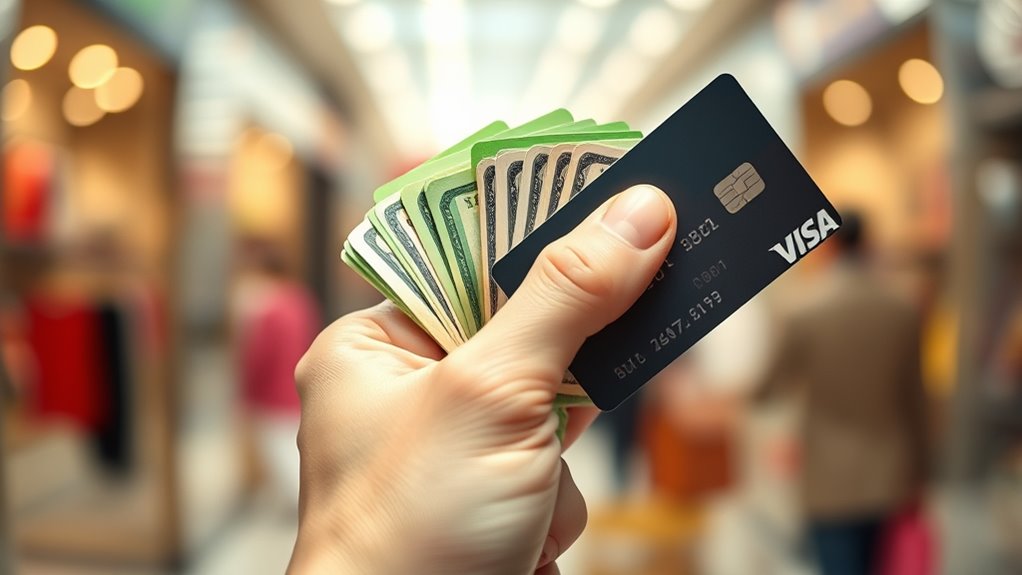

When you pay with a card, you often spend more because it feels less real than handing over cash, which makes you more aware of your money leaving your hands. With cash, you tend to be more mindful and budget-conscious since you see and feel your money. Using cards can encourage impulsive purchases as they lack that tangible connection. If you want to understand how these choices impact your spending habits, pay attention to what’s next.
Key Takeaways
- Cash spending feels more tangible, leading to greater awareness and often reducing impulsive purchases.
- Card transactions are more convenient, which can encourage overspending due to less immediate cost perception.
- Digital payments may facilitate emotional or impulsive spending, especially when linked to rewards or ease of use.
- Cash’s physical nature helps users stay within budgets by visibly tracking money leaving their hands.
- Card security features and digital convenience can lead to less mindful spending compared to the more conscious use of cash.
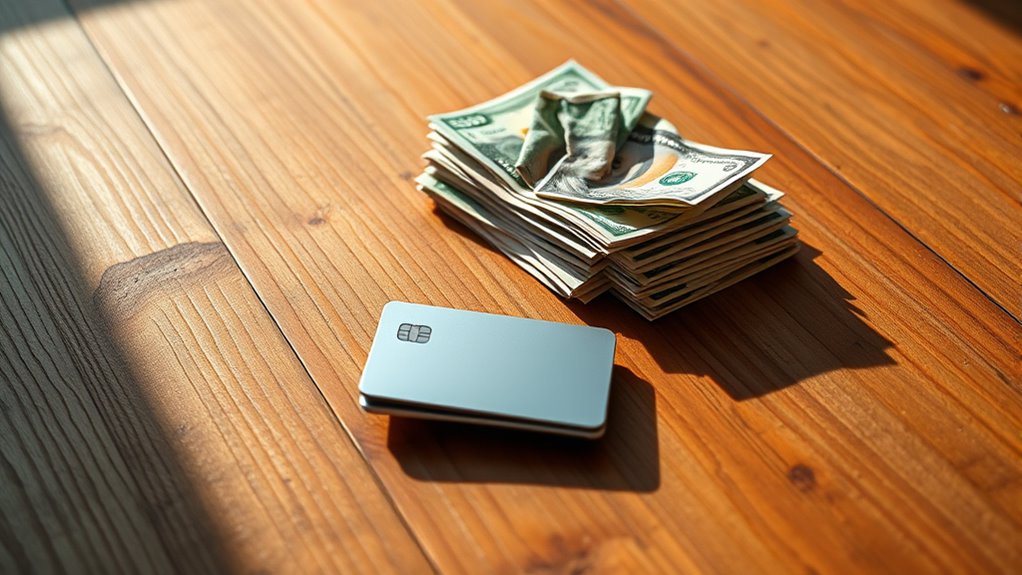
With the rise of digital payments, many people find themselves weighing the pros and cons of cash versus card. As you consider which method influences your spending habits more, it’s important to recognize how each impacts your behavior and mindset. When you pay with cash, it often feels more tangible, making you more aware of how much you’re parting with at any moment. This physical exchange can help curb emotional spending, where you might otherwise buy impulsively to boost your mood or reduce stress. In contrast, swiping a card can sometimes detach you from the actual cost of your purchases, leading to less mindful spending. The immediacy of card transactions can encourage you to make decisions based more on convenience than necessity, increasing the likelihood of overspending.
Security concerns are another vital factor when choosing between cash and card. Carrying cash means you lose it if stolen or misplaced, and there’s no way to trace or recover it easily. On the other hand, credit and debit cards come with protections, such as fraud alerts and dispute resolution, which can make you feel more secure. However, some worry about the potential for data breaches or hacking, which could compromise your financial information. This sense of vulnerability might lead you to restrict your card usage or avoid digital payments altogether, inadvertently limiting your spending options. Conversely, some feel safer with cash because it’s just physical money—no digital footprint to worry about. Yet, carrying large amounts of cash increases the risk of theft, and once it’s gone, it’s gone, unlike electronic transactions that can be reversed or flagged.
Additionally, understanding the benefits of essential oils can help you make more mindful choices—whether in spending or self-care routines—by encouraging awareness and balance. Ultimately, how you spend with cash or card hinges on your emotional relationship with money and your comfort level with security. Cash tends to make you more conscious of your spending because you see the money physically leaving your hands, which can help you stick to a budget. Cards, while offering convenience and security features, can sometimes encourage you to spend beyond your means because the transaction feels less immediate and less real. If emotional spending is a concern, using cash might help you manage impulses better, whereas if security worries dominate your decision-making, a well-protected card with fraud safeguards could be more reassuring. Recognizing these factors allows you to choose the method that aligns with your financial habits and comfort zone, helping you maintain control over your spending and peace of mind.
Frequently Asked Questions
How Does Payment Method Influence Impulse Buying Behavior?
Your payment method directly influences impulse buying behavior by affecting cash awareness and impulse triggers. When you pay with cash, you’re more conscious of how much you spend, often reducing impulsive purchases. In contrast, using a card can trigger impulse buying because it feels less tangible, making it easier to overlook spending limits. Recognizing these triggers helps you control your spending, whether you’re using cash or card.
Are There Psychological Differences in Spending With Cash Versus Cards?
Money’s a mirror reflecting your mind. When you use cash, you’re more aware of your spending, engaging in mental accounting that limits impulse buys. With cards, emotional spending often takes over, making purchases feel less real, like a dream. This psychological difference means you’re more likely to overspend with cards, while cash keeps your spending grounded, highlighting how payment method shapes your financial behavior.
Does the Type of Card (Credit/Debit) Affect Spending Habits?
Using a credit card often leads to increased spending compared to a debit card, due to cash psychology and spending psychology. With credit cards, you may feel less immediate impact on your budget, encouraging you to buy more. Debit cards tend to make you more conscious of your cash, reducing impulsive purchases. The type of card influences your spending habits because of the psychological effects linked to how you perceive and manage money.
How Do Transaction Fees Impact Consumer Spending?
Transaction fees can influence your spending by encouraging you to choose digital wallets that often have fewer fees or offer cashback incentives. When fees are low or rewards are appealing, you’re more likely to use these options, making transactions feel less costly and more rewarding. This can lead to increased spending, especially if you’re motivated by cashback offers or perks, making digital wallets a smart way to maximize benefits while spending.
Can Financial Literacy Alter the Spending Effects of Cash and Card?
Like a compass guiding your choices, financial literacy can shift how you handle cash and card spending. When you understand cash psychology, you’re less likely to overspend because you recognize the emotional triggers behind your habits. Financial education empowers you to make mindful decisions, reducing impulsive purchases. Ultimately, it helps you control your spending regardless of payment method, turning awareness into a tool for smarter financial habits.
Conclusion
So, whether you choose cash or card, remember: cash makes you feel the weight of your spending, while cards make transactions feel lighter. Cash makes you see your money disappear, while cards make expenses seem less real. Cash makes you pause, while cards make you swipe. Ultimately, it’s your awareness that controls your spending. Choose wisely, stay mindful, and keep your habits in check, no matter which method you prefer.