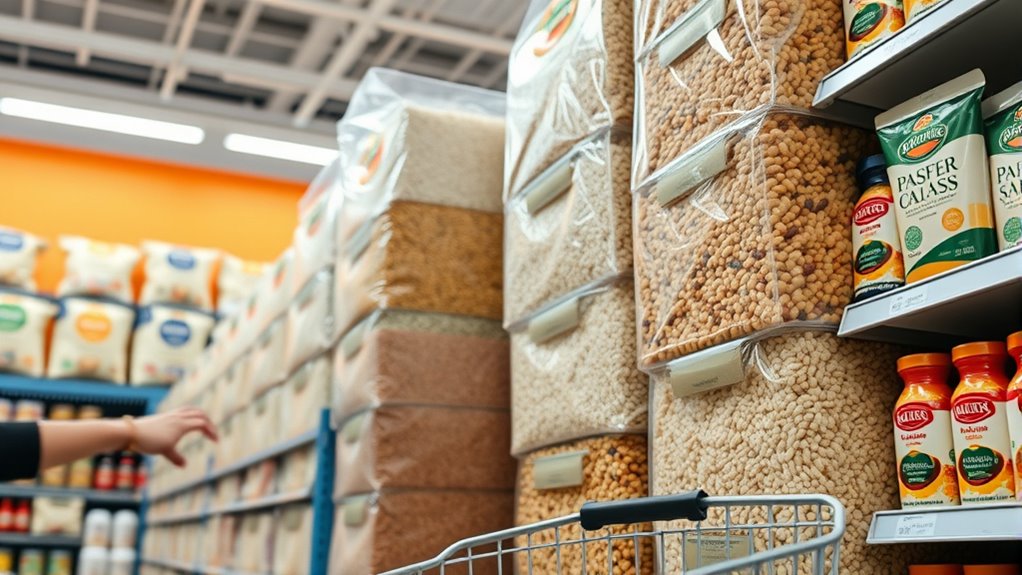

To maximize savings, focus on buying non-perishable items you use frequently and can store properly, like grains and canned goods, while comparing unit prices to avoid overspending. Avoid bulk purchases if storage is limited or items spoil quickly. Divide large packages into smaller portions to reduce waste. If you stay organized and aware of expiration dates, bulk shopping can boost household efficiency—keep exploring for more smart strategies to make the most of your supplies.
Key Takeaways
- Compare unit prices to verify that bulk purchases genuinely save money.
- Focus on non-perishable, long shelf-life items suited for bulk buying.
- Store bulk items properly in airtight containers and label to prevent spoilage.
- Avoid bulk buying for perishable goods with limited shelf life to minimize waste.
- Assess household size and consumption habits to determine if bulk shopping offers true savings.
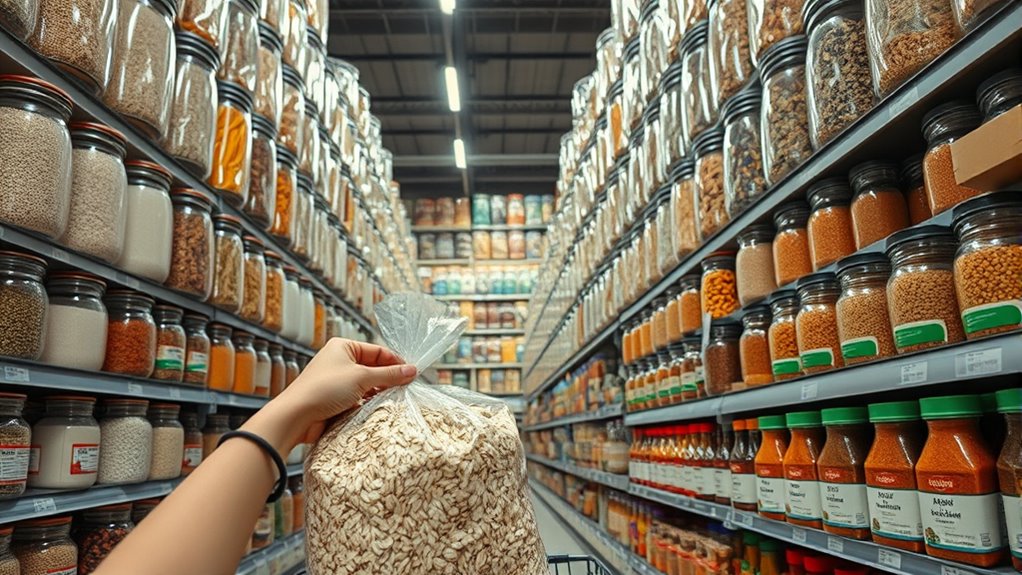
Buying in bulk can be a smart way to save money and reduce trips to the store, but it’s not always the best choice. One of the main reasons people opt for bulk purchases is the potential for bulk discounts, which can considerably lower the cost per unit. However, before diving into large quantities, you need to assess whether the savings outweigh the potential drawbacks. Not all products are suitable for bulk buying, especially those with a limited shelf life or that are prone to spoilage. For non-perishable items like rice, pasta, canned goods, or cleaning supplies, buying in bulk makes sense as long as you have enough storage space.
Storage tips are essential when buying in bulk because improper storage can lead to waste and diminished savings. Make sure you have a clean, dry, and organized space to keep your bulk items. Use airtight containers for foods to prevent pests and moisture from ruining your supply. Label everything clearly so you can easily track expiration dates and usage. For items that come in large packages, consider dividing them into smaller portions. This not only helps with organization but also minimizes the risk of waste if you only need a small amount at a time. If you’re short on space, prioritize bulk purchases for items you use frequently, and consider a rotating stock system—using older items first to prevent spoilage or expiry. Additionally, understanding the contrast ratio of your appliances can help you optimize your storage conditions and preserve the quality of perishable goods.
Proper storage ensures bulk savings by preventing waste and spoilage. Use airtight containers, label items, and rotate stock.
While bulk discounts seem appealing, it’s wise to compare prices carefully. Sometimes, buying smaller quantities more frequently can be cheaper than purchasing in large bulk, especially if the bulk item has a limited shelf life or if you end up wasting some of it. Also, be cautious about impulse buys; just because something is discounted in bulk doesn’t mean you’ll actually save money if it ends up unused or expired.
Another key consideration is your household’s consumption rate. If you’re living alone or in a small household, buying in bulk might lead to excess that’s hard to use before it spoils. Conversely, larger families or those with specific dietary needs might benefit more from bulk shopping. Always weigh the potential savings against the storage challenges and your actual usage habits. By applying smart storage tips and shopping strategically for bulk discounts, you can maximize your savings without creating clutter or waste. Remember, bulk buying is a tool—use it wisely to enhance your budget and household efficiency.
airtight food storage containers
As an affiliate, we earn on qualifying purchases.
As an affiliate, we earn on qualifying purchases.
Frequently Asked Questions
How Can I Determine if Bulk Buying Is Cost-Effective for My Household?
To determine if bulk buying is cost-effective, start with a cost analysis comparing the price per unit of bulk items versus smaller packages. Consider your shopping habits—if you regularly use certain products, buying in bulk can save money. However, if you don’t use everything before it expires or if storage is limited, it might not be worth it. Be honest about your consumption and storage to make smart choices.
What Are the Best Storage Solutions for Bulk Items?
You should use airtight containers to keep your bulk items fresh and protected from moisture and pests. Opt for sturdy shelving units to organize your storage space efficiently, making it easy to access what you need. Clear containers also help you quickly identify contents, reducing waste. By combining airtight containers with strong shelving, you maximize space, maintain quality, and keep your bulk supplies neatly arranged and easy to manage.
How Do I Avoid Waste When Buying in Bulk?
Sure, go ahead and buy that gigantic bag of rice, but don’t forget to practice some serious portion control or you’ll turn into a rice hoarder. To avoid waste, keep an eye on expiration dates and split your bulk items into smaller, manageable portions. When you’re aware of expiration dates and control your portions, you’ll save money and keep your pantry from becoming a composting experiment.
Are There Specific Products Better Suited for Bulk Purchasing?
Certain products are better suited for bulk purchasing, especially non-food items like paper towels, cleaning supplies, and toiletries, since they have a long shelf life. However, avoid buying perishable items in bulk unless you’re sure you’ll use them before they spoil. For example, fresh produce or dairy can lead to waste if you purchase too much at once. Always consider your usage habits before buying in bulk.
How Can I Compare Prices Effectively Across Different Stores?
Did you know that using unit pricing can save you up to 25%? To compare prices effectively, focus on unit pricing—check the cost per ounce, pound, or item—across stores. Use apps or labels to easily see which store offers the best deal. Always compare the unit price rather than just the total price, so you make smarter buying decisions and get the most value for your money.
bulk food storage bins
As an affiliate, we earn on qualifying purchases.
As an affiliate, we earn on qualifying purchases.
Conclusion
Buying in bulk can save you money, but it’s not always the best choice—especially if you risk waste or storage issues. Did you know that nearly 56% of Americans admit to wasting food, often because they buy more than they need? By understanding when to buy in bulk and when to skip it, you can make smarter decisions that save you money and reduce waste. Stay mindful, plan ahead, and buy smart to get the most value from your shopping.
labeling supplies for pantry
As an affiliate, we earn on qualifying purchases.
As an affiliate, we earn on qualifying purchases.
dividing large food packages
As an affiliate, we earn on qualifying purchases.
As an affiliate, we earn on qualifying purchases.