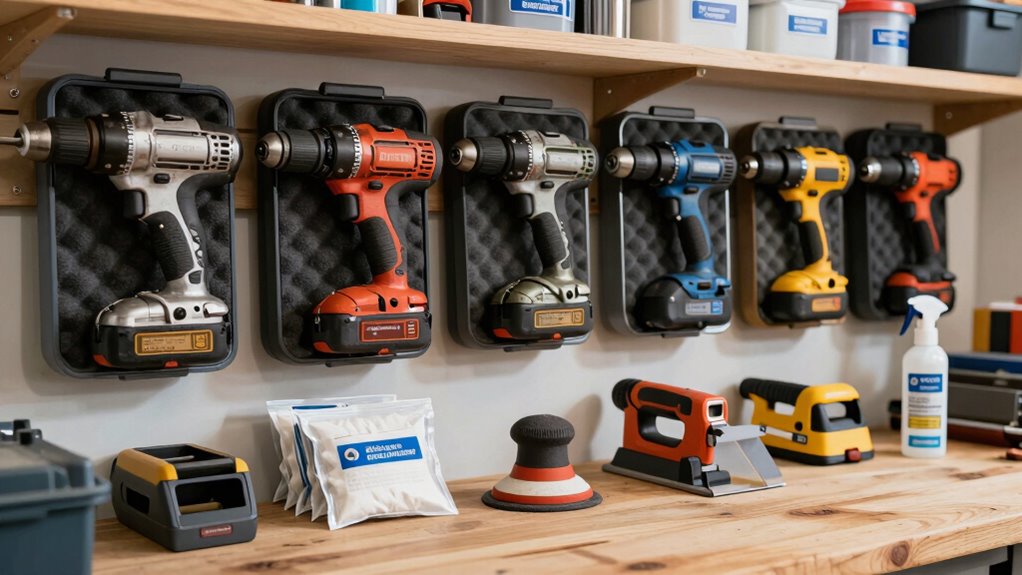

To prevent rust and failures, keep your power tools in a dry, well-ventilated area and clean them after use. Remove batteries if you’re storing tools long-term and keep them charged at around 50-70%. Use protective cases, desiccants, and anti-corrosion mats to guard against moisture. Regularly inspect tools for rust or damage and address issues immediately. Following these steps helps guarantee your tools stay in top condition—discover more tips to prolong their life.

Get your next haul delivered free with Prime
- Fast, free delivery on millions of items
- Prime Video, Amazon Music and more included
- Member-only deals all year
Key Takeaways
- Store tools in a dry, well-ventilated area and avoid humid environments to prevent rust.
- Remove batteries before long-term storage and keep them in a cool, dry place.
- Regularly inspect and clean tools, applying rust inhibitors to protect metal parts.
- Use silica gel packs or desiccants in storage containers to absorb moisture.
- Organize tools properly to prevent physical damage and ensure easy access for maintenance.
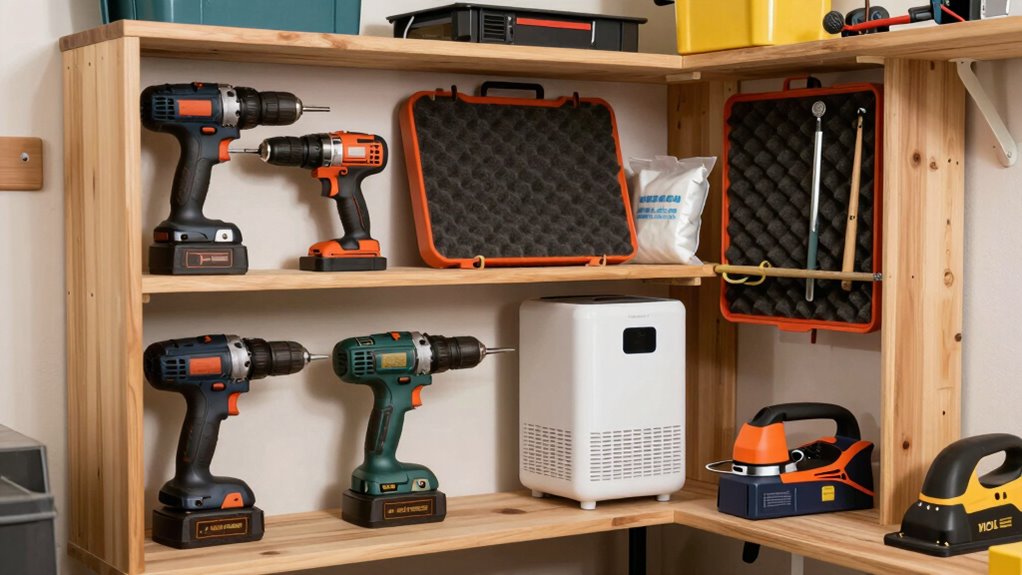
Storing power tools properly is essential for ensuring their longevity and safe operation. When you take the time to store your tools correctly, you prevent damage that can lead to costly repairs or replacements. One of the most important aspects of storage is paying attention to battery maintenance. If your power tools are battery-operated, you should always remove the batteries before storing them for an extended period. This prevents the batteries from losing their charge or becoming damaged due to residual power. For lithium-ion batteries, aim to keep them charged around 50-70%, as storing them fully charged or completely drained can reduce their lifespan. Regularly check the batteries for any signs of corrosion or swelling, and clean the contacts gently with a dry cloth to ensure good connection when you use the tool again. Proper storage also involves keeping batteries in a cool, dry place away from direct sunlight and extreme temperatures, which can accelerate degradation. Additionally, using a battery storage case can help protect them from physical damage and environmental factors. Ensuring that your batteries are stored in appropriate conditions can significantly extend their usable life and maintain their performance. Storing batteries in a secure environment can also prevent accidental damage or theft. Maintaining proper battery health by following these guidelines can further enhance the lifespan and safety of your tools. Moisture prevention is another crucial element in storing power tools. Moisture is a primary cause of rust and corrosion, especially if your tools are made of metal components. To keep moisture at bay, store your tools in a dry, well-ventilated area. Avoid places like basements or garages prone to humidity or temperature fluctuations. Use silica gel packs or other desiccants within your storage containers to absorb excess moisture. Additionally, wiping down your tools after each use helps remove dirt, debris, and moisture that could lead to rust over time. When storing tools in drawers or cabinets, consider lining them with anti-corrosion mats or protective coatings, especially if you live in a humid climate. Regularly inspect your stored tools for any signs of rust or corrosion, and address issues immediately by cleaning and applying rust inhibitors if necessary. Keeping your tools dry and protected not only extends their lifespan but also ensures they operate smoothly whenever you need them. In essence, proper storage involves a combination of good practices like removing batteries when not in use, maintaining battery health, and actively preventing moisture from damaging the tools. When you follow these steps, you’re safeguarding your investment and ensuring your power tools stay in top condition. Taking a few extra minutes to organize and care for your tools pays off in the long run, reducing downtime and costly repairs. Whether you’re a professional or a DIY enthusiast, consistent, mindful storage helps your power tools perform reliably for years to come.
As an affiliate, we earn on qualifying purchases.
Frequently Asked Questions
Can Storing Tools in a Humid Environment Cause Rust?
Yes, storing tools in a humid environment can cause rust. To prevent this, you should focus on humidity control by using dehumidifiers or silica gel packs in your storage area. Applying protective coatings like oil or rust inhibitors also helps protect your tools. Keep tools dry, clean, and well-maintained, and guarantee proper ventilation. This way, you’ll reduce moisture buildup and keep your power tools in good shape longer.
How Often Should I Inspect Stored Power Tools?
You should inspect your stored power tools at least once every three to six months. Regular tool maintenance is essential to catch rust, corrosion, or any damage early. Keep your storage organized so you can easily check for issues and guarantee each tool is properly cleaned and lubricated. This routine helps prevent rust and mechanical failures, extending your tools’ lifespan and maintaining their performance.
Are Vacuum-Sealed Storage Containers Effective for Power Tools?
Think of vacuum-sealed storage containers as sturdy shields for your tools. They’re effective because air-tight containers and moisture barriers keep out humidity, just like a raincoat keeps you dry. I once stored my drill in a vacuum-sealed bag after a rainy day, and it stayed rust-free for months. These containers prevent moisture buildup, ensuring your power tools stay in top shape and ready when you need them most.
Should I Remove Batteries Before Storing Power Tools Long-Term?
Yes, you should remove batteries before long-term storage to prevent corrosion and maintain battery health. Proper battery maintenance involves storing batteries separately in a cool, dry place, ideally at around 50% charge. Additionally, practicing tool rotation guarantees your power tools stay in good condition, reducing the risk of battery leakages or failures. Removing batteries is a simple step that prolongs the lifespan of both your batteries and tools.
What’s the Best Way to Prevent Corrosion on Metal Parts?
To prevent corrosion on metal parts, you should apply protective coatings like oil or rust inhibitors before storage. Keep moisture away by placing desiccant packs in your toolbox or storage container, which absorb humidity and reduce rust risk. Regularly inspect your tools, cleaning and reapplying coatings as needed. These steps help preserve your power tools, ensuring they stay in good condition and ready for use whenever you need them.
desiccant packs for tool storage
As an affiliate, we earn on qualifying purchases.
As an affiliate, we earn on qualifying purchases.
Conclusion
Think of your power tools as loyal soldiers, ready to serve your next project. By storing them properly, you’re providing them with a shield against rust and wear, ensuring they stand ready for battle when you need them most. When you protect their integrity, you’re not just safeguarding metal and motor—you’re preserving the spirit of craftsmanship. Keep them dry, clean, and organized, and they’ll be your trusted allies, always prepared to help you conquer any task.
As an affiliate, we earn on qualifying purchases.
battery storage case for lithium-ion batteries
As an affiliate, we earn on qualifying purchases.
As an affiliate, we earn on qualifying purchases.
Halloween Picks
halloween
As an affiliate, we earn on qualifying purchases.