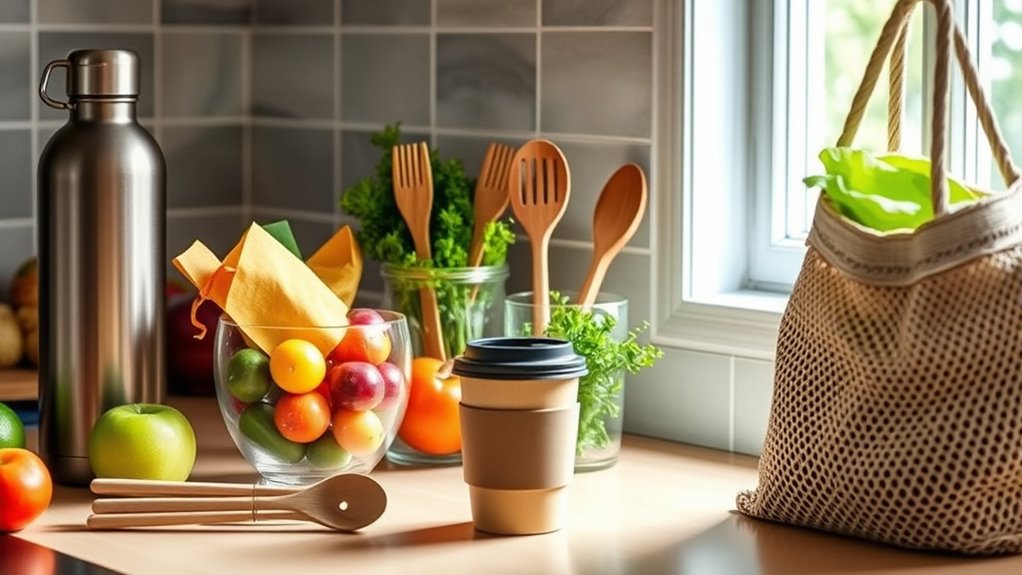

Switching to reusable products can considerably cut your everyday costs and reduce waste. Opt for durable water bottles, coffee cups, and food containers instead of buying disposables. Use reusable produce bags, beeswax wraps, and cloth napkins to eliminate packaging expenses. Eco-friendly packaging choices and long-lasting household items also save money over time. By making these simple switches, you support sustainability and keep more money in your pocket—discover more ways to make smart, cost-effective choices.
Key Takeaways
- Investing in reusable items like bottles and containers reduces ongoing purchase costs and reliance on disposable products.
- Eco-friendly packaging options minimize expenses associated with single-use wrappers and containers over time.
- Using durable reusable products for daily routines decreases frequent replacements and waste management costs.
- Reusable household items such as beeswax wraps and cloth napkins cut down on disposable packaging expenses.
- Transitioning to reusable products supports sustainability, leading to long-term savings and a zero waste lifestyle.
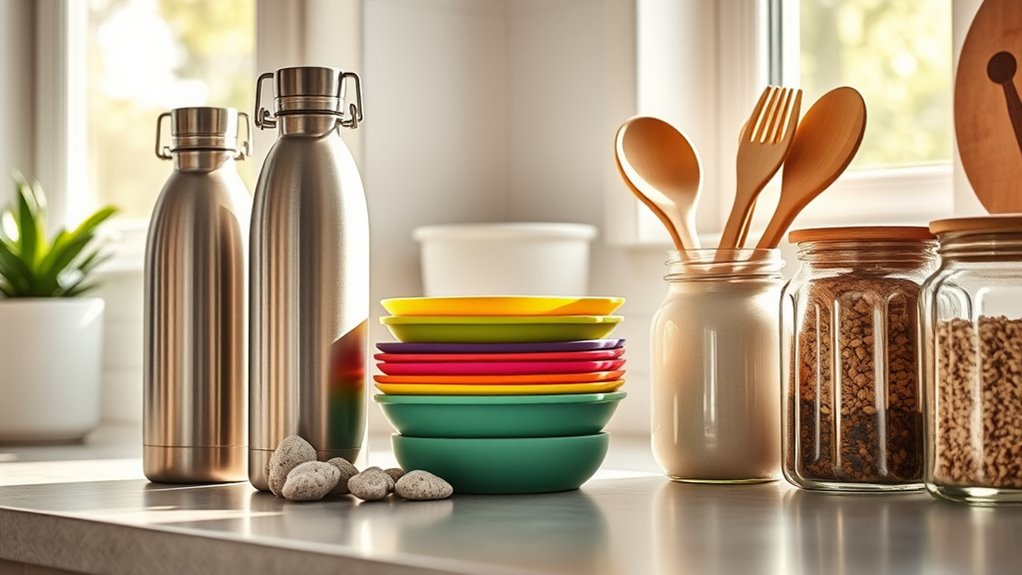
Have you ever stopped to contemplate how much waste single-use products generate daily? It’s staggering when you think about the countless plastic bags, bottles, and packaging thrown away each day. Transitioning to reusable products isn’t just good for the environment—it can also substantially cut your everyday costs. One of the most effective ways to start is by choosing items that promote a zero waste lifestyle. Using reusable bags, containers, and utensils reduces your dependence on disposable items, which often come wrapped in excess, non-recyclable packaging. This shift not only minimizes waste but also saves you money over time, as you won’t need to constantly purchase replacements.
Reducing single-use waste helps the environment and saves money over time.
Eco friendly packaging plays an essential role in this movement. Many companies now offer products that come in sustainable, reusable packaging solutions designed to last. When you opt for these, you’re not only making an eco-conscious choice but also avoiding the repeated expense of single-use wrappers and containers. For instance, instead of buying snacks or groceries in single-use plastic bags, you can use fabric or silicone bags that you refill again and again. This kind of packaging is durable, reduces waste, and often costs less in the long run. It’s a simple switch that yields big savings and helps you contribute to a healthier planet.
Moving beyond packaging, reusable products like water bottles, coffee cups, and straws are practical and economical. Instead of buying bottled water or disposable coffee cups every day, you can invest in a sturdy, reusable bottle or mug. While the initial investment might seem higher, the savings accumulate quickly, especially if you typically purchase these items frequently. Plus, many reusable products are designed to be durable, making them a one-time purchase that lasts for years. Over time, you’ll notice the savings and also enjoy the convenience of having your favorite drink container on hand without the waste.
Switching to reusable produce bags, beeswax wraps, and cloth napkins can drastically cut down on packaging waste. These items are not only eco friendly but also cost-effective because they eliminate the need for buying disposable alternatives. You may find that after a short period, your purchases of single-use items drop dramatically, translating into immediate savings. Additionally, many of these reusable items are made from natural, biodegradable materials, aligning perfectly with a zero waste ethic. Incorporating high quality reusable projectors into your home setup can also contribute to long-term savings and sustainability, as they tend to last longer and reduce the need for frequent replacements.
Amazon Product B0GFJ2P344
As an affiliate, we earn on qualifying purchases.
Frequently Asked Questions
How Do Reusable Products Compare in Cost Over Time?
Reusable products typically save you money over time, making them a smart long-term investment. Although the initial cost might be higher, you’ll notice significant cost savings as you reuse them daily instead of constantly buying disposables. Over months and years, these savings add up, reducing your expenses. Plus, you help the environment, making reusable products a win-win for your budget and planet.
Are Reusable Items Safe and Hygienic for Daily Use?
Reusable items are generally safe and hygienic if you follow proper hygiene practices. Regularly clean and sterilize them to prevent bacteria buildup and address any safety concerns. Use hot water and soap or appropriate disinfectants, especially for items like water bottles or food containers. Avoid sharing reusable items, and replace them if they show signs of damage. Staying consistent with cleaning routines guarantees your reusable products remain safe and hygienic for daily use.
What Environmental Impacts Do Reusable Products Have?
Imagine a world where waste reduction transforms our environment, and reusable products lead the charge. By choosing reusable items, you considerably cut down on single-use plastics, reducing landfill overflow and pollution. These choices promote environmental benefits like conserving resources and lowering greenhouse gas emissions. Your decision to reuse not only helps protect ecosystems but also fosters a sustainable future, making a tangible impact on the health of our planet.
How Do I Properly Clean and Maintain Reusable Products?
To keep your reusable products clean, follow proper cleaning techniques like washing with warm, soapy water or using a dishwasher if suitable. Regular maintenance tips include inspecting for damage, replacing worn parts, and drying thoroughly to prevent mold. Always read manufacturer instructions for specific cleaning guidelines, and store items in a dry, cool place. Consistent care guarantees your reusable products stay functional and safe for everyday use.
Can Reusable Products Replace All Disposable Items?
Imagine switching entirely to reusable water bottles, replacing all single-use alternatives. The answer is yes, reusable products can replace many disposable items, but not all. While they cut down on waste and save money, some situations still call for disposable convenience, like medical supplies or certain packaging. You should evaluate each item’s practicality and hygiene needs, gradually shifting to reusable options where feasible for a greener, cost-effective lifestyle.
Amazon Product B0G477K9QM
As an affiliate, we earn on qualifying purchases.
Conclusion
Switching to reusable products is like planting a seed that grows into a forest of savings. Every time you choose reusables over disposables, you’re nurturing a greener planet and a healthier wallet. These small choices ripple outward, creating a wave of change that benefits both you and the environment. So, embrace reusables today—you’re not just saving money, you’re cultivating a sustainable future, one thoughtful choice at a time.
Amazon Product B0F2GQ8B42
As an affiliate, we earn on qualifying purchases.
Amazon Product B0F2GL3S19
As an affiliate, we earn on qualifying purchases.