
Smart meal planning helps you cut food waste and save money by organizing your grocery shopping, preparing meals in advance, and efficiently using leftovers. By planning weekly menus and creating a detailed shopping list focused on versatile ingredients, you avoid impulse buys and spoilage. Batch cooking reduces daily prep time, while repurposing leftovers extends their value. Keep these strategies in mind, and you’ll discover how to make mealtimes more efficient and budget-friendly. There’s more to learn that can transform your approach.
Key Takeaways
- Plan weekly meals to buy only necessary ingredients, reducing excess and minimizing food waste.
- Batch cook staples like rice and vegetables to streamline meal prep and cut down on daily cooking time.
- Incorporate leftovers into new meals creatively to maximize ingredient use and prevent spoilage.
- Develop a consistent weekly meal routine to avoid impulsive purchases and promote healthier eating habits.
- Organize your kitchen and shopping routines to improve efficiency and ensure strategic ingredient selection.
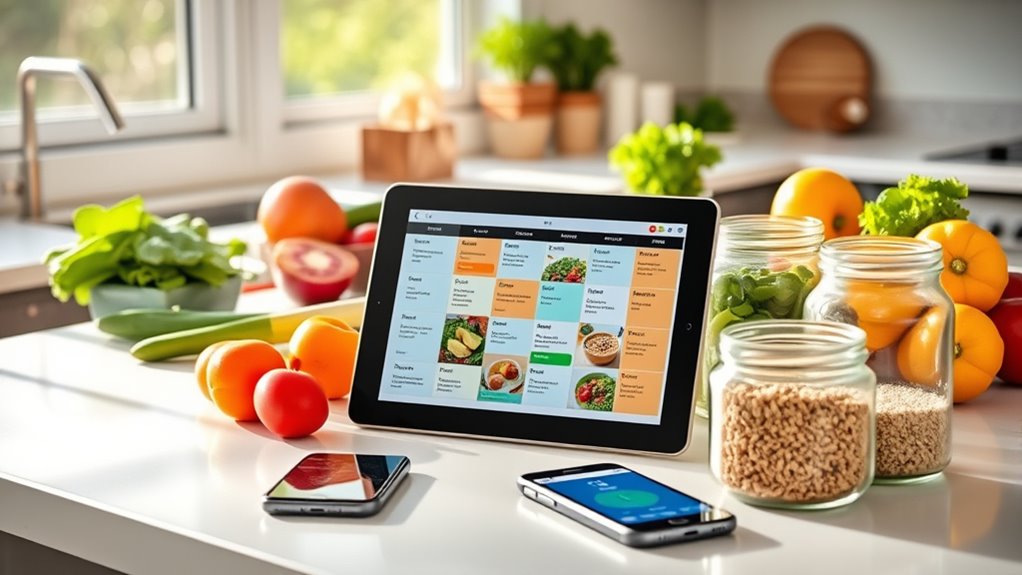
Have you ever wondered how to make mealtime easier, healthier, and less stressful? Smart meal planning can be your answer. It’s about organizing your food choices and preparation routines to save time, money, and reduce waste. One of the most effective ways to do this is by streamlining your grocery shopping. Instead of making multiple trips or buying impulsively, plan your meals for the week. Make a detailed grocery list based on those plans, focusing on versatile ingredients that can be used across several dishes. This approach helps you avoid impulse buys and prevents excess food from ending up in the trash. When you go grocery shopping with a clear list, you buy only what you need, which cuts down on waste and keeps your budget in check. Plus, it makes grocery trips faster and less stressful because you know exactly what to get.
Another powerful strategy is batch cooking. Once you’ve completed your grocery shopping, dedicate a specific day or time to prepare large quantities of meals or ingredients. For example, cook a big batch of rice, roasted vegetables, or grilled chicken that can be portioned out and used in different meals throughout the week. Batch cooking saves you from cooking every day, freeing up your time for other priorities. It also helps you stick to healthy eating habits because you’re less likely to resort to takeout or processed foods when you already have home-cooked options ready. When you prepare meals in advance, you’re less tempted to throw away leftover ingredients that might spoil before you can use them. Understanding pinball machine weight can also be useful if you plan to set up a home kitchen or game area, as it helps in planning space and equipment placement.
Smart meal planning also involves thinking ahead about leftovers. Incorporate them into your next meals or repurpose them creatively—turn roasted vegetables into a soup or use cooked chicken in salads and wraps. This reduces food waste and stretches your grocery budget further. Stick to a consistent routine by creating a weekly meal plan that includes breakfast, lunch, and dinner options. Having a clear plan minimizes the chances of buying unnecessary ingredients or resorting to last-minute, less healthy choices. Over time, this approach becomes second nature, helping you develop healthier eating habits while saving money.
Amazon Product B0DXPV4LD2
As an affiliate, we earn on qualifying purchases.
Frequently Asked Questions
How Can I Start Meal Planning With a Busy Schedule?
To start meal planning with a busy schedule, focus on time management and quick prep. Dedicate 10-15 minutes weekly to plan simple, nutritious meals. Use a meal planner or app to organize your grocery list and prep ingredients ahead. Batch cook or prep ingredients in advance, so you save time during busy weekdays. This approach helps you stay organized, reduces stress, and guarantees you eat healthy without sacrificing your busy schedule.
What Are Budget-Friendly Ingredients for Meal Planning?
You can start with budget-friendly ingredients like affordable proteins such as beans, eggs, or canned tuna, which are versatile and cost-effective. Incorporate bulk grains like rice, oats, or pasta to stretch your meals further. These ingredients are inexpensive, easy to store, and can be used in various recipes. Planning around them helps you save money, reduces waste, and keeps your meals nutritious and satisfying without breaking the bank.
How Do I Store Leftovers to Prevent Spoilage?
Imagine you cooked a large batch of chili and want it to last. You should store leftovers in airtight containers, like glass or BPA-free plastic, to guarantee food safety. Use shallow containers for even cooling and label them with dates. Proper storage prevents spoilage, reduces bacteria risk, and keeps your food fresh longer. Always refrigerate within two hours and reheat thoroughly before eating to maintain safety.
Are There Apps That Help With Meal Planning and Shopping?
Yes, there are plenty of apps that help with meal planning and shopping. You can explore recipe apps that suggest meals based on what you have, making it easier to reduce waste. Additionally, shopping list tools sync with your meal plans, so you buy only what you need. These apps streamline your grocery trips, save money, and make meal prep more efficient, helping you stay organized and waste less food.
How Can I Involve Family Members in Meal Planning?
Imagine gathering around your kitchen table, where everyone’s voice shapes the week’s meals. You involve family members by encouraging shared decision making, asking for their favorite dishes, and planning together. Use a meal planning app to visualize options, making it fun for everyone. This shared involvement not only builds excitement but also guarantees meals reflect your family’s tastes, strengthening bonds while reducing waste and saving money.
Amazon Product B07BNS7T6V
As an affiliate, we earn on qualifying purchases.
Conclusion
By planning your meals smartly, you can cut down on food waste and save money. Did you know that Americans throw away about 150,000 tons of food daily? That’s like wasting enough food to fill over 1,200 garbage trucks each day. So, take control of your shopping and cooking habits—your wallet and the environment will thank you. Start small today, and see how much you can save while making a positive impact!
Amazon Product B0GHPY79QD
As an affiliate, we earn on qualifying purchases.
Amazon Product B0G5FTXKYL
As an affiliate, we earn on qualifying purchases.