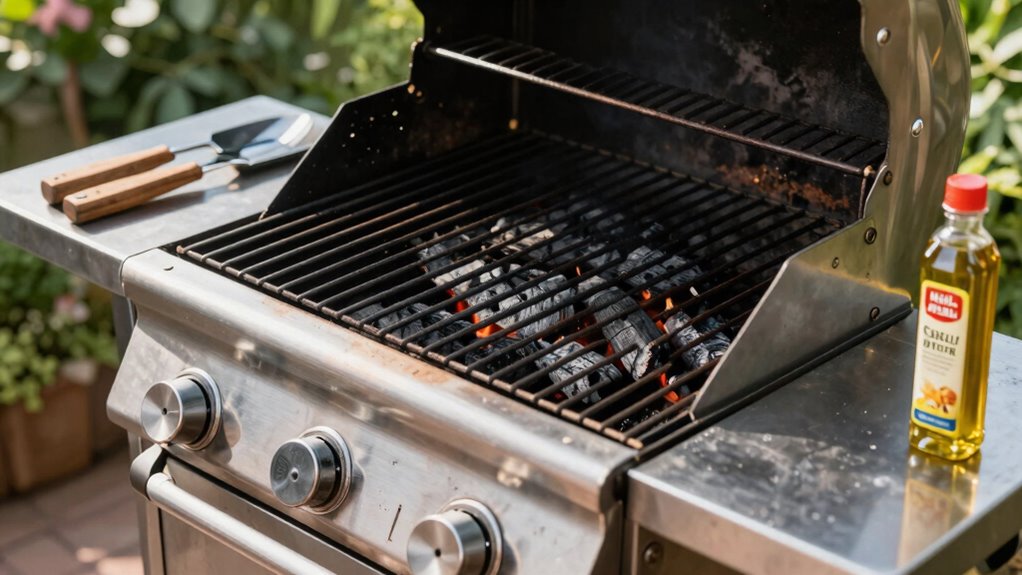

To keep your grill working better for longer, clean it regularly after each use by removing ashes, scrubbing grates, and wiping down surfaces. Inspect and clean burners, hoses, and vents to prevent leaks and guarantee even heat. Deep clean periodically and soak removable parts like grates and drip pans. Store it in a dry, covered area to prevent rust. Proper maintenance boosts performance and lifespan—keep going to discover more tips for ideal grill care.

Get your next haul delivered free with Prime
- Fast, free delivery on millions of items
- Prime Video, Amazon Music and more included
- Member-only deals all year
Key Takeaways
- Regularly clean and remove ash, grease, and food residues to prevent buildup and ensure proper airflow.
- Inspect and maintain burners, hoses, and air vents to prevent leaks, blockages, and uneven heating.
- Deep clean grates, drip pans, and interior components periodically to remove stubborn grime and improve performance.
- Store the grill in a dry, covered area and apply a light oil coating to prevent rust and corrosion.
- Follow safety procedures, such as disconnecting propane tanks and checking for leaks, to ensure safe operation.
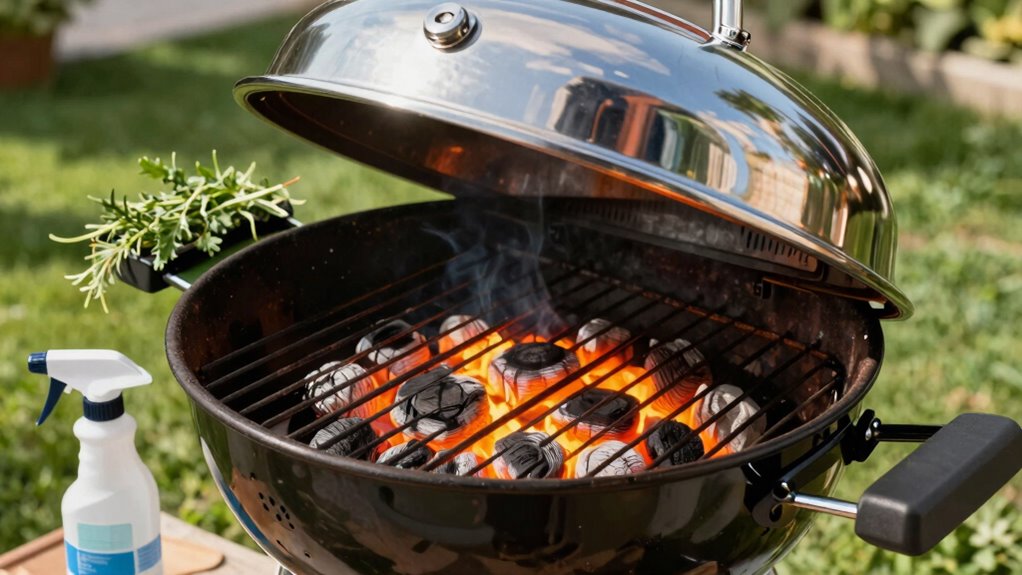
To guarantee your grill stays in top condition and lasts for many seasons, regular maintenance is essential. Whether you prefer charcoal or gas, understanding the differences can help you choose the right care routine. Charcoal grills tend to produce more ash, which can build up and affect airflow and heat distribution. Gas grills, on the other hand, have burners and hoses that require specific attention to prevent leaks and ensure they function safely. No matter your grill type, consistent cleaning and upkeep keep it functioning efficiently and extend its lifespan.
When it comes to grill cleaning techniques, the goal is to remove grease, food residues, and ash without damaging the surfaces. For charcoal grills, after each use, allow the ashes to cool completely before removing them with a scoop or brush. This prevents ash from clogging air vents and ensures proper airflow. For the cooking grates, use a stiff wire brush to scrub off charred bits. A vinegar-based solution or a specialized grill cleaner can help loosen stubborn grime. Make sure to rinse and dry thoroughly before storing or using the grill again. Additionally, proper ventilation can help reduce smoke and improve safety during grilling.
Gas grills require a slightly different approach. Once cooled, disconnect the propane tank and inspect the burners for blockages or corrosion. Use a brush or a pipe cleaner to clear any debris from the burner holes. Wiping down the exterior with soapy water or a grill-specific cleaner helps remove grease and dirt, preserving the surface quality. Regularly check the hoses for leaks or cracks—using a soap solution and watching for bubbles can help identify leaks. Keeping the burners and the interior parts clean prevents flare-ups and uneven heating. Additionally, understanding how to maintain airflow and ensure proper ventilation is crucial for optimal performance. Proper airflow not only ensures even cooking but also extends the life of your grill components by preventing moisture buildup.
For both types, deep cleaning should be done periodically. Remove the grates and drip pans, and soak them in warm, soapy water or a vinegar solution. Use a wire brush or scraper to remove baked-on grease. Clean the interior with a vacuum or brush to clear away ash and debris. Applying a high-heat grill cleaner can dislodge stubborn residues. After cleaning, wipe everything dry and apply a light coat of oil to the grates to prevent rust. Proper storage in a dry, covered area also helps protect your grill from the elements and prolong its life. Properly maintaining grill components ensures that your investment lasts longer and performs more reliably.
Consistent maintenance not only improves your grill’s performance but also keeps your food tasting great and reduces safety risks. Investing a few minutes after each use for cleaning and inspection can make a huge difference in longevity. Whether you’re using charcoal or gas, adopting proper grill cleaning techniques and staying attentive to your grill’s needs will ensure it remains a reliable part of your outdoor cooking arsenal for years to come.
As an affiliate, we earn on qualifying purchases.
Frequently Asked Questions
How Often Should I Replace My Grill’s Parts?
You should replace your grill’s parts as needed during regular grill maintenance. Check components like burners, grates, and igniters annually, or sooner if they show signs of wear, rust, or damage. For peak performance, replace parts promptly to prevent issues and guarantee safety. Regular part replacement keeps your grill functioning efficiently, prolongs its lifespan, and guarantees a better grilling experience every time you fire it up.
Can I Use Household Cleaners on My Grill?
Using household cleaners on your grill is like releasing a nuclear blast—definitely not recommended. Cleaning chemicals meant for household surfaces can corrode your grill’s parts and ruin its finish. Stick to grill-specific cleaning products or a vinegar-water solution for surface maintenance. This keeps your grill in top shape without risking damage. Always read labels and avoid harsh chemicals to guarantee your grill stays in prime condition for many cookouts to come.
What’s the Best Way to Store a Grill During Winter?
For winter storage, you should clean your grill thoroughly and make sure it’s dry. Cover protection is essential; use a high-quality, weather-resistant cover to shield it from snow and moisture. Store your grill in a sheltered area like a garage or shed if possible, or keep it outside with the cover securely in place. This prevents rust and damage, ensuring your grill stays in great condition for spring grilling season.
How Do I Prevent Rust From Forming on My Grill?
To prevent rust from forming on your grill, focus on regular grill maintenance and rust prevention techniques. After each use, clean the grates thoroughly to remove food residue, then dry them completely to eliminate moisture. Apply a thin coat of high-temperature cooking oil to the metal surfaces, especially the grates and exterior. Cover your grill when not in use, and store it in a dry, sheltered spot during off-seasons to protect against moisture and rust.
Are There Eco-Friendly Ways to Clean My Grill?
Yes, you can clean your grill using natural cleaning and eco-friendly solutions. Try mixing baking soda and water to create a paste for scrubbing grates, or use vinegar to break down grease and grime. These natural options are safe for the environment and effective. Regularly cleaning with these solutions prevents buildup, extends your grill’s lifespan, and keeps it safe and healthy for your next barbecue.
As an affiliate, we earn on qualifying purchases.
Conclusion
By following these simple tips, you’ll find your grill not only lasts longer but also performs better when you need it most. It’s funny how a little extra care can turn a good grill into a great one—almost like it’s grateful for the attention. After all, a well-maintained grill isn’t just about cooking; it’s about creating memories. So keep up the effort, and your barbecue days will be even more satisfying, season after season.
As an affiliate, we earn on qualifying purchases.
As an affiliate, we earn on qualifying purchases.
Fall Picks
fall essentials
As an affiliate, we earn on qualifying purchases.