
Starting a budget garden is a smart way to cut grocery costs by growing your own vegetables and herbs at home. Planning carefully helps maximize space, select the best plants for your climate, and schedule harvests for continuous produce. Companion planting can also boost yields and reduce pests naturally. As you improve your skills, you’ll enjoy healthier plants and more savings. Keep exploring how to optimize your garden for even greater benefits.
Key Takeaways
- Plan your garden considering space, climate, and plant types to maximize yield and cost savings.
- Use companion planting to improve plant health and reduce pest control costs naturally.
- Select and schedule plants wisely for continuous harvests, minimizing store-bought produce.
- Manage resources efficiently to avoid waste and focus on high-yield, suitable crops.
- Regularly improve techniques to boost productivity and further lower grocery expenses.

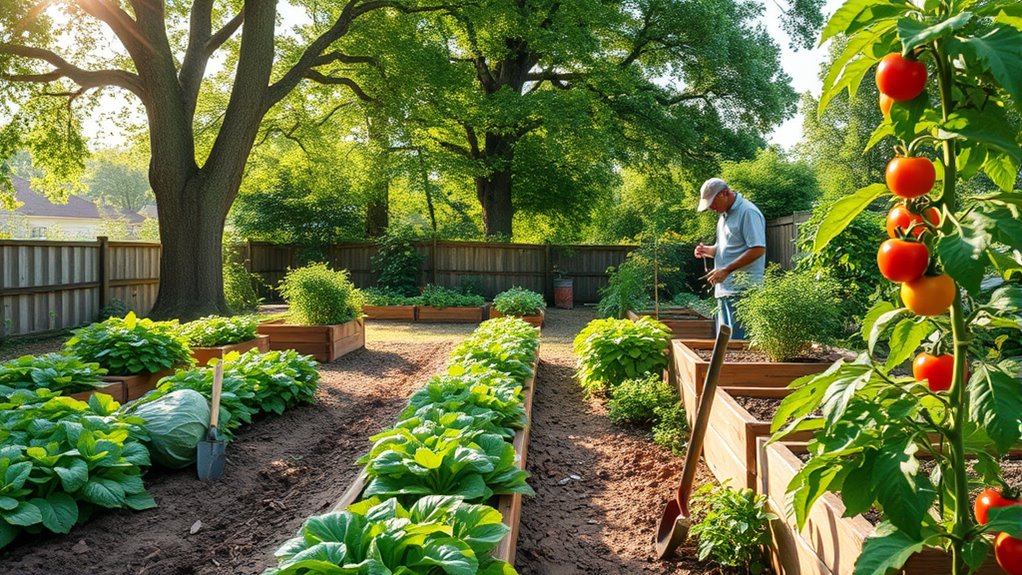
Have you ever considered how gardening can help you cut down your grocery bills? Growing your own vegetables and herbs isn’t just satisfying—it’s a practical way to save money. When you start a budget garden, you take control of what goes into your meals and reduce the amount you spend at the store. To make your garden as productive and cost-effective as possible, proper garden planning is essential. Think about the space you have, the climate, and which plants will give you the best return on your effort. Sketching out a plan helps ensure you use your space efficiently, plant at the right times, and avoid overcrowding. With good planning, you can stagger planting times and harvest a steady supply of fresh produce.
Once your plan is in place, consider companion planting to maximize your garden’s potential. Companion planting involves growing certain plants together that benefit each other. For example, planting basil near tomatoes can improve flavor and repel pests, while marigolds can keep nematodes away from your root vegetables. This technique reduces the need for chemical pest control and helps maintain healthy plants, leading to bigger yields with less work and expense. By pairing plants strategically, you also make better use of your garden space, which means you can grow more varieties without needing extra land or resources.
Starting with a clear garden plan and using companion planting techniques makes your garden more manageable and productive. You’ll spend less time battling pests or dealing with diseases, which translates into healthier plants and higher yields. The more you optimize your garden layout, the more you’ll be able to harvest without having to buy as many vegetables and herbs from the store. Plus, planning your planting schedule allows you to stagger harvests, ensuring you always have fresh produce on hand. This not only saves money but also adds variety and freshness to your meals.
In addition, a well-thought-out garden plan helps you buy seeds and supplies more efficiently, avoiding unnecessary purchases. You can focus on the most productive plants and avoid wasting resources on those that don’t thrive in your conditions. As your garden matures, you’ll gain a better understanding of what works best, enabling you to refine your approach and improve your yields over time. Overall, combining smart garden planning with companion planting techniques empowers you to create a thriving, budget-friendly garden that considerably cuts your grocery expenses while giving you fresh, homegrown food. Incorporating GMC tuning knowledge about proper techniques can also inspire innovative methods to optimize your garden’s growth and performance.
Amazon Product B0FV8Q7ZBL
As an affiliate, we earn on qualifying purchases.
Frequently Asked Questions
What Are the Best Vegetables for Small Garden Spaces?
You should plant compact vegetables like lettuce, radishes, and cherry tomatoes for small spaces. These thrive with companion planting, which boosts growth and deters pests. Practice crop rotation each season to keep your soil healthy and reduce disease. By choosing space-efficient vegetables and applying companion planting and crop rotation, you maximize your small garden’s productivity, making it easier to harvest fresh, affordable produce without needing a large area.
How Do I Prevent Pests Without Chemicals?
Imagine your garden as a peaceful oasis, free from chemical sprays. You can prevent pests naturally by practicing companion planting—pairing plants that repel bugs with your vegetables. Use natural pest control methods like neem oil or encouraging beneficial insects such as ladybugs. These strategies create a healthy balance, protecting your garden while keeping it chemical-free. With patience and care, your garden remains vibrant and pest-free, all naturally.
When Is the Optimal Planting Season in My Region?
You should plant during your region’s ideal seasonal planting window, which aligns with its climate considerations. Check local frost dates and soil temperatures to determine the best time for sowing seeds or transplanting seedlings. Typically, spring and early fall are perfect, but it varies depending on your climate zone. Monitoring local weather patterns and consulting gardening calendars will help you maximize your harvest and avoid planting at the wrong time.
How Much Time Does Maintenance Typically Require?
Think of your garden as a lively dance partner, requiring steady attention. On average, maintenance takes about 1-2 hours weekly. You’ll need to stick to a consistent watering schedule and monitor fertilization needs, adding nutrients as plants grow. Regular weeding, pruning, and checking for pests keep your garden thriving. With dedication, your efforts will bloom into a harvest that’s both rewarding and manageable, like tending a beautiful, well-choreographed performance.
Can Container Gardening Be as Productive as Ground Planting?
Container gardening can be just as productive as ground planting if you follow composting basics and proper watering techniques. You control soil quality and water more efficiently, leading to healthy plants and good yields. Use nutrient-rich compost in your containers and water regularly without overdoing it. With consistent care, your container garden can produce abundant vegetables and herbs, helping you save money and enjoy fresh produce all season long.
Amazon Product B0GFHB3GPF
As an affiliate, we earn on qualifying purchases.
Conclusion
By starting your own budget garden, you take control of your food and save money at the same time. Imagine stepping outside to pick fresh veggies whenever you want—doesn’t that make shopping trips seem less necessary? With a little effort, you can enjoy farm-fresh flavors right in your backyard. So, why not turn your outdoor space into a sustainable source of produce and reduce your grocery bills? Your wallet—and taste buds—will thank you.
Amazon Product B0GPSLFWT5
As an affiliate, we earn on qualifying purchases.
Amazon Product B0G652B24D
As an affiliate, we earn on qualifying purchases.