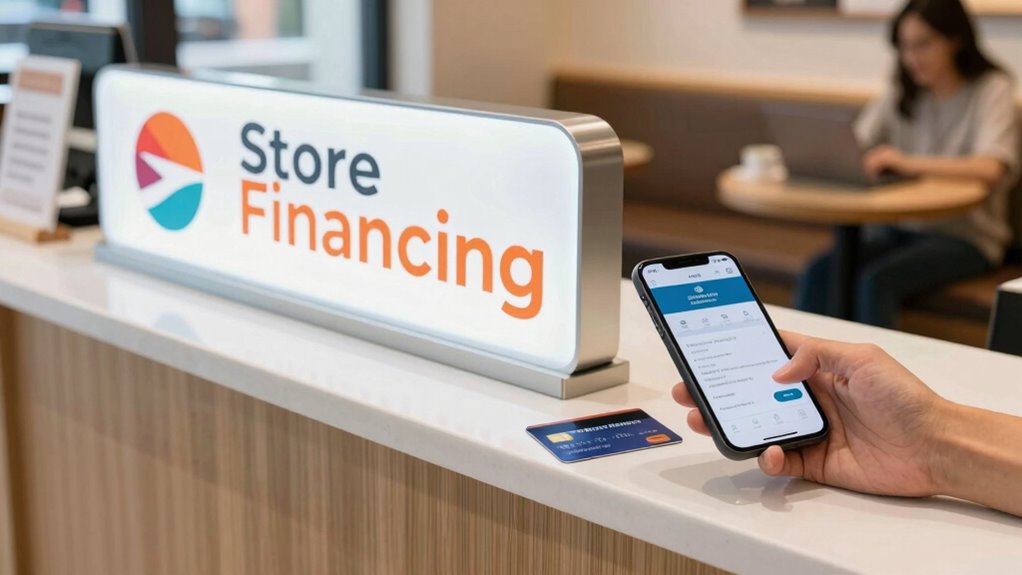

Store financing is a quick way to pay for specific products at a retailer, often with promotional interest rates or deferred payments, but it’s limited to that store’s items. Personal loans are more flexible, allowing you to use the funds for various purposes and providing clear repayment terms. Your credit score influences approval and rates for both options. To understand which suits your needs best, explore their differences further.

Get your next haul delivered free with Prime
- Fast, free delivery on millions of items
- Prime Video, Amazon Music and more included
- Member-only deals all year
Key Takeaways
- Store financing is offered directly by retailers for specific products, while personal loans are flexible and usable for various purposes.
- Qualification for store financing depends heavily on credit score, often with promotional rates or deferred payments.
- Personal loans have fixed repayment terms and clear schedules, providing transparency and fixed monthly payments.
- Store financing is limited to particular store products, whereas personal loans can be used for multiple financial needs.
- Additional fees or conditions may apply to store financing, while personal loans generally have straightforward terms and interest rates.

When you’re considering ways to finance a big purchase, understanding the differences between store financing and personal loans can save you time and money. Both options can help you spread out payments, but they do so in very different ways, and knowing which is better for your situation depends on factors like your credit score and repayment terms. Store financing is typically offered directly by the retailer, often in the form of promotional interest rates or deferred payments. These offers are designed to entice buyers to make larger purchases and usually come with specific terms, such as zero interest for a set period or reduced interest rates. If you qualify, store financing can be convenient because it’s tailored to a particular store’s products, and the process is often quick and straightforward. However, your credit score plays a significant role in qualifying for these offers, and a lower score might mean higher interest rates or outright denial. Additionally, store financing options sometimes come with hidden fees or conditions that can affect the overall cost of the purchase.
Personal loans, on the other hand, are obtained from banks, credit unions, or online lenders. They tend to have more flexible uses, so you’re not limited to a single retailer or category of purchase. When applying for a personal loan, your credit score heavily influences the interest rate and approval chances. Good credit often results in lower interest rates, which can save you money over the life of the loan. Personal loans usually come with fixed repayment terms, meaning you agree on a specific loan amount, interest rate, and repayment schedule upfront. These terms can range from a few months to several years, giving you clarity on your monthly payments and total interest paid. Unlike store financing, personal loans might have higher interest rates if your credit isn’t ideal, but they offer more transparency and flexibility because you’re not tied to a specific store or product. Understanding credit score requirements can help you choose the best option for your financial situation. Moreover, some lenders offer specialized Gold IRA loans or financing options tailored to specific investment types, which can be beneficial for certain investors. A good credit history can often significantly improve your chances of securing favorable loan terms and lower interest rates. Additionally, it’s important to consider the impact of your credit score on your overall borrowing ability, which can influence not only loan approval but also the interest rate you receive. Whichever option you choose, always compare the terms carefully and be aware of any potential hidden costs.
store financing promotional interest rates
As an affiliate, we earn on qualifying purchases.
As an affiliate, we earn on qualifying purchases.
Frequently Asked Questions
Can Store Financing Affect My Credit Score Differently Than Personal Loans?
Store financing can affect your credit score differently than personal loans because it’s often reported as a retail account, impacting your credit mix and payment history. The credit impact depends on your repayment terms—timely payments can boost your score, while missed payments hurt it. Personal loans usually have fixed terms and may offer more flexible repayment options, but both can influence your credit depending on how responsibly you manage them.
Are There Hidden Fees Associated With Store Financing Options?
Did you know nearly 20% of consumers encounter hidden fees in retail promotions? Store financing often seems straightforward, but there can be hidden costs, making it easy to fall for financing scams. Always read the fine print carefully—some offers include unexpected charges like origination fees or high interest rates. Being vigilant helps you avoid surprises, ensuring you get the best deal without hidden fees catching you off guard.
Which Option Offers More Flexibility for Early Repayment?
Store financing often offers more flexibility for early repayment compared to personal loans. With store financing, you typically can pay off the balance early without penalties, giving you greater control over your loan flexibility. Personal loans may have prepayment penalties, making early repayment less advantageous. If you value the ability to pay off your debt sooner without extra costs, store financing is usually the better choice for early repayment options.
Do Store Financing Plans Have Higher Interest Rates Than Personal Loans?
Ironically, store financing plans often have higher interest rates than personal loans, despite retail credit seemingly offering a better deal. With installment plans, you’re usually paying a premium for convenience and branding rather than savings. Personal loans tend to offer lower rates because lenders see them as less risky. So, if you’re eyeing affordability, a personal loan might be your smarter choice over store financing.
Is Pre-Approval Necessary for Store Financing or Personal Loans?
Pre-approval isn’t always necessary for store financing or personal loans, but it can speed up the loan approval process. When you apply, lenders typically conduct credit checks to assess your financial health and eligibility. For store financing, pre-approval may be optional, but it often makes shopping easier. Personal loans often require pre-approval to determine your loan terms, giving you a clearer picture before committing financially.
personal loans for large purchases
As an affiliate, we earn on qualifying purchases.
As an affiliate, we earn on qualifying purchases.
Conclusion
In the end, understanding the difference between store financing and personal loans helps you make smarter choices. Think of store financing as a quick fix, like patching a leaky roof, while personal loans are more like building a sturdy new house from scratch. Knowing which path to take can save you from biting off more than you can chew. So, weigh your options carefully, and don’t let the grass fool you—sometimes, the grass is greener where you water it.
As an affiliate, we earn on qualifying purchases.
As an affiliate, we earn on qualifying purchases.
Halloween Picks
halloween
As an affiliate, we earn on qualifying purchases.