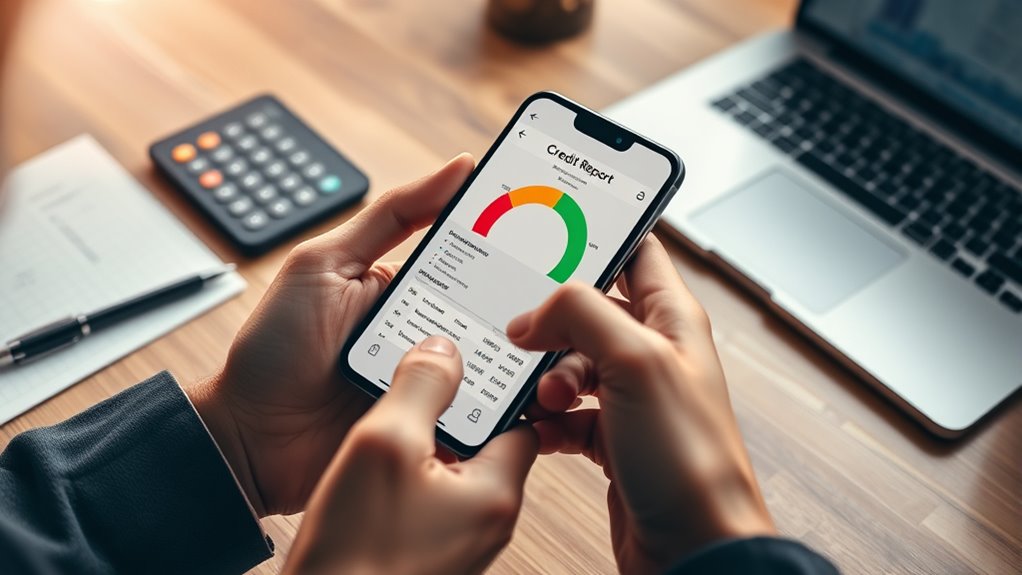

Understanding your credit report and score helps you see how lenders view your financial behavior. Your report shows your borrowing history, while your score summarizes it on a 300-850 scale. Paying bills on time, reducing debt, and checking for errors can boost your score. Regularly reviewing your report guarantees accuracy. Keep an eye on these factors, and you’ll gain control over your financial future—more useful tips await to help you improve and protect your credit standing.
Key Takeaways
- Your credit report shows your borrowing history, while your credit score summarizes this info into a number from 300 to 850.
- Regularly reviewing your report helps identify and correct errors that could unfairly lower your score.
- Payment history and credit utilization are major factors affecting your credit score.
- Maintaining timely payments and low debt levels can improve and sustain your credit score.
- Monitoring your credit report and score regularly helps you stay in control of your financial health.
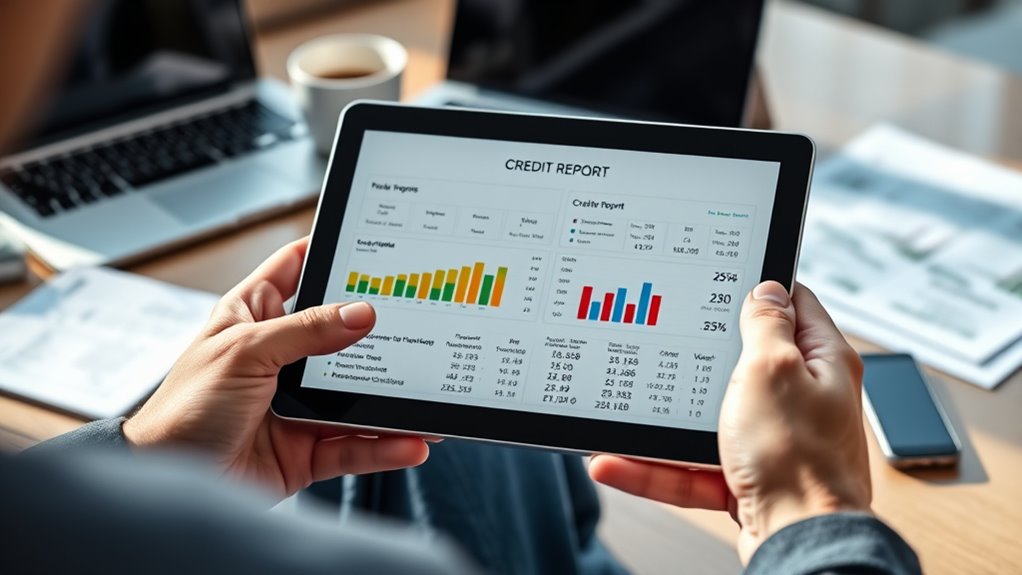
Your credit report and credit score are key tools that influence your financial life, affecting everything from loan approvals to interest rates. Understanding how they work enables you to make smarter financial decisions. Your credit report is a detailed record of your borrowing history, including loans, credit cards, payment history, and any public records like bankruptcies or liens. Your credit score, on the other hand, is a numerical summary derived from the information in your report, typically ranging from 300 to 850. Lenders use this score to gauge your creditworthiness quickly.
One common issue many people face is credit report errors. These inaccuracies can include incorrect personal information, wrong account statuses, or outdated information. Such errors can unfairly lower your credit score or cause lenders to reject your applications. Regularly reviewing your credit report allows you to spot and dispute errors promptly. You’re entitled to free annual reports from each of the major credit bureaus—Equifax, Experian, and TransUnion—and checking these can help you maintain accuracy and protect your financial reputation.
Your credit score factors are the key elements lenders consider when evaluating your creditworthiness. Payment history is the most significant factor, accounting for about 35% of your score, so late payments or defaults heavily impact your rating. The amounts owed, or your credit utilization ratio, also play a major role. Keeping your balances low relative to your credit limits shows responsible usage and can improve your score. Length of credit history influences your score too; longer histories tend to be more favorable because they display your ability to manage credit over time. New credit applications can temporarily lower your score, especially if you open multiple accounts quickly. In conclusion, your mix of credit types—such as credit cards, installment loans, or mortgages—can also influence your overall score. A diverse credit profile demonstrates your ability to handle different types of credit responsibly.
Understanding these factors helps you identify areas for improvement. If you notice errors or outdated information on your report, addressing them swiftly can boost your credit score. Paying bills on time, reducing your debt, and avoiding unnecessary new accounts are practical steps to maintain or enhance your score. Keep in mind that your credit report and score are dynamic; they change as your financial behavior evolves. Staying proactive by regularly monitoring both can save you money and prevent surprises during loan applications. Additionally, understanding the role of attention in your creative practice can help you develop better focus and discipline, which are valuable skills in managing your financial documents as well. Ultimately, knowing what impacts your credit score and how to keep your report accurate empowers you to take control of your financial future.
Frequently Asked Questions
How Often Should I Check My Credit Report?
You should check your credit report at least once a year, but more often if you’re applying for new credit or suspect fraud. Regular credit monitoring helps you spot report discrepancies early and address them promptly. By reviewing your report periodically, you stay informed about your financial health and can take action to improve your credit score or resolve potential issues before they escalate.
What Are the Main Factors Affecting My Credit Score?
Think of your credit score as a garden. Your payment history is like watering your plants regularly, and credit utilization is like giving just enough sunlight—too little or too much can harm growth. Missing payments can cause weeds to sprout, lowering your score, while high credit utilization shows you’re overusing credit and can hurt your rating. Keep these factors balanced, and your credit garden will flourish.
How Long Do Negative Items Stay on My Report?
Negative items typically stay on your credit report for up to seven years, but some, like bankruptcies, can remain for ten years. If you notice outdated or incorrect information, you can start a dispute process to correct credit report errors. Regularly reviewing your report helps you catch and address negative items early, minimizing their impact and maintaining a healthier credit profile over time.
Can I Improve My Credit Score Quickly?
Yes, you can improve your credit score quickly with credit repair and score boosting strategies. Focus on paying down high balances, correcting errors on your report, and avoiding new debt. Consider requesting a credit limit increase or becoming an authorized user to enhance your score. Consistently making on-time payments and reducing outstanding debt will boost your credit profile faster, helping you see improvements in a short period.
Are There Different Types of Credit Scores?
Yes, there are different types of credit scores, influenced by various credit scoring models. You might encounter FICO scores, which are most common among lenders, or VantageScore, created collaboratively by the credit bureaus. Each model uses slightly different criteria and weightings, so your score can vary depending on which one is used. Understanding these differences helps you better manage your credit and improve your chances of approval.
Conclusion
By familiarizing yourself with your credit report and score, you gently open the door to financial clarity and opportunity. Remember, these tools are subtle guides, helping you navigate the often winding path of credit. With attention and care, you can steer your financial journey toward stability and growth. Embrace the knowledge you gain, trusting that each step brings you closer to a more secure and confident future, even when the road feels quietly uncertain.