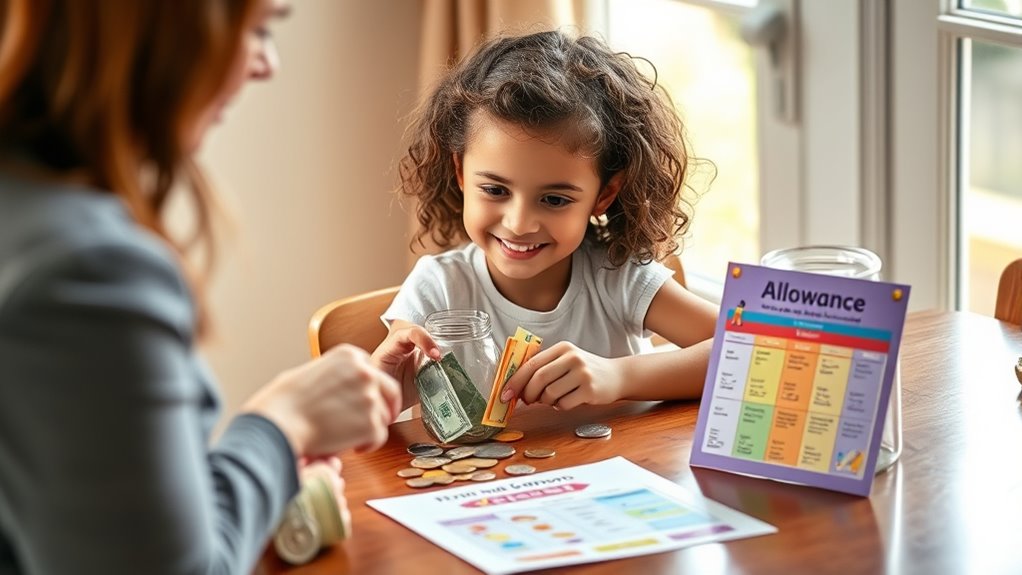

Teaching kids about budgeting with allowances helps them develop responsible spending habits and financial literacy early. Start by setting clear limits for saving, spending, and giving, and use visual tools to make concepts concrete. Encourage them to plan for both immediate and future needs, and ask questions like “Do you need this?” to develop critical thinking. As you continue, you’ll discover simple ways to help your child build a solid foundation for healthy money management.

Get your next haul delivered free with Prime
- Fast, free delivery on millions of items
- Prime Video, Amazon Music and more included
- Member-only deals all year
Key Takeaways
- Use visual tools like dividing allowance into sections for savings, spending, and giving to teach budgeting concepts.
- Set clear limits for each category to help kids understand and practice balancing their money.
- Encourage questions like “Do I need this?” to promote thoughtful decision-making within budget constraints.
- Gradually introduce complex budgeting ideas, such as planning for larger purchases or future expenses.
- Reinforce the importance of saving a portion of allowance regularly to develop long-term financial discipline.

Have you ever wondered how to teach your kids the value of money? Starting early with lessons about saving habits and spending choices can make a big difference in their financial future. When you give your children an allowance, it’s a perfect opportunity to introduce these concepts in a practical way. Instead of simply handing over money, use the allowance as a tool to help them develop responsible financial behaviors. By guiding them on how to manage their funds, you’re setting a foundation for smart money decisions later in life.
Encourage your kids to think about saving a portion of their allowance regularly. Let them see that saving isn’t about denying themselves but about planning for things they want in the future. For example, if they’re eyeing a toy or a game, advise them to set aside some of their allowance each week until they have enough to buy it. This habit reinforces the idea that saving is a valuable part of spending choices. Over time, they’ll learn to prioritize what’s truly important and understand that patience can lead to better rewards.
It’s also essential to talk openly about spending choices. When your child wants to buy something, ask questions like, “Do you really need this?” or “Is there something else you’d like to save for?” This encourages them to think critically about how they spend their money, rather than making impulsive purchases. Show them how to compare prices or consider if an item is worth the cost. These discussions help them develop a sense of financial awareness and control, which are key skills for managing money responsibly.
Another effective way to teach budgeting with allowances is to set clear limits. Decide what portion of their allowance will go toward savings, spending, and even giving to charity. When kids see the division of their money, they understand that budgeting isn’t just about restricting spending but about making conscious choices. It’s a way to balance immediate desires with long-term goals. As they become more comfortable with managing their allowance, you can gradually introduce more complex concepts like planning for bigger expenses or understanding the importance of emergency funds.
Ultimately, teaching kids about budgeting with allowances isn’t about making them perfect at money management overnight. It’s about creating opportunities for them to practice these skills in real life. By fostering good saving habits and thoughtful spending choices early on, you help your children develop a healthy relationship with money that will serve them well into adulthood. Recognizing the importance of financial literacy can also help reinforce these lessons in a meaningful way.
kids allowance budgeting organizer
As an affiliate, we earn on qualifying purchases.
As an affiliate, we earn on qualifying purchases.
Frequently Asked Questions
When Should I Start Giving My Child an Allowance?
You should start giving your child an allowance around age 5 or 6 to foster independence and financial literacy. Early allowances help them learn money management skills and understand the value of saving and spending. By giving them small, manageable amounts, you encourage responsible decision-making and build confidence in handling money. This foundation prepares them for future financial independence and helps them develop good habits from a young age.
How Much Allowance Is Appropriate for Different Ages?
Age-appropriate allowances vary, but generally, start with small amounts around age 5 or 6, increasing as your child matures. For younger kids, allowances of $1-$3 per week work well, while preteens might get $5-$10. Follow allowance guidelines by tying amounts to chores and responsibilities, fostering financial understanding. Adjust allowances over time, encouraging saving and spending habits, and always communicate expectations clearly to help your child learn money management.
Should Allowances Be Tied to Chores or Responsibilities?
Chore-based allowances motivate kids with tangible tasks, while responsibility-based allowances teach the value of earning without specific chores. You should consider your child’s personality and your goals—if you want them to connect effort with reward, tie allowances to chores. But if you’re aiming to instill responsibility as a broader habit, then base allowances on responsibilities. Mixing both approaches can provide a balanced lesson on work and accountability.
How Can I Teach Kids About Saving and Investing?
You can teach kids about saving and investing by explaining compound interest and opening investment accounts. Show them how their money grows over time when they save in a high-yield account or investments. Use simple examples of earning interest and reinvesting it. Encourage them to set savings goals, and involve them in choosing investments, so they understand the benefits of patience and smart money management for their future.
What Are Effective Ways to Encourage Responsible Spending?
You can encourage responsible spending by setting clear limits that challenge their spending habits while allowing freedom to make choices. Show them how responsible spending aligns with their financial goals, like saving for a toy or gift. Use real-life examples and positive reinforcement to help them see the benefits of thoughtful spending. This balance teaches them to prioritize needs over wants and develop healthy money habits early on.
visual money management tools for children
As an affiliate, we earn on qualifying purchases.
As an affiliate, we earn on qualifying purchases.
Conclusion
By teaching kids about budgeting with allowances, you’re planting seeds of financial wisdom that will grow over time. Imagine them holding a small jar of coins, each one representing a choice—saving, spending, or sharing. As they learn to balance these jars, they’ll build a sturdy bridge to financial independence. With your guidance, they’ll develop the confidence to navigate their money’s journey, turning every decision into a stepping stone toward a secure and bright future.
children's savings and spending jars
As an affiliate, we earn on qualifying purchases.
As an affiliate, we earn on qualifying purchases.
As an affiliate, we earn on qualifying purchases.
Halloween Picks
halloween
As an affiliate, we earn on qualifying purchases.