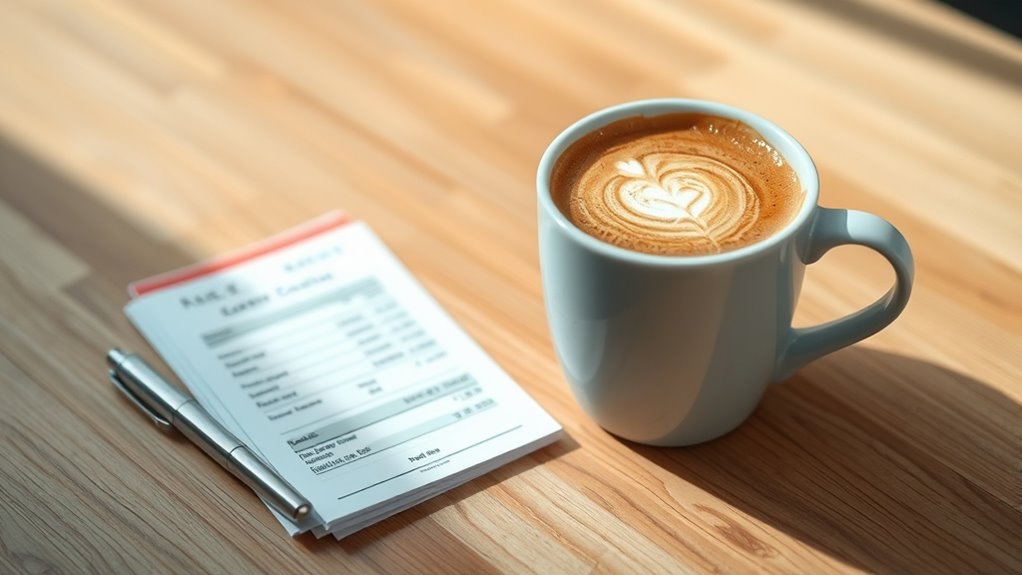

Small expenses like daily coffee might seem trivial, but they can add up considerably over time, affecting your financial health. By spending $4 each workday, you could lose more than $1,000 a year, which might be redirected toward savings or investments. While cutting back can boost your financial discipline, it’s also important to reflect on your personal values and lifestyle. To discover how these tiny costs can shape your overall finances, keep exploring.
Key Takeaways
- Small daily expenses can accumulate into significant savings over time, impacting long-term financial goals.
- Behavioral factors like habits and emotions heavily influence small spending decisions, often overriding rational considerations.
- Eliminating or reducing minor expenses aligns spending with personal values, potentially accelerating wealth-building efforts.
- Not all small expenses are harmful; they can provide necessary comfort and enjoyment without derailing finances.
- Focusing solely on small expenses may overlook larger financial priorities; balance and context are essential for effective planning.
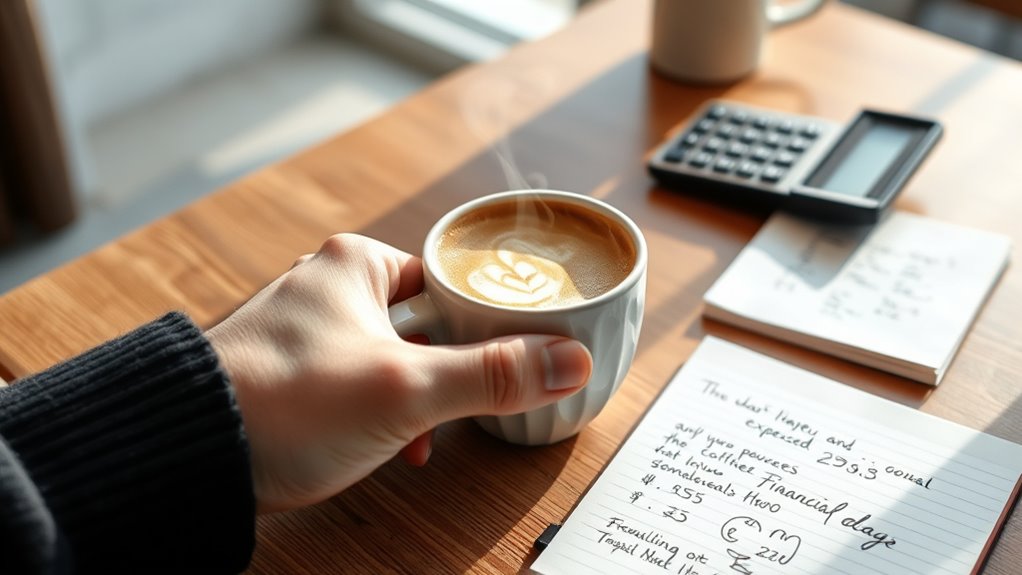
Have you ever wondered if that daily latte really dents your financial goals? It’s a common question that gets to the heart of personal finance and how small expenses can add up over time. Many people believe that cutting out tiny luxuries is the easiest way to boost savings, but behavioral economics suggests the story isn’t that straightforward. Our spending habits aren’t just about numbers; they’re shaped by emotions, habits, and subconscious cues. When you think about a $4 coffee every day, it might seem insignificant. But when you multiply that by 250 workdays a year, it totals $1,000. That’s a meaningful chunk of change that could go toward investments, paying off debt, or building an emergency fund.
However, it’s important to recognize that not everyone’s financial situation is the same, and demonizing small expenses can sometimes do more harm than good. Behavioral economics explains why people often justify small indulgences—they provide immediate gratification and comfort. Telling yourself to cut out the daily latte might trigger guilt or frustration, making it harder to stick to your overall financial plan. Instead, understanding your personal psychology can help you make smarter choices. For some, small expenses are a manageable part of a balanced lifestyle, not a threat to financial health. Others may find that eliminating certain luxuries frees up mental space and discipline to focus on larger, more impactful goals.
The key isn’t necessarily about banning all small expenses but about being aware of how they fit into your broader financial picture. Small habits can compound, but they don’t have to dominate your financial strategy. It’s more effective to think of these expenses as part of a bigger picture—how do they align with your values and goals? If your goal is to retire early, then maybe cutting back on non-essential spending makes sense. But if your priority is enjoying life’s simple pleasures, then a daily coffee might be worth the cost. Behavioral economics shows us that spending decisions are rarely rational; they’re influenced by emotions, habits, and social pressures. Recognizing this can help you craft a personal finance plan that’s both realistic and sustainable. Additionally, understanding the role of Fokos in shaping personal finance perspectives can provide valuable insights into how small expenses influence long-term behaviors. Ultimately, small expenses matter when they align with your goals and values, but they shouldn’t be the sole measure of your financial health. Instead, focus on building habits that support your long-term dreams while allowing room for the little pleasures that make life enjoyable.
reusable coffee cup
As an affiliate, we earn on qualifying purchases.
As an affiliate, we earn on qualifying purchases.
Frequently Asked Questions
How Do Small Expenses Impact Long-Term Financial Growth?
Small expenses like luxury indulgences and subscription services can markedly impact your long-term financial growth. By cutting back on these, you save more money that could be invested or used to pay off debt. Over time, even minor reductions add up, helping you build wealth faster. Think about how skipping daily coffee or canceling unused subscriptions can boost your savings, giving you a stronger financial future.
Can Eliminating Small Expenses Significantly Increase Savings?
You might be surprised, but cutting small expenses like luxury indulgences and subscription services can markedly boost your savings. When you eliminate these minor costs, it’s like uncovering extra income in your budget. Over time, these savings add up, helping you reach financial goals faster. Sometimes, a small change in daily habits can make a big difference in your financial future—so don’t overlook the power of trimming those seemingly insignificant expenses.
What Psychological Effects Do Cutting Small Costs Have?
Cutting small costs can boost your psychological relief by giving you a sense of control over your finances. It reduces impulsive spending, making you more mindful of your habits. As you see savings grow, you might feel more confident and less stressed about money. These positive psychological effects encourage better financial discipline, helping you stay committed to your long-term goals while enjoying a clearer, more focused mindset.
Are Small Expenses More Harmful Than Large, Infrequent Costs?
Small expenses aren’t necessarily more harmful than large, infrequent costs; both can chip away at your budget. While impulse buying of tiny items may seem harmless, it can erode your discipline over time. Large unexpected costs hit harder but are often easier to plan for. Staying vigilant helps maintain budget discipline, preventing small expenses from snowballing into bigger problems. Remember, a little here and there can add up faster than you think.
How Do Individual Spending Habits Influence the Latte Factor’s Effectiveness?
Your spending habits directly impact the latte factor’s effectiveness because behavioral economics shows that impulse buying often leads to overspending on small items. If you’re prone to impulse purchases, cutting back on daily expenses like coffee can considerably boost your savings. By understanding your tendencies, you can create strategies to reduce impulsive spending, making the latte factor a powerful tool for financial discipline and long-term wealth building.
budgeting and savings planner
As an affiliate, we earn on qualifying purchases.
As an affiliate, we earn on qualifying purchases.
Conclusion
So, next time you think that skipping your daily coffee won’t make a difference, remember this: saving just $5 a day adds up to over $1,800 a year. While small expenses might seem insignificant, they can compound over time and considerably impact your financial goals. Don’t underestimate the power of consistent savings—sometimes, cutting back on tiny daily costs can lead to big long-term benefits. Every little bit counts toward your financial future.
financial literacy books
As an affiliate, we earn on qualifying purchases.
As an affiliate, we earn on qualifying purchases.
coffee travel mug
As an affiliate, we earn on qualifying purchases.
As an affiliate, we earn on qualifying purchases.