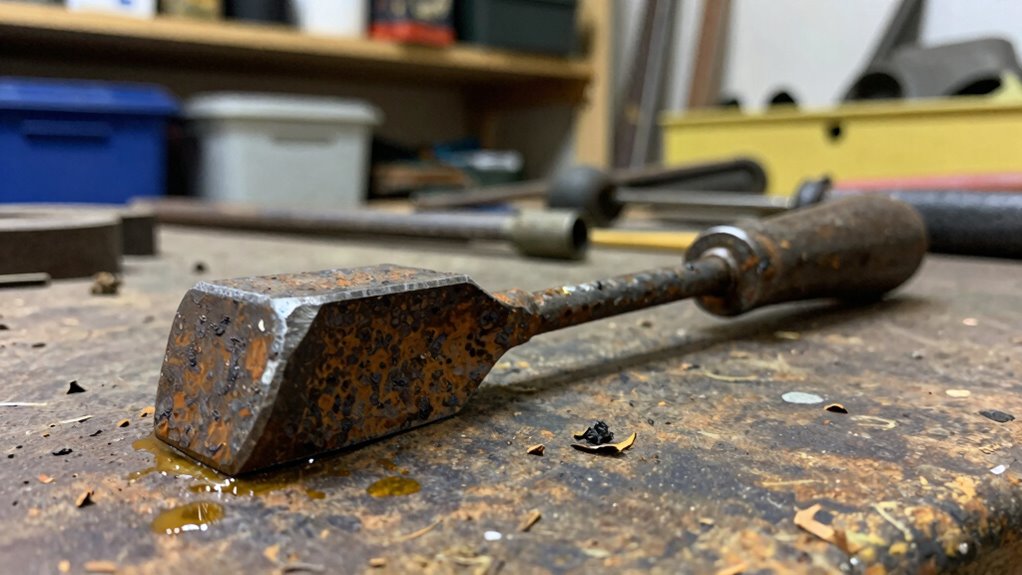

Storing your tools in damp or dirty environments is the key mistake that shortens their life. Moisture causes rust and corrosion, weakening metal parts, while dirt and debris can impair performance over time. Improper organization adds the risk of accidental damage. To keep your tools in good shape, you need to control humidity, clean them after use, and store them properly. Continue to discover more ways to protect your tools and extend their longevity.
Key Takeaways
- Storing tools in damp or unclimate-controlled environments accelerates rust and corrosion.
- Ignoring proper organization can lead to accidental damage and increased wear.
- Failing to clean and lubricate tools before storage allows dirt and moisture to cause deterioration.
- Using inappropriate storage methods, like leaving tools loose or unprotected, increases risk of damage.
- Neglecting regular inspections and maintenance shortens tool lifespan and reduces performance.
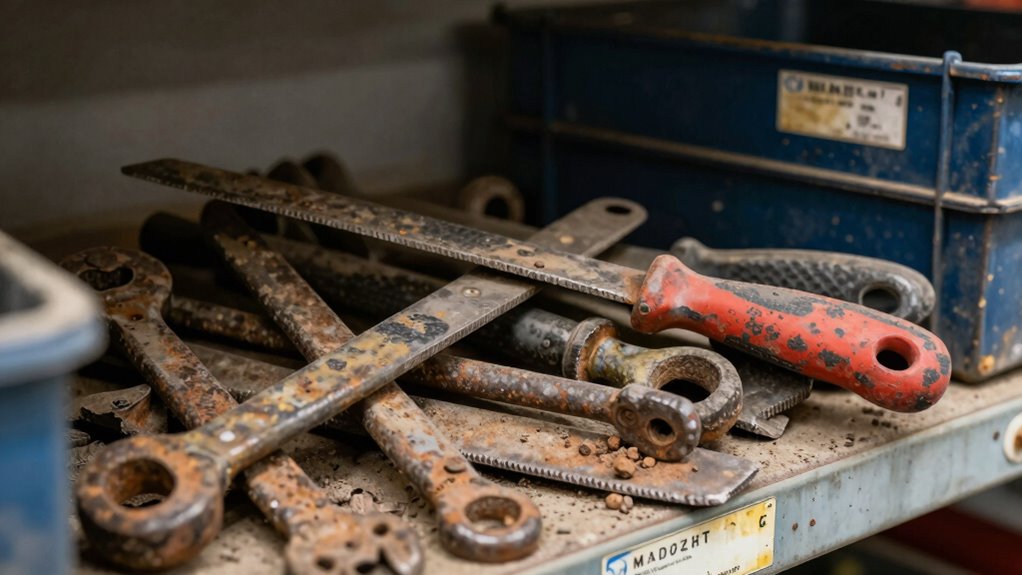
Storing tools improperly can considerably shorten their lifespan, leading to costly replacements and decreased efficiency. One of the biggest mistakes you can make is neglecting proper tool maintenance and overlooking the importance of a suitable storage environment. When tools aren’t stored correctly, they’re exposed to conditions that accelerate wear and corrosion, ultimately reducing their effectiveness and longevity. To keep your tools in top shape, you need to pay attention to both how you maintain them and where you store them.
Proper storage and maintenance are key to extending your tools’ lifespan and ensuring optimal performance.
First, think about your storage environment. Humidity, temperature fluctuations, and dirt can all cause serious damage if tools are left exposed. Moisture, in particular, promotes rust and corrosion, which can weaken the metal and make tools unsafe or unusable. Avoid storing tools in damp basements or garages where moisture levels are high. Instead, opt for a dry, climate-controlled space, or use silica gel packs or dehumidifiers to control humidity. A clean, organized storage area also minimizes the risk of dirt and debris settling on tools, which can lead to corrosion and impair their performance over time.
Tool maintenance is equally critical in preventing premature wear. Regularly inspecting your tools allows you to identify issues early, such as dull blades, loose parts, or signs of rust. Proper cleaning after each use removes dirt, grease, and moisture that can cause corrosion. Applying lubricants to moving parts helps reduce friction and prevents rust formation. Storing tools in designated racks or cases keeps them protected from accidental damage and keeps their cutting edges aligned. Sharp tools are safer and more efficient, so ensure blades and bits are kept sharp and replace them when necessary.
Additionally, avoid throwing tools into a cluttered toolbox or leaving them scattered around. Disorganized storage can lead to accidental damage and make it harder to spot issues like cracks or rust. Use appropriate holders—like wall-mounted racks, toolboxes with foam inserts, or magnetic strips—to keep tools separated and easily accessible. Proper storage not only protects tools but also streamlines your workflow, saving you time during projects.
Ultimately, maintaining your tools and creating a suitable storage environment go hand in hand. When you pay attention to both, you prevent unnecessary wear and extend the life of your tools. It’s a simple investment that pays off in the long run, reducing replacement costs and ensuring your tools perform reliably whenever you need them. Proper storage isn’t just about organization; it’s about preserving your tools’ integrity and efficiency for years to come.
Another key aspect is understanding environmental factors that can accelerate deterioration, so you can take proactive steps to mitigate their impact.

Keter Stack-n-Roll Modular Tools Organizer for Garage Storage and DIY, 3 Piece Resin Rolling Tool Box System for Small Parts, Black
Durable and Lightweight construction makes this modular tool storage system perfect for home use
As an affiliate, we earn on qualifying purchases.
As an affiliate, we earn on qualifying purchases.
Frequently Asked Questions
How Often Should I Inspect My Tools During Storage?
You should inspect your tools at least once a month during storage. Look for signs of tool corrosion and check moisture control measures, like desiccants or airtight containers. Regular inspections help you catch moisture buildup early, preventing rust and extending tool life. Keep tools dry and well-maintained, and address any corrosion immediately to avoid costly damage. Proper storage and routine checks guarantee your tools stay in top condition longer.
What Are the Best Environments for Storing Cutting Tools?
You should store your cutting tools in a controlled environment that minimizes moisture, temperature fluctuations, and exposure to corrosive elements. Ideal conditions include a dry, cool, and well-ventilated space, free from humidity and dust. Proper storage organization—using labeled, separate compartments—helps prevent tool corrosion and damage. By maintaining these best environments, you extend your tools’ life, guarantee safety, and enhance cutting efficiency, saving time and money in the long run.
Can Improper Storage Cause Immediate Tool Failure?
Yes, improper storage can cause immediate tool failure. If you don’t control moisture and prevent tool corrosion, rust can develop quickly, weakening the tools and making them more prone to breakage during use. Poor moisture control accelerates corrosion, reduces cutting edge sharpness, and compromises tool integrity. To avoid this, guarantee your storage environment is dry, and use protective coatings or rust inhibitors to extend your tools’ lifespan and maintain ideal performance.
Are There Specific Storage Containers Recommended for Different Tools?
Did you know that proper tool storage can extend tool life by up to 30%? For tool organization and storage safety, you’ll want specific containers for different tools. Use foam-lined cases for delicate or precision tools, and heavy-duty plastic bins for rugged items. Keep sharp tools in sheaths or protective covers to prevent accidents. Selecting the right storage containers guarantees your tools stay in top condition and enhances safety in your workspace.
How Does Temperature Fluctuation Affect Stored Tools?
Temperature fluctuations can considerably harm your stored tools by causing metal expansion and contraction, leading to cracks or warping. To prevent this, you need proper temperature control and humidity management. Keep tools in a stable environment, avoiding extreme heat or cold, and ensure the storage area maintains consistent humidity levels. This approach preserves your tools’ integrity, extends their lifespan, and keeps them ready for use whenever you need them.

Dehumidifier, 95OZ Dehumidifier for Home 1000 Sq.Ft – Quiet with Auto Shut Off & Relaxing 7 Color Ambient Light,Ideal for Livingroom, Bedroom, Basement(Black)
Semiconductor dehumidifiers use thermoelectric cooling to remove moisture from the air. They create a drier, more comfortable environment…
As an affiliate, we earn on qualifying purchases.
As an affiliate, we earn on qualifying purchases.
Conclusion
Ignoring proper storage might save a moment’s effort, but it costs you in the long run—just like neglecting your tools slowly wears them down, shortening their lifespan. You could rush to finish today’s job, or you could invest a little time now to preserve your tools’ sharpness and durability. In the end, the small mistake of poor storage becomes a silent thief, robbing you of efficiency and savings over time. Choose wisely—your tools, and your future projects, will thank you.

Wisesorb Silica Gel Packets, 20 Gram 15 Packs Dessicant Packets for Storage, Pure and Safe Silica Gel Desiccant Packs, Humidity Packs
Nonwoven Paper Packaging Material-The silica gel desiccant packets are three-side sealing constructed with high quality Verna non-woven fabric…
As an affiliate, we earn on qualifying purchases.
As an affiliate, we earn on qualifying purchases.

TLGREEN 95 Piece Tool Set, Tool Kit, Mechanics Tool Set, Portable Toolbox with Adjustable Wrench Pliers Socket Bits, with Plastic Toolbox, for House Apartment Garage (Red)
The tools are heat-treated with carbon steel and placed in a suitable box,compact carrying case for storage and…
As an affiliate, we earn on qualifying purchases.
As an affiliate, we earn on qualifying purchases.