

When using coupons, it’s important to understand terms like exclusions, MAP, and final sale. Exclusions tell you what items or offers the coupon doesn’t cover, so you don’t get surprises at checkout. MAP restrictions limit how low prices can go, impacting your potential savings. Final sale items can’t be returned or exchanged after using a coupon. Knowing these details helps you shop smarter and avoid surprises—keep exploring to learn more about these key coupon terms.
Key Takeaways
- Exclusions specify items or conditions not eligible for the coupon, such as sale items or certain brands.
- MAP restrictions prevent prices from being advertised below a set minimum, affecting potential savings.
- “Final Sale” means items cannot be returned or exchanged after using the coupon, often with no refunds.
- Terms like “no stacking” prohibit combining multiple coupons or discounts on the same purchase.
- Reading the fine print ensures understanding of all limitations, maximizing savings and avoiding surprises.
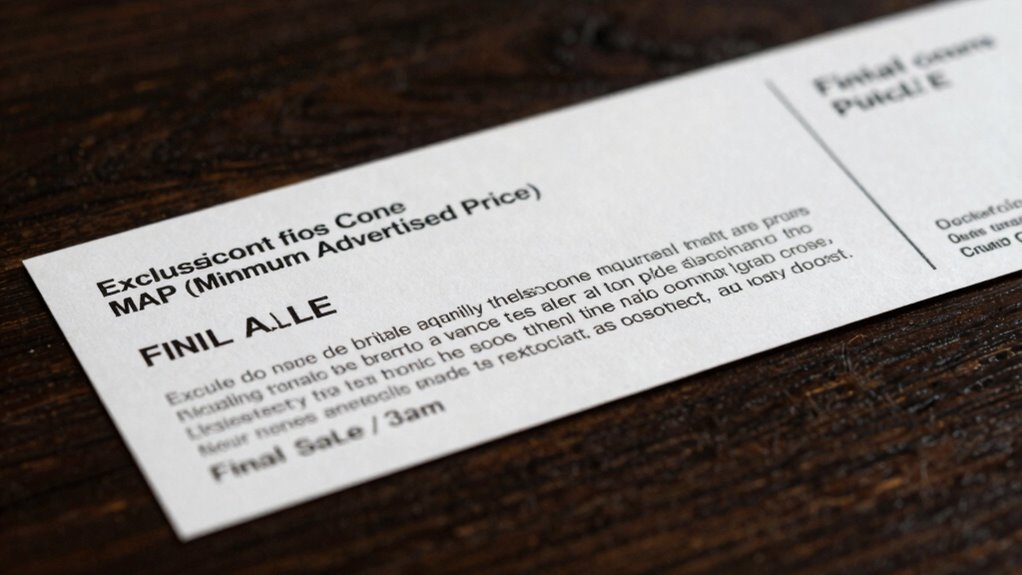
Ever found yourself confused by the fine print on a coupon? You’re not alone. Many people get caught up in the promotional language and overlook the details that can affect whether they actually get that sweet deal. Coupons often come with a lot of small print, and understanding the terms can save you from disappointment at checkout. One of the most common points of confusion involves discount restrictions. Retailers often specify which products or categories the coupon applies to, and these restrictions can be quite specific. For example, a coupon might be valid only on select items, or it might exclude sale and clearance items altogether. Knowing these restrictions helps you make smarter shopping decisions and avoid the frustration of trying to use a coupon that doesn’t work on your purchase.
Understanding coupon restrictions helps you shop smarter and avoid checkout surprises.
Another key aspect to pay attention to is the promotional language that companies use to entice you. Terms like “up to,” “while supplies last,” or “selected items only” are carefully crafted to attract attention, but they also set limits on the deal’s scope. For instance, a phrase like “save 20% on all footwear” might be true in a broad sense, but the fine print could specify that the discount only applies to certain brands or styles. Recognizing this promotional language helps you understand exactly what you’re getting and prevents misconceptions that might lead to disappointment. It also highlights the importance of reading the full terms to guarantee you’re eligible to use the coupon.
Many coupons come with specific rules about exclusions, such as “no stacking” or “not valid with other offers.” These exclusions are put in place to protect the retailer’s profit margins and can change from one promotion to another. For example, a “Final Sale” tag on certain items means that once you purchase them using the coupon, you can’t return or exchange those items. This is a common exclusion that might seem straightforward but can cause issues if you’re not aware beforehand. Knowing these exclusions allows you to decide if a deal is worth it or if you should look for a more flexible offer. Additionally, reading the full terms can help you avoid unexpected limitations that could otherwise spoil your shopping experience.
Lastly, understanding the concept of Minimum Advertised Price (MAP) is essential. MAP policies restrict how low a retailer can advertise a product’s price. Even if a coupon offers a discount, the retailer must adhere to MAP rules, which sometimes means they can’t advertise prices below a certain threshold. This can limit how much you actually save, even with a coupon. Being aware of MAP restrictions helps you set realistic expectations about your savings and prevents any surprises at checkout. Additionally, considering the effectiveness and safety of products—like newborn sunscreens—can influence your choices and savings when shopping for your little one. In the end, reading and understanding coupon terms—especially regarding promotional language, discount restrictions, exclusions, and MAP—ensures you get the best value from your shopping experience.
coupon exclusions list
As an affiliate, we earn on qualifying purchases.
As an affiliate, we earn on qualifying purchases.
Frequently Asked Questions
Can Coupons Be Combined With Other Discounts?
You usually can’t stack discounts unless the store explicitly allows coupon stacking. Most stores have specific coupon stacking rules that prevent combining multiple discounts, especially with coupons, sale items, or clearance. Check the store’s policies before trying to combine offers. If stacking discounts is permitted, follow the coupon stacking rules carefully to maximize your savings. Always read the fine print to avoid surprises at checkout.
Do All Stores Have the Same Coupon Exclusions?
Not all stores dance to the same tune when it comes to coupon exclusions. Store policies act like a GPS, guiding what discounts sail smoothly and which ones hit a dead end. As a savvy shopper, your coupon literacy is your map, helping you navigate these rules. Some stores keep their exclusions close to their chest, so always read the fine print before you jump into the savings pool.
How Does MAP Pricing Affect Coupon Use?
MAP pricing directly impacts your ability to use coupons because many brands set minimum advertised price limits to protect their pricing strategies. Retailers must follow these promotional restrictions, meaning you can’t combine coupons with prices below the MAP. This helps maintain brand value and fair competition. As a shopper, you’ll notice that some discounts are restricted or unavailable if they conflict with MAP policies, ensuring consistent pricing across stores.
Are Final Sale Items Returnable or Exchangeable?
Think of final sale items as sealed books—you can’t rewrite their story. They usually aren’t returnable or exchangeable, as per the store’s return policies. If you want to exchange or return, check the specific procedures, but expect restrictions. Just like a closed chapter, final sale items are meant to be final—so choose wisely before sealing the deal. Always review the store’s exchange procedures to avoid surprises.
Do Coupon Terms Vary by Product Category?
Yes, coupon terms often vary by product category. You’ll find product-specific restrictions that limit discounts on certain items, like electronics or designer brands. Category-based policies also come into play, with some categories having stricter rules or exclusions. Always check the fine print on your coupons to understand these nuances, so you don’t encounter surprises at checkout. Knowing these differences helps you maximize savings and avoid buying restrictions.

SSWBasics Large Unstrung Yellow Perforated Coupon Price Tags (1¾” W x 2⅞”H) – Box of
1¾” W x 2⅞”H
As an affiliate, we earn on qualifying purchases.
As an affiliate, we earn on qualifying purchases.
Conclusion
Now that you know the ins and outs of coupon terms, you’re like a savvy navigator steering through a sea of fine print. Exclusions, map, and final sale are just landmarks guiding your journey, ensuring you don’t get lost in the waves of confusion. Armed with this knowledge, you can confidently sail toward those sweet savings, turning what once seemed like a storm into a calm, rewarding voyage. Happy shopping, and may your discounts always flow smoothly!

Final Fantasy VII Remake: Material Ultimania
As an affiliate, we earn on qualifying purchases.
As an affiliate, we earn on qualifying purchases.

Second Glance
As an affiliate, we earn on qualifying purchases.
As an affiliate, we earn on qualifying purchases.