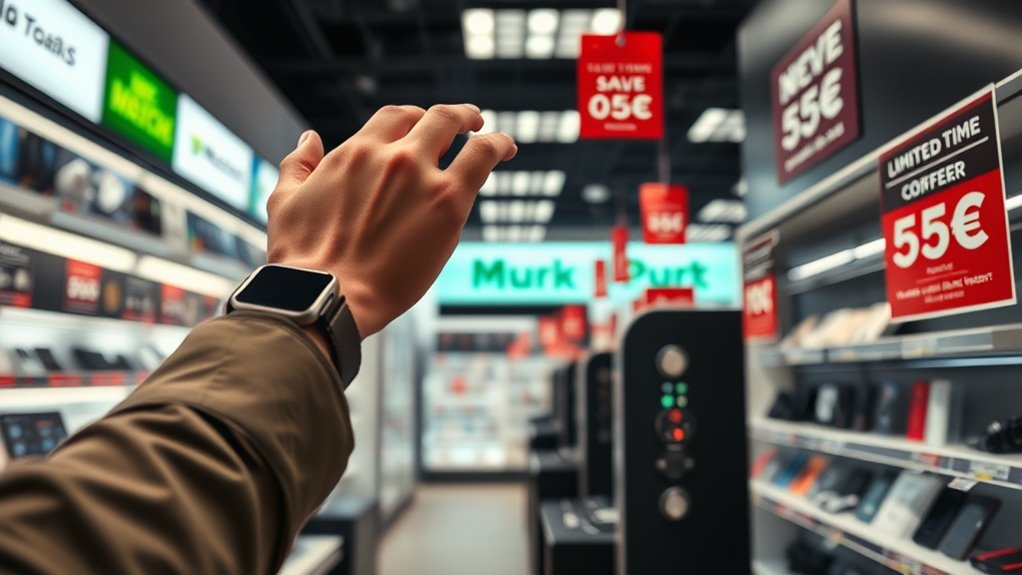

Retailers use clever tactics like strategic product placement, bright displays, limited-time offers, and visual cues to trigger impulsive purchases. They often position small, inexpensive items near checkout to tempt you, creating feelings of excitement or reward. To resist, stick to a shopping list, pause before grabbing tempting items, and use the 24-hour rule for non-essentials. Stay aware of these tactics—if you keep exploring, you’ll discover even more ways to stay in control.

Get your next haul delivered free with Prime
- Fast, free delivery on millions of items
- Prime Video, Amazon Music and more included
- Member-only deals all year
Key Takeaways
- Recognize and identify common retail tactics like strategic placement and visual cues designed to trigger impulse purchases.
- Set a clear shopping list and stick to it to prevent unplanned buying decisions.
- Pause and reflect on each tempting item, asking if it’s necessary and aligns with your budget.
- Use the 24-hour rule before purchasing non-essential items to reduce emotional spending.
- Increase awareness of environmental cues and emotional triggers to maintain self-control and make intentional purchases.

Impulse buys can quickly derail your budget and leave you feeling regretful. Retailers know this all too well, and they use clever tactics to tap into your emotional triggers. These triggers are psychological cues that prompt quick, unplanned purchases. For example, a brightly lit display or a limited-time offer can spark excitement or urgency, making you feel like you might miss out if you don’t act immediately. Retailers also employ strategic placement of products to influence your buying decisions. Items like candies near the checkout or accessories next to big-ticket items aren’t accidental; they’re carefully positioned to catch your eye when you’re least expecting it. Recognizing these tactics is the first step in resisting impulse purchases.
When you walk into a store, your mind is bombarded with visual cues designed to lure you in. Bright colors, appealing displays, and the strategic placement of products all work together to create a sense of desire or urgency. Retailers want you to associate certain products with positive feelings—excitement, happiness, or even a sense of reward. They often place smaller, inexpensive items like snacks or trinkets near the checkout to trigger a quick, feel-good purchase. These things seem harmless at first, but they add up quickly, sneaking into your cart because of emotional triggers that you might not even realize are influencing you. Additionally, understanding how contrast ratio impacts image quality can help you become more aware of visual cues that affect your perception and decision-making.
To resist these tactics, you need to be aware of your emotional triggers. Before heading into a store, set a clear shopping list and stick to it. Remind yourself that many of the displays and placement strategies are meant to manipulate your emotions and encourage unplanned spending. When you see tempting items near the checkout, pause and ask yourself if you genuinely need them or if they’re just there to create a sense of urgency. Take a moment to breathe and evaluate whether the purchase aligns with your budget and goals. Using a method like the 24-hour rule—waiting a day before buying something non-essential—can also help you resist impulsive urges fueled by emotional triggers and strategic placement.
Ultimately, understanding how retailers influence your choices empowers you to make more intentional decisions. Recognizing their tactics allows you to pause, evaluate, and avoid falling into the trap of impulse buying. It’s not about depriving yourself but about maintaining control over your spending habits. By staying aware of emotional triggers and resisting the allure of strategic placement, you’ll keep your budget intact and make purchases that truly add value to your life.
Frequently Asked Questions
How Do Retailers Identify Vulnerable Shoppers?
Retailers identify vulnerable shoppers by observing how they navigate the shopping environment and store layout. You might linger in certain areas or display signs of hesitation, which can signal susceptibility. Stores often target these moments with strategic product placements or sales pitches. By paying attention to your movements and reactions, they can gauge your level of interest and tailor their tactics to encourage impulsive purchases.
What Psychological Tricks Are Most Effective in Prompting Impulse Buys?
Imagine your emotions as a spark that retailers want to ignite. They cleverly use visual cues like bright signs and attractive displays to trigger emotional responses, prompting impulse buys. These psychological tricks tap into your emotional triggers, making you feel the urge to act quickly. By understanding this, you can pause and recognize these tactics, helping you resist unplanned purchases and stay in control of your spending.
Can Loyalty Programs Help Reduce Impulse Spending?
Loyalty programs can help reduce impulse spending by encouraging you to plan purchases and earn rewards over time. When you focus on reward programs, you become more aware of your spending habits, making it easier to resist unplanned buys. Instead of impulsively grabbing items, you’ll think strategically about earning points or discounts, which promotes more mindful shopping and helps control unnecessary expenses.
What Are the Long-Term Effects of Impulse Purchasing Habits?
Impulsive purchases can turn into a spending addiction that wrecks your financial future. Over time, these habits fuel emotional decision making, leading to unnecessary debt and stress. You might feel like you’re on a rollercoaster of regret and anxiety, damaging your savings and financial stability. Long-term, impulsive habits can hinder your ability to plan for goals, creating a cycle that’s hard to break and affecting your overall well-being.
How Can I Rebuild Financial Discipline After Frequent Impulse Spending?
You can rebuild financial discipline by establishing clear budgeting strategies and practicing financial accountability. Start by tracking your expenses to identify impulse spending triggers. Set realistic financial goals and create a budget that limits unnecessary purchases. Whenever you feel tempted, pause and evaluate if the expense aligns with your priorities. Consistently reviewing your progress helps reinforce discipline, making it easier to resist impulse buys and stay on track financially.
Conclusion
By understanding the tactics retailers use, you can turn impulse buys into deliberate choices. It’s like walking past a tempting dessert while knowing you’re full—you resist because you value your goals. Instead of giving in to fleeting cravings, choose what truly matters. Remember, the power to resist isn’t about deprivation; it’s about making smarter decisions. So next time, pause, breathe, and remind yourself that your wallet and goals will thank you.
Halloween Picks
halloween
As an affiliate, we earn on qualifying purchases.